hinoko
JLPT N3 reading practice: a test and intermediate stories

91 stories · 14 free · about 9 min each
N3 is the bridge between textbook Japanese and real texts: longer sentences, kanji up to N3 (617 in all) and many expressions that link ideas. These 91 stories use words up to N3, with at most 2 N2 words in a story, flagged in their card.
JLPT N3 reading practice test

3 questions in the format of the reading part of the exam (読解, dokkai), on texts written for this page. Pick an answer and the explanation appears.
Text 1
マンションの掲示板に、次のお知らせが貼ってある。
住民の皆様へ
来月三日(月)から七日(金)まで、エレベーターの点検を行います。作業中は、午前九時から午後五時までエレベーターが使えません。重い荷物の配達を頼む予定がある方は、なるべくこの期間を避けてください。どうしても必要な場合は、管理人室までご相談ください。
さくら台マンション 管理人
Show the translation
This notice is posted on the board of an apartment building.
To all residents
From Monday the 3rd to Friday the 7th of next month, the elevator will be inspected. During the work, the elevator cannot be used from 9 a.m. to 5 p.m. If you plan to have heavy items delivered, please avoid this period if possible. If it is truly necessary, please consult the building manager's office.
Sakuradai Mansion, building manager
-
1このお知らせで一番伝えたいことは何か。
See the answer
Answer: 1. The notice is there to warn residents: during the inspection the elevator is out of service in the daytime (9:00 to 17:00), so heavy deliveries should be avoided. The five days are a detail, and the manager is only for deliveries that can't be moved.
Text 2
最近、駅や電車の中で、本を読んでいる人をあまり見なくなった。ほとんどの人がスマートフォンの画面を見ている。私も以前はそうだった。しかし去年、通勤の時間に小説を読むことにしてから、毎日が少し変わった。
スマートフォンでニュースやSNSを見ていると、次から次へと新しい情報が入ってきて、駅に着くころには何を読んだのかほとんど覚えていない。ところが本を読むと、三十分の間、ずっと同じ物語の中にいることになる。降りる駅で本を閉じると、頭の中が不思議と静かになっている。
もちろん、スマートフォンが悪いと言いたいわけではない。ただ、一日に三十分だけでも、一つのことに集中する時間を持つのは大切なことだと思う。
Show the translation
Lately I rarely see people reading books at stations or on trains. Almost everyone is looking at a smartphone screen. I used to as well. But since I decided last year to read novels during my commute, my days have changed a little.
When I look at news or social media on my phone, new information keeps pouring in, and by the time I reach my station I hardly remember what I read. With a book, on the other hand, I stay inside the same story for thirty minutes. When I close it at my stop, my head feels strangely quiet.
Of course, I don't mean that smartphones are bad. I just think it matters to have, even for thirty minutes a day, a time to focus on one thing.
-
2筆者によると、通勤の時間に本を読むとどうなるか。
See the answer
Answer: 4. 頭の中が不思議と静かになっている: when the writer closes the book at their stop, their mind is calm. The flood of information and forgetting what you read describe the smartphone, not the book.
-
3筆者が一番言いたいことは何か。
See the answer
Answer: 3. The main point is in the last paragraph: even thirty minutes a day spent on one thing matters. The writer says outright that they don't mean smartphones are bad (悪いと言いたいわけではない), which rules out 1 and 2.

The 91 N3 stories
Read without stopping first, then tap only what blocks you: reading, meaning and form are in each word’s card, and the questions at the end check that you followed the story.
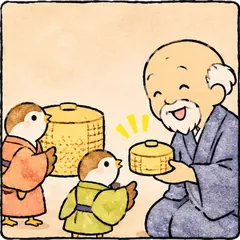
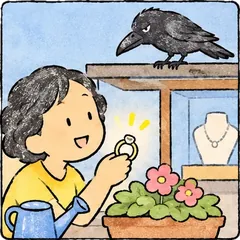
昔話Folk tales
0/7

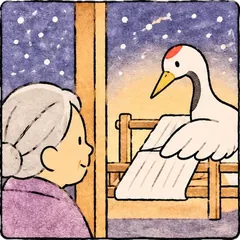



ふしぎな 話Strange tales
0/3

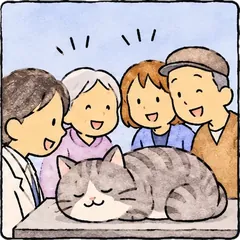
新しい 生活A new life
0/2

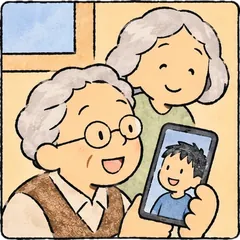
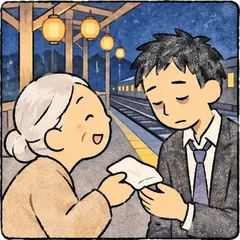
ひのこの 旅Hinoko's journey
0/2

77 more N3 stories with Premium



















































Grammar in these stories
The grammar points these stories use most, each linked to its explanation in our JLPT grammar lists, often with an example.
- 〜と(条件) Dictionary form + と: "when A, (always) B", a natural or automatic result.
- 受身形 Passive form: "be done by someone" (doer + に), also for unwelcome events.
- 〜ていた Te-form + いた: past of 〜ている, "was doing", or a past state.
- 〜ずに Nai-form minus ない + ずに: "without doing", more written than ないで (言わずに, "without saying"); する: せずに.
- 〜てくる Te-form + くる: do something and come (back), or a change that has begun.
- 〜てくれる Te-form + くれる: someone does something for me or my side.
- 〜ても Te-form + も: "even if, even though"; B happens regardless of A.
- 〜らしい "Apparently, it seems": a guess based on what you heard or read.
- 〜ように(目的) Dictionary or nai-form + ように: "so that", for a result you can’t fully control (忘れないように, "so as not to forget").
- 〜てみる Te-form + みる: "try doing" something, to see how it is.
- 〜ような/〜ように(たとえ) "Like, as": のような before a noun, のように before a verb or adjective.
- 〜てしまう Te-form + しまう: do something completely, or with regret (by mistake); spoken: 〜ちゃう.
The reading part of the N3 exam
At the exam, reading (読解, dokkai) has no time of its own: it shares the 70 minutes of the section “Language knowledge (grammar) and reading” with the grammar questions. It has about 16 questions of four kinds, each with four choices:
| Kind of question | What you read | Length | Questions |
|---|---|---|---|
| 内容理解(短文)Comprehension (short passages)Text 1 of the test above | Short explanations or instructions about daily life or work. | 150 to 200 characters | 4 |
| 内容理解(中文)Comprehension (mid-size passages)Text 2 of the test above | A commentary or an essay: its key words, causes and effects. | about 350 characters | 6 |
| 内容理解(長文)Comprehension (long passages) | A longer commentary, essay or letter: the overall outline and the author’s line of thought. | about 550 characters | 4 |
| 情報検索Information retrieval | An ad or a brochure: find what you need in it. | about 600 characters | 2 |
Lengths: approximate number of Japanese characters, as set by the JLPT for each kind of text. Questions: indicative numbers, which can vary slightly from one session to another. Sources on jlpt.jp: test times, number of questions (official test composition, in Japanese), length of the texts (in Japanese).
- Official sample questions (jlpt.jp) ↗
Free, from the organizers of the JLPT.
- JLPT N3: test format, question types and pass mark
Every section of the exam, its time and the pass mark.
How many kanji and words for N3?

In our lists, N3 is the biggest step in vocabulary: it adds 2,140 new words and 370 kanji, for about 3,526 words and 617 kanji in all, plus 251 grammar points. The JLPT has published no official list of words or kanji since 2010: these figures are based on the lists compiled by Jonathan Waller, which many learners use.
 718 words in all +718 new words 97 grammar points 50 stories
 1,386 words in all +668 new words 165 grammar points 48 stories
 This page 3,526 words in all +2,140 new words 251 grammar points 91 stories
 5,329 words in all +1,803 new words 201 grammar points 90 stories
Together, our 189 stories from N5 to N3 use 2,132 of the 2,140 words of the JLPT N3 vocabulary list (the 8 others are not in our stories, which don’t talk about alcoholic drinks, tobacco or suicide, and are still on the JLPT list) and its 251 grammar points: read them all and you have met the level in context.
Learn them by reading rather than by heart: in the stories, the most useful words come back again and again, in context. The lists below are there to check what is left; 197 of the 2,140 words of the vocabulary list link to a free story where they appear.
Reading without rōmaji, and when to hide the furigana
Kana, not rōmaji
No rōmaji at N3 either, and you no longer need it: kanji tell apart what rōmaji mixes up. 橋 (bridge) and 箸 (chopsticks) are both read hashi, but you can’t confuse them in writing.
When to hide the furigana
The N3 test above starts with furigana hidden: make it a habit. Show them only to check a reading, then hide them again; in the stories, the same switch does the same.
Is N3 the right level for you?
N3 is your level if:
- you read N4 stories easily, with the translation closed;
- you read most of the 247 kanji of N5 and N4 without furigana;
- long sentences linked by 〜たびに, 〜ばかりでなく or 〜に対して still slow you down;
- the test above is within reach, even with the furigana on.
Questions about reading at N3
How long is the reading part of the JLPT N3?
Reading has no time of its own: it shares the 70 minutes of the section “Language knowledge (grammar) and reading” with the grammar questions.
What kinds of texts are in the JLPT N3 reading part?
Four kinds of questions, each with four choices: short texts (150 to 200 characters), mid-size texts (about 350 characters), a long text (about 550 characters), and a document to search for information (about 600 characters).
How many reading questions are there in the JLPT N3?
About 16 questions: 4 on short texts, 6 on mid-size texts, 4 on a long text, and 2 on a document to search for information. These are the JLPT’s indicative numbers; a session can differ slightly.
Are the texts on this page real JLPT questions?
No: the test and the stories are original texts, written for N3. The questions follow the format of the exam, and the official sample questions are free on jlpt.jp.
Can I practice JLPT N3 reading for free?
Yes: the test at the top of this page and 14 of the 91 N3 stories are free to read online, without an account.
How long does it take to read an N3 story?
About 9 minutes on average, for a story of about 21 sentences.
Didn’t find your answer?
Write to us at contact@hinoko-japanese.com: we answer in English or French.