 hinoko
ももたろう Momotarō story: the Peach Boy in easy Japanese
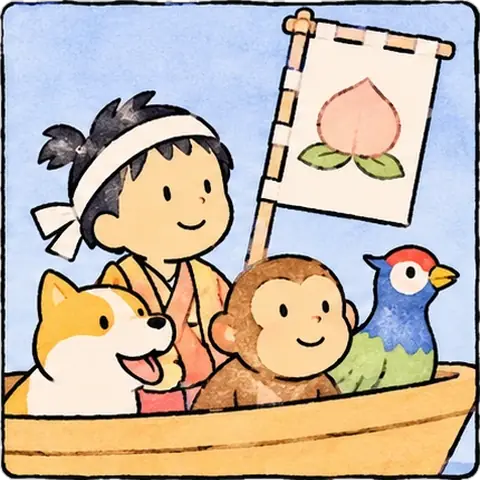
A boy born from a peach sets off to fight the ogres who steal his village's treasures.
- ~9 minutes
- 22 sentences
- 654 characters
- 65 kanji
- 2 N2 words
Every word and every kanji is checked against the lists of N3 and the levels below; 2 words from N2, flagged in the vocabulary. How we check →
Too hard? Try the N4 stories or the N5 stories.
The story
むかし、ある むらに、おじいさんと おばあさんが 住んでいた。
Long ago, in a certain village, there lived an old man and an old woman.
ある 日、おじいさんは 山へ 木を 切りに、おばあさんは 川へ せんたくに 行った。
One day, the old man went to the mountain to cut wood, and the old woman went to the river to do the washing.
おばあさんが せんたくを している と、大きな ももが 流れてきた。
While she was washing, a big peach came floating down.
あまりの 大きさに、おばあさんは おどろいた。
It was so big that the old woman was astonished.
家に 持って 帰って 割ってみる と、中から 元気な 男の子が 飛び出した。
When they took it home and split it open, a lively little boy jumped out.
二人は その 子を「ももたろう」と 呼び、大切に 育てた。
They named him "Momotarō" and raised him with great care.
その ころ、むらの 人たちは、海の 向こうの しまに 住む おにに たからを 取られて、困っていた。
At that time, the villagers were in trouble: the ogres who lived on an island across the sea kept stealing their treasures.
大きく なった ももたろうは、ゆうきを 出して「おにと 戦いに 行く」と 言った。
Now grown up, Momotarō summoned his courage and said, "I'm going to fight the ogres."
おにの しままでは、ふねで 三日は かかる と 言われていた。
It was said to take at least three days by boat to reach the ogres' island.
おばあさんは 旅の ために おいしい おかしを 作り、おじいさんは「日本一」と 書いた はたを わたした。
The old woman made delicious cakes for the journey, and the old man gave him a banner on which he had written "Best in Japan".
とちゅうで 会った 犬は、おかしを 一つ もらって、ももたろうの なかまに なった。
A dog he met on the way received a cake and became Momotarō's companion.
さるも また、おかしを もらって なかまに なった。
The monkey, too, received a cake and became a companion.
きじも また、空から 来て、なかまに なった。
The pheasant, too, came down from the sky and became a companion.
しまに 着く と、ももたろうは、空から おにを 見る 仕事を きじに 任せた。
When they reached the island, Momotarō left it to the pheasant to watch the ogres from the sky.
大きな もんを 開ける のは、木に 登る のが 上手な さるに 任せた。
The job of opening the big gate he left to the monkey, who was good at climbing trees.
さるが もんを 開ける と、みんなで おにと 戦った。
When the monkey opened the gate, they all fought the ogres.
犬は おにの 足を かみ、さるは 顔を かき、きじは 空から 目を 突いた。
The dog bit the ogres' legs, the monkey scratched their faces, and the pheasant pecked at their eyes from the sky.
あまりの 痛さに、いちばん 強い おには なきだした。
It hurt so much that the strongest ogre burst into tears.
「ゆるして ください。たからは みんな 返します」と、おにたちは こうふくした。
"Forgive us! We'll give back all the treasures," said the ogres, and they surrendered.
金や 銀の たからを 運ぶ には、車が 三台は 必要だった。
To carry the gold and silver treasures, they needed at least three carts.
ももたろうが むらに 帰る と、おじいさんと おばあさんの 喜びは、言葉に できない ほどだった。
When Momotarō returned to the village, the old man and the old woman's joy was beyond words.
こうして、ももたろうは むらの ほこりに なった。
And so Momotarō became the pride of the village.
Did you understand?
-
1 むらの 人たちが 困っていた のは なぜか。
Why were the villagers in trouble?
See the answer
Answer: 2. おにに たからを 取られていた から Because the ogres had been stealing their treasures.
-
2 ももたろうは、さるに 何を 任せたか。
What did Momotarō leave to the monkey?
See the answer
Answer: 3. 大きな もんを 開ける 仕事 opening the big gate
-
3 おにたちが こうふくした あと、どう なったか。
What happened after the ogres surrendered?
See the answer
Answer: 4. たからを 持って むらへ 帰った They went back to the village with the treasures.

Next story
 かさじぞう
The Jizō and the Straw Hats
On the last day of the year, a poor old man sets off to town to sell the straw hats he has made.
Tappable words, synthetic voice and review.
About this tale
Momotarō (桃太郎) is probably the best-known hero of Japanese folklore. His name means "Peach Tarō": momo is a peach, and Tarō a traditional name for an eldest son. The peach is no ordinary fruit: in Japan, as in China, it was believed to ward off evil, and in the Kojiki, Japan’s oldest chronicle (712), the god Izanagi throws peaches to drive back the army of the land of the dead. The tale spread through illustrated books in the Edo period (1603-1868). In some old versions, the old couple eat the peach, grow young again and have a baby; today, every child knows the boy who springs from the fruit.
One day, an old woman washing clothes in the river sees a huge peach come floating down. She carries it home, and when the old couple cut it open, a lively little boy jumps out. They raise him with love. Once grown, Momotarō learns that the oni (ogres) of Onigashima, an island across the sea, are stealing people’s treasures, and he sets off to fight them, with millet dumplings (kibi dango) made by the old woman. On the way, a dog, a monkey and a pheasant each accept a dumpling and join him.
The tale celebrates courage, generosity and teamwork: a shared treat turns three very different animals into loyal companions, each useful in its own way. Okayama, in the ancient land of Kibi, has made Momotarō its emblem, and its kibi dango sweets play on both the millet of the tale and the old name of Kibi. hinoko tells the story at JLPT N3 level, in 22 sentences: the dumplings become simple おかし (sweets) to keep the vocabulary at the right level, the old man hands Momotarō a banner reading 日本一 (best in Japan), and on the island each animal has a job. You will also practice 〜を〜に任せる (leaving a task to someone) and あまりの〜に (so… that).
Grammar in this story
-
〜を〜に任せる A を B に任せる: "leave A to B, entrust A to B" (仕事を彼に任せる, "leave the job to him").
しまに 着く と、ももたろうは、空から おにを 見る 仕事を きじに 任せた。
When they reached the island, Momotarō left it to the pheasant to watch the ogres from the sky.
-
又〜も Noun + もまた: "… too, likewise", a more literary も (きじもまた, "the pheasant, too").
さるも また、おかしを もらって なかまに なった。
The monkey, too, received a cake and became a companion.
-
あまり(程度) あまりの + noun, or verb + あまり: "so… that", an excess that leads to a result (あまりの暑さに).
あまりの 大きさに、おばあさんは おどろいた。
It was so big that the old woman was astonished.
-
数量+は Number or amount + は: "at least" that much (三日はかかる, "it takes at least three days").
おにの しままでは、ふねで 三日は かかる と 言われていた。
It was said to take at least three days by boat to reach the ogres' island.
Vocabulary 105 words
- むかし
- the old days, long ago
- ある
- a certain, one (in a story)
- むら
- village
- おじいさん
- old man; grandfather
- おばあさん
- old woman; grandmother
- 住む すむ
- to live (somewhere)
- 日 ひ
- day
- 山 やま
- mountain
- 木 き
- tree
- 切る きる
- to cut
- 川 かわ
- river
- せんたく
- laundry, washing
- 行く いく
- to go
- する
- to do
- 大きな おおきな
- big (always before a noun)
- もも N2
- peach
- 流れる ながれる
- to flow; (music, a broadcast) to play, to be aired
- 大きい おおきい
- big
- おどろく
- to be surprised
- 家 いえ
- house, home
- 持つ もつ
- to hold, to carry
- 帰る かえる
- to go home, to return
- 割る わる
- to split, to break open
- 中 なか
- inside
- 元気 げんき
- healthy, lively
- 男の子 おとこのこ
- boy
- 飛び出す とびだす
- to jump out, to rush out
- 二人 ふたり
- two people; 二人で = "the two of them"
- その
- that (already mentioned, or near the listener)
- 子 こ
- child; この 子 = "this child"
- 呼ぶ よぶ
- to call (someone)
- 大切 たいせつ
- important, precious
- 育てる そだてる
- to raise, to bring up
- ころ
- time, days; 小さい ころ = "when I was little"
- 人 ひと
- person; ゆうびんきょくの 人 = "the post office clerk"
- たち
- (after a noun) plural: どうぶつたち = "the animals"
- 海 うみ
- sea
- 向こう むこう
- the other side, over there; (on the phone) at the other end
- しま
- island
- おに
- ogre, demon (of Japanese tales)
- たから
- treasure
- 取る とる
- to take
- 困る こまる
- to be in trouble, to be at a loss
- なる
- to become
- ゆうき
- courage; ゆうきを 出す = to summon up one's courage
- 出す だす
- to take out, to bring out
- 戦う たたかう
- to fight
- 言う いう
- to say
- ふね
- boat (especially a small one): 小さな ふね = "a small boat"
- 三日 みっか
- three days; the 3rd of the month
- かかる
- (電話が かかる) a call comes in; (time, money) to take, to cost
- 旅 たび
- journey, travel
- おいしい
- delicious, tasty
- おかし
- sweets, snacks
- 作る つくる
- to make
- 日本 にっぽん
- Japan (read にっぽん); 日本一 = the best in Japan
- 一 いち
- one
- 書く かく
- to write
- はた
- flag, banner
- わたす
- to hand (over)
- とちゅう
- on the way, midway
- 会う あう
- to meet, to see (someone)
- 犬 いぬ
- dog
- 一つ ひとつ
- one (thing)
- もらう
- to receive, to get
- なかま
- companion, fellow; 火の仲間 = "a fellow fire"
- さる
- monkey; さるの 年 = the Year of the Monkey
- また
- (at the start of a sentence) also, in addition, moreover
- きじ N2
- pheasant (Japan's national bird)
- 空 そら
- sky
- 来る くる
- to come
- 着く つく
- to arrive
- 見る みる
- to look, to see
- 仕事 しごと
- work, job
- 任せる まかせる
- to entrust; 〜を〜に任せる = "to leave (a task) to someone"
- もん
- gate
- 開ける あける
- to open
- 登る のぼる
- to climb
- 上手 じょうず
- skilled, good at
- みんな
- everyone; all
- 足 あし
- foot, leg; paw
- かむ
- to bite; to chew
- 顔 かお
- face
- かく
- to scratch; 頭を かく = to scratch one's head (embarrassment)
- 目 め
- eye
- 突く つく
- to poke, to jab
- 痛い いたい
- painful, sore
- いちばん
- the most; いちばん 上 = "the very top"
- 強い つよい
- strong, heavy (rain, wind)
- なく
- to cry
- ゆるす
- to forgive; to allow
- 返す かえす
- to give back, to return
- こうふく
- surrender; こうふくする = to surrender
- 金 きん
- gold
- 銀 ぎん
- silver
- 運ぶ はこぶ
- to carry
- 車 くるま
- car
- 三 さん
- three
- 台 だい
- counter for machines and vehicles (phones, cars…)
- 必要 ひつよう
- necessary
- 喜び よろこび
- joy
- 言葉 ことば
- word, words; a short message
- できる
- can do, to manage
- こうして
- and so, in this way
- ほこり
- pride; むらの ほこり = the pride of the village