 hinoko
Japanese folktales in easy Japanese
Japanese folktales, or mukashibanashi (昔話), were passed down by word of mouth for centuries before finding their way into medieval collections, Edo-period picture books and, today, school textbooks. Most of them open with the same words, mukashi mukashi, aru tokoro ni (むかしむかし、あるところに), "long, long ago, in a certain place", and they are full of humble old couples, grateful animals, oni (ogres) and spirits of the snow or the sea. Every Japanese child grows up with them, and knowing them will help you catch countless references in manga, anime and everyday life.
On hinoko, the best-known tales are retold in easy Japanese for learners: Momotarō, Yuki-onna, Urashima Tarō, the Grateful Crane, Kasa-jizō, Issun-bōshi, the Tongue-Cut Sparrow and the Mouse’s Wedding. They are written at JLPT N3 level, except Urashima Tarō, at N4, with furigana over every kanji and a translation of each sentence into English and seven other languages. Each tale opens with a short introduction to its origins, its characters and what it means. All of them are free to read online, with no account.
8 folktales to read for free

The tales at a glance
New to Japanese? These tales are written at N3 and N4: start with the N5 stories. Read the N5 stories →
| Tale | The story | Good to know | Level |
|---|---|---|---|
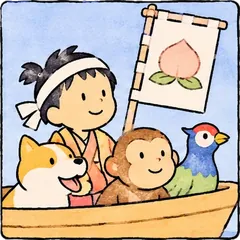
| ももたろうMomotarō | A boy born from a peach sets off to fight the ogres who steal his village's treasures. | Momotarō (桃太郎) is probably the best-known hero of Japanese folklore. | N3 · 9 min |
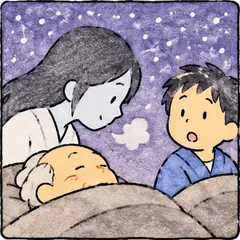
| 雪女The Snow Woman | Caught in a snowstorm, two woodcutters spend the night in a hut by a river. | Yuki-onna (雪女), the "snow woman", is a spirit of the Japanese winter: a pale, beautiful figure who appears in snowstorms, in legends told wherever snow falls heavily in Japan. | N3 · 10 min |
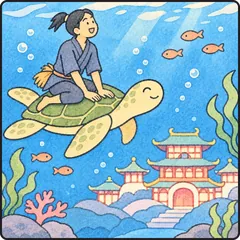
| うらしまたろうUrashima Tarō | A young man from a village by the sea sees some children bullying a turtle. | Urashima Tarō (浦島太郎) is one of the oldest stories in Japan. | N4 · 8 min |
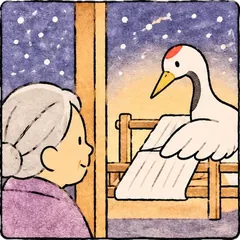
| つるのおんがえしThe Grateful Crane | One snowy day, a poor old man frees a crane caught in a trap. Soon after, a visitor knocks at his door. | Tsuru no ongaeshi (鶴の恩返し), "the crane returns a kindness", belongs to a large family of Japanese tales in which an animal takes human form to live among people. | N3 · 9 min |
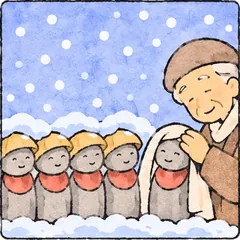
| かさじぞうThe Jizō and the Straw Hats | On the last day of the year, a poor old man sets off to town to sell the straw hats he has made. | Kasa-jizō (笠地蔵), "the jizō in straw hats", is one of Japan’s best-loved winter tales, told in many regional variants: the number of statues and the old man’s trade change from one telling to another. | N3 · 8 min |
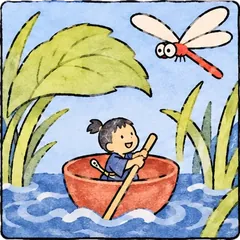
| いっすんぼうしIssun-bōshi | A boy no bigger than a finger sets off for the capital, with a needle for a sword. | Issun-bōshi (一寸法師) is the hero of one of the Otogizōshi, the short illustrated stories of the Muromachi period (14th to 16th centuries), later printed in the Edo period. | N3 · 10 min |
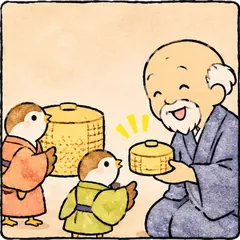
| したきりすずめThe Tongue-Cut Sparrow | A kind old man takes care of a sparrow, but his wife has no love for the bird. | Shitakiri suzume (舌切り雀), "the tongue-cut sparrow", is one of Japan’s most famous folktales, often counted among the "five great tales" (五大昔話) along with Momotarō. | N3 · 9 min |
| ねずみのよめいりThe Mouse's Wedding | A father mouse looks for the strongest match in the world for his daughter, and knocks on the grandest doors. | Nezumi no yomeiri (鼠の嫁入り), "the mouse’s wedding", is a very old fable. | N3 · 8 min |
Questions about these folktales
Which Japanese folktales can you read for free?
All 8 on this page: Momotarō, The Snow Woman, Urashima Tarō, The Grateful Crane, The Jizō and the Straw Hats, Issun-bōshi, The Tongue-Cut Sparrow and The Mouse's Wedding. Each one is free to read online, with no account.
What level are these Japanese folktales?
7 of the 8 tales are written at JLPT N3, and Urashima Tarō at N4. Each one takes about 8 to 10 minutes to read.
Can a beginner read Japanese folktales?
Not right away: these tales are written at N3 and N4. Every kanji has its furigana and every sentence its translation, but start with the N5 stories and come back to the tales afterwards.
Didn’t find your answer?
Write to us at contact@hinoko-japanese.com: we answer in English or French.