 hinoko
うらしまたろう Urashima Tarō story in easy Japanese (JLPT N4)
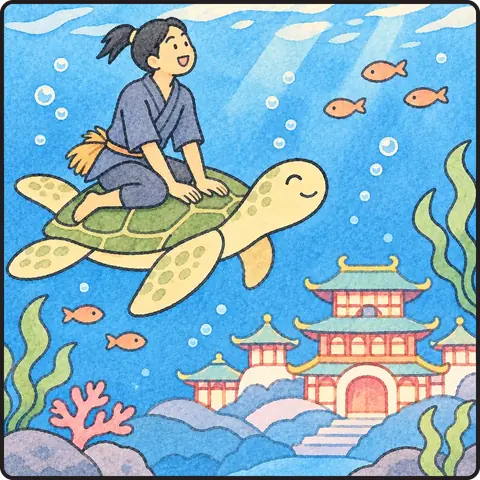
A young man from a village by the sea sees some children bullying a turtle.
- ~8 minutes
- 18 sentences
- 592 characters
- 35 kanji
- 2 N3 words
Every word and every kanji is checked against the lists of N4 and the levels below; 2 words from N3, flagged in the vocabulary. How we check →
The story
むかし むかし、海の 近くの むらに、うらしまたろうという わかい 男が 住んでいました。
Long ago, in a village near the sea, there lived a young man called Urashima Tarō.
たろうが 海の そばを 歩いていると、子どもたちが 大きな かめを いじめていました。
As Tarō was walking by the sea, some children were bullying a big turtle.
たろうは 子どもたちに お金を あげて、かめを 海に かえしてやりました。
Tarō gave the children some money and let the turtle go back into the sea.
何日か して、たろうが 海で 魚を つっていると、その かめが 出てきました。
A few days later, while Tarō was fishing in the sea, the turtle appeared.
「この間は ありがとうございました。おれいに、りゅうぐうじょうという ところへ ごあんないします」
"Thank you for the other day. To thank you, I will take you to a place called Ryugu-jo."
たろうは かめの せなかに のって、海の 中へ 入っていきました。
Tarō climbed onto the turtle's back and went down into the sea.
りゅうぐうじょうでは、うつくしい おとひめさまが むかえてくれました。
At Ryugu-jo, the beautiful Princess Otohime welcomed him.
ごちそうを 食べたり、魚たちの おどりを 見たり して、ゆめの ように 楽しい 三年が すぎました。
He ate feasts and watched the fish dance, and three years went by, as happy as a dream.
けれども、たろうは むらに いる 母の ことを 思い出しました。
But then Tarō remembered his mother back in the village.
「母が 待っています。もう 帰らなければ なりません」
"My mother is waiting for me. I must go home now."
おとひめさまは さびしそうに、おみやげに 小さな はこを わたしました。
Looking sad, Princess Otohime gave him a little box as a gift.
「でも、この はこは けっして 開けないで くださいね」
"But please never open this box."
むらに 帰ると、母の 家は なくなっていて、知っている 人も いませんでした。
When he got back to the village, his mother's house was gone, and there was no one he knew.
おじいさんに 聞くと、「うらしまたろう?それは 三百年も 前の 人ですよ」と 言われました。
When he asked an old man, he was told: "Urashima Tarō? That's someone from three hundred years ago!"
りゅうぐうじょうの 三年は、むらの 三百年だったのです。
The three years at Ryugu-jo had been three hundred years in the village.
かなしく なった たろうは、やくそくを わすれて、はこを 開けてしまいました。
Overcome with sadness, Tarō forgot his promise and opened the box.
すると、はこから 白い けむりが 出てきて、たろうは 白い ひげの おじいさんに なってしまいました。
Then white smoke came out of the box, and Tarō turned into an old man with a white beard.
海だけは、むかしと 同じでした。
Only the sea was the same as in the old days.
Did you understand?
-
1 たろうは、子どもたちに お金を あげて、かめを どう しましたか。
After giving the children money, what did Tarō do with the turtle?
See the answer
Answer: 2. 海に かえしました He returned it to the sea.
-
2 たろうが りゅうぐうじょうに いた あいだに、むらでは 何年 すぎましたか。
While Tarō was at Ryugu-jo, how many years went by in the village?
See the answer
Answer: 4. 三百年 three hundred years
-
3 たろうが はこを 開けると、何が 出てきましたか。
When Tarō opened the box, what came out?
See the answer
Answer: 3. 白い けむり white smoke

Next story
 はじめてのアルバイト
First Part-Time Job
Ken starts a part-time job at a ramen shop near the station.
Tappable words, synthetic voice and review.
About this tale
Urashima Tarō (浦島太郎) is one of the oldest stories in Japan. The Nihon shoki, a chronicle completed in 720, already mentions a fisherman, Urashimako, who caught a turtle that turned into a woman, and went to sea with her, as far as Hōrai, the land of the immortals. The Man’yōshū, Japan’s oldest poetry anthology (8th century), tells his story in a long poem. Over the centuries, the tale kept changing: in the Otogizōshi, short illustrated stories of the Muromachi period (14th to 16th centuries), the hero is already called Urashima Tarō, and the version Japanese children know today took shape in the books and schools of the Meiji era (1868-1912).
A kind young man from a village by the sea, Urashima Tarō, sees some children tormenting a turtle on the beach, and he lets it go back into the sea. A few days later, while he is fishing, the turtle comes back to thank him and carries him on its back to Ryūgū-jō, the Dragon Palace beneath the sea. There, Princess Otohime welcomes him: feasts, fish that dance for him, and three years that slip by like a happy dream. But Tarō begins to think of his mother, waiting in the village. When he decides to go home, Otohime sadly gives him a small box, the famous tamatebako, with one warning: he must never open it.
Urashima Tarō is less about reward than about time: the time that passes, and the past we can never return to. It is often compared to Rip Van Winkle, and in Japanese, the slowing of time described by Einstein’s relativity is even nicknamed the "Urashima effect" (ウラシマ効果). hinoko tells the classic story at JLPT N4 level, in 18 sentences: a good first folktale if you are still at N5 or N4. The tamatebako simply becomes "a small box", 小さなはこ. You will practice 〜という (called…), 〜と (when, if) and 〜てしまう (to end up doing, often with regret), and only two words go beyond N4, including かめ (kame, turtle).
Grammar in this story
-
〜という "Called, named" (Aという B); also joins a statement to a noun: "the news that…".
むかし むかし、海の 近くの むらに、うらしまたろうという わかい 男が 住んでいました。
Long ago, in a village near the sea, there lived a young man called Urashima Tarō.
-
〜と(条件) Dictionary form + と: "when A, (always) B", a natural or automatic result.
たろうが 海の そばを 歩いていると、子どもたちが 大きな かめを いじめていました。
As Tarō was walking by the sea, some children were bullying a big turtle.
-
〜てしまう Te-form + しまう: do something completely, or with regret (by mistake); spoken: 〜ちゃう.
かなしく なった たろうは、やくそくを わすれて、はこを 開けてしまいました。
Overcome with sadness, Tarō forgot his promise and opened the box.
Vocabulary 79 words
- むかし
- the old days, long ago
- 海 うみ
- sea
- 近く ちかく
- near, nearby
- むら
- village
- わかい
- young
- 男 おとこ
- man; 男の 方 = "a gentleman" (polite)
- 住む すむ
- to live (somewhere)
- そば
- beside, near
- 歩く あるく
- to walk
- 子ども こども
- child; 子どもの とき = "as a child"
- たち
- (after a noun) plural: どうぶつたち = "the animals"
- 大きな おおきな
- big (always before a noun)
- かめ N3
- turtle
- いじめる
- to bully, to be cruel to
- お金 おかね
- money
- あげる
- to give (to someone else)
- かえす
- to give back, to return
- 何日 なんにち
- how many days?; what day (of the month)?
- する
- to do
- 魚 さかな
- fish
- つる
- to fish (with a line); 魚が つれる = "the fish are biting"
- その
- that (already mentioned, or near the listener)
- 出る でる
- to go out, to leave
- この間 このあいだ
- the other day, recently
- ありがとうございました
- thank you very much (polite, for something done)
- おれい
- thanks; おれいを する = "to thank someone (with a gesture, a gift)"
- ところ
- place; ゆいの ところ = "where Yui is"
- あんない
- (〜する) to guide, to show the way
- せなか
- back; 父の 背中を 見て 育つ = "to grow up following one's father's example"
- のる
- to get on, to ride, to take (a bus)
- 中 なか
- inside
- 入る はいる
- to enter, to come in
- うつくしい
- beautiful
- さま
- (after a noun) mark of great respect
- むかえる
- to welcome; (正月を 迎える) to see in the New Year
- ごちそう
- feast, treat; (〜する) to treat someone to a meal
- 食べる たべる
- to eat
- おどり
- dance
- 見る みる
- to look, to see
- ゆめ
- dream
- 楽しい たのしい
- fun, enjoyable; (of a person) having fun
- 三 さん
- three
- 年 ねん
- year (counter): 五十年 = "fifty years"
- すぎる
- to pass (time); to go past
- いる
- to be, to exist (living things)
- 母 はは
- my mother
- こと
- thing, matter; いい こと = "a good thing"
- 思い出す おもいだす
- to remember, to recall
- 待つ まつ
- to wait
- もう
- already; (with a negative) no longer
- 帰る かえる
- to go home, to return
- さびしい
- lonely; sad (feeling something is missing)
- おみやげ
- gift, souvenir (to take home)
- 小さな ちいさな
- small, little (always before a noun)
- はこ
- box
- わたす
- to hand (over)
- でも
- but
- この
- this… (near me, or the one just mentioned)
- けっして
- (with a negative) never, by no means
- 開ける あける
- to open
- 家 いえ
- house, home
- なくなる
- to run out, to be gone
- 知る しる
- to know; you say しっています
- 人 ひと
- person; ゆうびんきょくの 人 = "the post office clerk"
- おじいさん
- old man; grandfather
- 聞く きく
- to listen; to ask
- それ
- that (near the listener, or already mentioned)
- 百 ひゃく
- one hundred (100)
- 前 まえ
- front; before (入る 前に = "before going in")
- 言う いう
- to say
- かなしい
- sad
- なる
- to become
- やくそく
- promise; (〜する) to promise
- わすれる
- to forget
- すると
- then, thereupon (what follows happens right after)
- 白い しろい
- white
- けむり N3
- smoke
- ひげ
- whiskers (of a cat); beard
- 同じ おなじ
- the same