 hinoko
はじめてのアルバイト First Part-Time Job
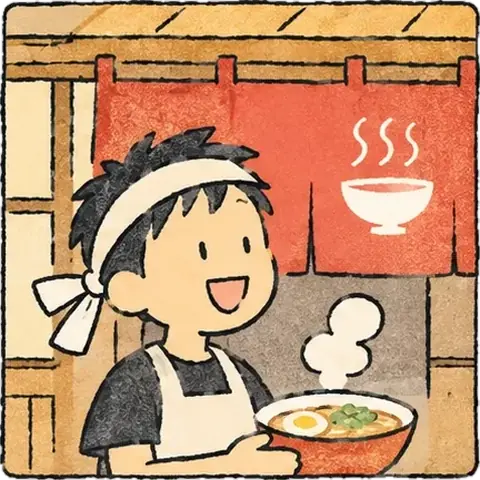
Ken starts a part-time job at a ramen shop near the station.
- ~6 minutes
- 14 sentences
- 410 characters
- 26 kanji
- 0 N3 words
Every word and every kanji is checked against the lists of N4 and the levels below; no word from a higher level. How we check →
The story
けんは 駅の 前の 小さい ラーメン屋で アルバイトを 始めました。
Ken started a part-time job at a small ramen shop in front of the station.
店長は 「おきゃくさんが 来たら、大きな こえで あいさつしてね」と 言いました。
The manager said, "When a customer comes in, greet them in a loud voice, okay?"
さいしょの おきゃくさんに、けんは 「いらっしゃいませ……」と 言いました。
To the first customer, Ken said, "Welcome…"
「聞こえないよ。もっと 大きく!」と 店長が 言いました。
"I can't hear you! Louder!" said the manager.
つぎの おきゃくさんが 来た とき、けんは 店の 外まで 聞こえる こえで 「いらっしゃいませ!」と 言いました。
When the next customer came in, Ken said "Welcome!" in a voice you could hear all the way outside.
店の 中の おきゃくさんは みんな おどろいて、それから わらいました。
All the customers in the shop were startled, and then they laughed.
昼は とても いそがしかったです。
Lunchtime was very busy.
「けんくん、ラーメン 三つ、運べる?」と 店長が 聞きました。
"Ken, can you carry three ramen?" asked the manager.
「はい、運べます!」
"Yes, I can!"
でも、けんは テーブルの 前で 一つ おとしてしまいました。
But in front of the table, Ken dropped one.
夜、おきゃくさんが みんな 帰ってから、店長が ラーメンを 作ってくれました。
In the evening, after all the customers had left, the manager made him some ramen.
仕事の あとの ラーメンは、世界で いちばん おいしかったです。
That ramen after work was the best in the world.
帰る とき、けんは まちがえて 「いらっしゃいませ!」と 言ってしまいました。
As he was leaving, Ken said "Welcome!" by mistake.
店長は わらって、「明日も その こえで たのむよ」と 言いました。
The manager laughed and said, "I'm counting on that voice tomorrow, too!"
Did you understand?
-
1 けんが 大きな こえで あいさつした とき、店の おきゃくさんは どう しましたか。
When Ken greeted them in a loud voice, what did the customers in the shop do?
See the answer
Answer: 3. わらいました。 They laughed.
-
2 けんは ラーメンを いくつ おとしてしまいましたか。
How many ramen did Ken drop?
See the answer
Answer: 1. 一つ one
-
3 帰る とき、けんは 何と 言いましたか。
As he was leaving, what did Ken say?
See the answer
Answer: 2. 「いらっしゃいませ」 "Welcome"

Next story
 きょうとの地図
The Kyoto Map
On a school trip to Kyoto, Ken leads his two friends to a famous temple. He's the one holding the map.
Tappable words, synthetic voice and review.
Grammar in this story
-
〜てしまう Te-form + しまう: do something completely, or with regret (by mistake); spoken: 〜ちゃう.
でも、けんは テーブルの 前で 一つ おとしてしまいました。
But in front of the table, Ken dropped one.
-
〜と言う Quote + と言う: reports what someone says; と also goes with 聞く, 答える.
店長は 「おきゃくさんが 来たら、大きな こえで あいさつしてね」と 言いました。
The manager said, "When a customer comes in, greet them in a loud voice, okay?"
-
可能形 Potential form, "can, be able to" (書ける, 食べられる); the object often takes が.
「けんくん、ラーメン 三つ、運べる?」と 店長が 聞きました。
"Ken, can you carry three ramen?" asked the manager.
Vocabulary 53 words
- はじめて
- for the first time
- 駅 えき
- station
- 前 まえ
- front; before (入る 前に = "before going in")
- 小さい ちいさい
- small, little
- ラーメン
- ramen (noodle soup)
- 屋 や
- shop, after what it sells: はなや = "flower shop"
- アルバイト
- part-time job
- 始める はじめる
- to start, to begin (something)
- 店長 てんちょう
- manager (of a shop or restaurant)
- おきゃくさん
- customer
- 来る くる
- to come
- 大きな おおきな
- big (always before a noun)
- こえ
- voice
- あいさつ
- greeting; (〜する) to greet
- する
- to do
- 言う いう
- to say
- さいしょ
- the first; at first
- 聞こえる きこえる
- to be heard, to be audible
- もっと
- more, even more
- 大きい おおきい
- big
- つぎ
- next; つぎの あさ = "the next morning"
- とき
- time; 〜とき = "when…"
- 店 みせ
- shop, store; restaurant
- 外 そと
- outside
- 中 なか
- inside
- みんな
- everyone; all
- おどろく
- to be surprised
- それから
- and then, after that
- わらう
- to laugh, to smile
- 昼 ひる
- noon; daytime
- とても
- very
- いそがしい
- busy
- くん
- friendly, familiar suffix after the name of a boy or young man
- 三つ みっつ
- three (things)
- 運ぶ はこぶ
- to carry
- 聞く きく
- to listen; to ask
- はい
- yes
- でも
- but
- テーブル
- table
- 一つ ひとつ
- one (thing)
- おとす
- to drop; to lose (by dropping it)
- 夜 よる
- night, evening
- 帰る かえる
- to go home, to return
- 作る つくる
- to make
- 仕事 しごと
- work, job
- あと
- after; the rest (あと 一つ = "one left"; あと 五分 = "five more minutes")
- 世界 せかい
- the world
- いちばん
- the most; いちばん 上 = "the very top"
- おいしい
- delicious, tasty
- まちがえる
- to make a mistake; (〜て) by mistake
- 明日 あした
- tomorrow
- その
- that (already mentioned, or near the listener)
- たのむ
- to ask (a favor); to count on someone