 hinoko
きょうとの地図 The Kyoto Map
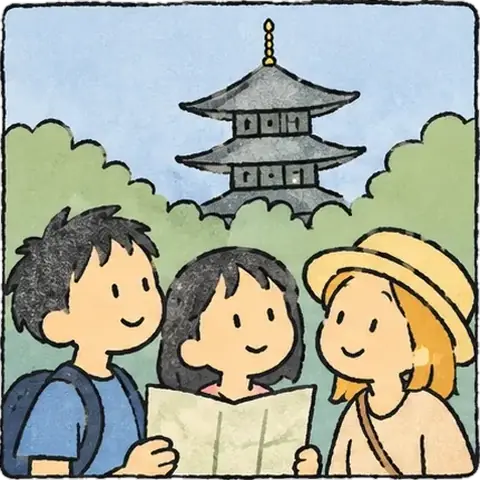
On a school trip to Kyoto, Ken leads his two friends to a famous temple. He's the one holding the map.
- ~5 minutes
- 15 sentences
- 372 characters
- 33 kanji
- 0 N3 words
Every word and every kanji is checked against the lists of N4 and the levels below; no word from a higher level. How we check →
The story
学校の 旅行で、けんたちは きょうとへ 行きました。
On a school trip, Ken and his classmates went to Kyoto.
けんと ゆいと マリアは、駅から 有名な おてらまで 歩く ことに しました。
Ken, Yui and Maria decided to walk from the station to a famous temple.
けんは 地図を 持って、「だいじょうぶ。ぼく、地図は 読めるから」と 言いました。
Holding the map, Ken said, "Don't worry. I can read maps."
でも、三十分 歩いたら、道が 分からなく なってしまいました。
But after walking for thirty minutes, they no longer knew which way to go.
マリアは 「もう 歩けない」と 言って、すわってしまいました。
Maria said, "I can't walk anymore," and sat down.
けんは 地図を 見て、「おかしいなあ」と 思いました。
Ken looked at the map and thought, "That's strange…"
その とき、ゆいが 古い いしを 見つけました。
Just then, Yui found an old stone.
いしには、むずかしい 漢字が 書いてありました。
There were difficult kanji written on the stone.
けんは 「ゆい、これ、読める?」と 聞きました。
Ken asked, "Yui, can you read this?"
「うん。おてらは あっちって 書いてある」
"Yeah. It says the temple's that way."
ゆいは けんの 地図を 見て、わらいだしました。
Yui looked at Ken's map and burst out laughing.
「けん、地図の 北が 下に なってるよ!」
"Ken, north is at the bottom of the map!"
三人は 来た 道を もどりました。
The three of them went back the way they had come.
おてらに 着いたら、先生が 「おそかったですね」と 言いました。
When they reached the temple, the teacher said, "You're late."
けんは 小さい こえで 「きょうとの 地図は、むずかしいんです」と 答えました。
Ken answered in a small voice, "Kyoto maps are just difficult."
Did you understand?
-
1 けんの 地図は どう なっていましたか。
Which way up was Ken's map?
See the answer
Answer: 3. 北が 下に なっていました。 North was at the bottom.
-
2 いしの 漢字を 読んだ 人は だれですか。
Who read the kanji on the stone?
See the answer
Answer: 4. ゆい Yui
-
3 おてらに 着いた とき、先生は 何と 言いましたか。
What did the teacher say when they reached the temple?
See the answer
Answer: 2. 「おそかったですね」 "You're late."

Next story
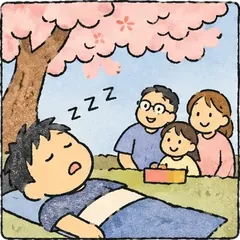 花見のばしょ
The Hanami Spot
Ken's father gives him a job for Sunday's picnic under the cherry blossoms.
Tappable words, synthetic voice and review.
Grammar in this story
-
可能形 Potential form, "can, be able to" (書ける, 食べられる); the object often takes が.
けんは 地図を 持って、「だいじょうぶ。ぼく、地図は 読めるから」と 言いました。
Holding the map, Ken said, "Don't worry. I can read maps."
-
〜たら Ta-form + ら: "if", or "when, once" A has happened, then B.
でも、三十分 歩いたら、道が 分からなく なってしまいました。
But after walking for thirty minutes, they no longer knew which way to go.
-
〜てしまう Te-form + しまう: do something completely, or with regret (by mistake); spoken: 〜ちゃう.
マリアは 「もう 歩けない」と 言って、すわってしまいました。
Maria said, "I can't walk anymore," and sat down.
Vocabulary 52 words
- 学校 がっこう
- school
- 旅行 りょこう
- trip, travel
- たち
- (after a noun) plural: どうぶつたち = "the animals"
- きょうと
- Kyoto, the old capital
- 行く いく
- to go
- 駅 えき
- station
- 有名 ゆうめい
- famous
- おてら
- (Buddhist) temple
- 歩く あるく
- to walk
- する
- to do
- 地図 ちず
- map
- 持つ もつ
- to hold, to carry
- だいじょうぶ
- all right, okay
- ぼく
- I, me (boys and men, casual)
- 読む よむ
- to read
- 言う いう
- to say
- でも
- but
- 三 さん
- three
- 十 じゅう
- ten
- 分 ふん
- minute: 五分 = "five minutes"
- 道 みち
- path, road
- 分かる わかる
- to understand, to know
- なる
- to become
- もう
- already; (with a negative) no longer
- すわる
- to sit down
- 見る みる
- to look, to see
- おかしい
- strange, odd; funny
- 思う おもう
- to think, to believe
- その
- that (already mentioned, or near the listener)
- とき
- time; 〜とき = "when…"
- 古い ふるい
- old (for things)
- いし
- stone
- 見つける みつける
- to find, to discover
- むずかしい
- difficult
- 漢字 かんじ
- kanji, Chinese character
- 書く かく
- to write
- これ
- this (near me)
- 聞く きく
- to listen; to ask
- うん
- yeah, yes (casual)
- あっち
- that way, over there (casual あちら)
- わらう
- to laugh, to smile
- 北 きた
- north
- 下 した
- under, below
- 人 にん
- (after a number) counter for people: 三人 = "three people"
- 来る くる
- to come
- もどる
- to return, to go back (to a place, a state)
- 着く つく
- to arrive
- 先生 せんせい
- teacher
- おそい
- late; おそく = "late" (adverb)
- 小さい ちいさい
- small, little
- こえ
- voice
- 答える こたえる
- to answer