 hinoko
JLPT N2 reading practice: a test and advanced stories

90 stories · 10 free · about 12 min each
N2 is close to the Japanese you read every day: articles, essays, letters. These 90 stories use words and kanji up to N2 (986 kanji), the written style and the nuanced grammar of the level, with at most 2 N1 words in a story, flagged in their card.
JLPT N2 reading practice test

3 questions in the format of the reading part of the exam (読解, dokkai), on texts written for this page. Pick an answer and the explanation appears.
Text 1
以下は、ある会社の社員に届いたメールである。
件名:会議室の予約方法の変更について
社員各位
来月一日より、会議室の予約は社内システムからのみ受け付けることになりました。これまでのように総務部へ電話で申し込むことはできなくなりますので、ご注意ください。なお、十名以上で利用する大会議室については、システムで予約した後、利用日の三日前までに、利用目的を総務部へメールでお知らせください。
総務部 佐藤
Show the translation
Below is an email received by the employees of a company.
Subject: Change in how meeting rooms are booked
To all staff
From the first of next month, meeting rooms can only be booked through the internal system. You will no longer be able to book by calling General Affairs as before, so please take note. Also, for the large meeting room, used by ten people or more, please book it in the system and then email General Affairs the purpose of the meeting at least three days before the date.
Sato, General Affairs
-
1大会議室を使いたい人は、どうしなければならないか。
See the answer
Answer: 4. For the large room, the order matters: book in the system first (システムで予約した後), then email the purpose at least three days before the date. Phone bookings stop next month, and option 3 reverses the order.
Text 2
子どものころ、私は失敗するのが何より怖かった。テストで間違えるのも、人前で話して笑われるのも嫌で、自信のないことには最初から手を出さなかった。そうしていれば恥をかくことはないが、その代わり、新しいことは何一つ身につかなかった。
考え方が変わったのは、大学の寮で留学生と暮らすようになってからだ。彼らの多くは、間違いを気にせず、どんどん日本語で話しかけてきた。文法がめちゃくちゃでも、言いたいことは不思議と伝わる。半年もたつと、彼らの日本語は驚くほど上達していた。一方、間違えないようにと黙っていた私の英語は、ほとんど進歩していなかった。
失敗を避けることは、失敗から学ぶ機会を自分から捨てることでもある。今では、うまくいかなかった経験こそが一番の先生だと思っている。
Show the translation
As a child, I feared failure more than anything. I hated making mistakes on tests and being laughed at when I spoke in front of others, so I never even tried anything I wasn't sure of. That way I never embarrassed myself, but in exchange I never learned anything new.
My thinking changed when I started living with international students in a university dormitory. Many of them kept talking to me in Japanese without worrying about mistakes. Even when their grammar was a mess, what they meant somehow got across. Within six months their Japanese had improved remarkably. My English, meanwhile, which I kept to myself so as not to make mistakes, had barely progressed.
Avoiding failure also means throwing away, by your own choice, the chance to learn from it. Today I believe that the experiences that went wrong are the best teacher.
-
2筆者の考え方が変わったきっかけは何か。
See the answer
Answer: 1. The turning point is life in the dormitory: the international students spoke without fearing mistakes and improved fast, while the writer's own English, kept silent, did not. The text never mentions a failed test or English lessons.
-
3筆者が一番言いたいことは何か。
See the answer
Answer: 3. The last paragraph states the main point: avoiding failure means giving up the chance to learn from it. Option 2 is the writer's old attitude, and option 4 is only the example, not the lesson.

The 90 N2 stories
Hide the furigana and look up a reading only when you need it, word by word. Keep the expressions you want to reuse: they come back for review with their sentence.
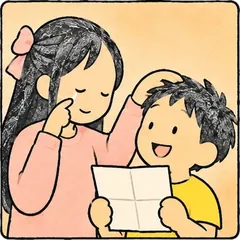
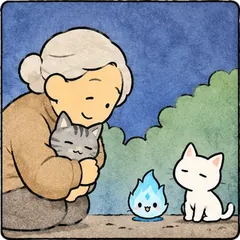
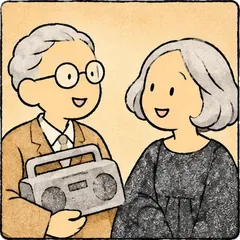
なぞLittle mysteries
0/3
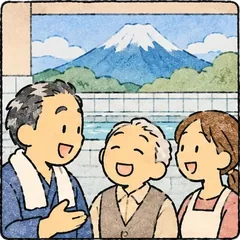
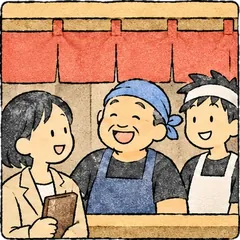
働く 人たちPeople at work
0/3
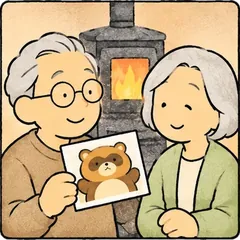
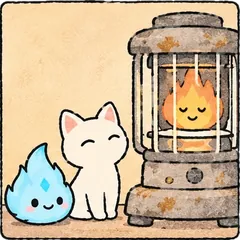
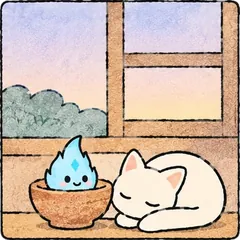
ひのこHinoko
0/2

80 more N2 stories with Premium

























Grammar in these stories
The grammar points these stories use most, each linked to its explanation in our JLPT grammar lists, often with an example.
- 〜につけ Dictionary form + につけ: "every time…", with a feeling that comes back (見るにつけ).
- 〜一方で Plain form + 一方で: "while, on the other hand", sets two sides side by side (便利な一方で, "handy, yet…").
- 〜ものの Plain form + ものの: "although…, true… but": admits a fact, then what follows falls short.
- いまだに いまだに (未だに): "still, even now", even after a long time (いまだに覚えている, "still remembers").
- 〜かのように Plain form + かのように: "as if…", though it is not really the case.
- 〜かと思ったら Ta-form + かと思ったら: "no sooner… than", or "just when I thought…", with a surprise.
- 〜て以来 Te-form + 以来: "ever since", a state that has lasted from that point (日本に来て以来, "ever since I came to Japan").
- 〜てならない Te-form + ならない: "terribly, can’t help feeling…", for feelings (不思議でならない).
- 〜からして Noun + からして: "starting with, even…" (a first, telling example), or "judging from…".
- 〜にわたって Noun + にわたって: "over, throughout" a period or an area (五十年にわたって, "over fifty years").
- 〜に応じて Noun + に応じて: "according to, depending on", adjusting to it (気温に応じて).
- 〜ことなく Dictionary form + ことなく: "without (ever) doing…"; written (休むことなく, "without a break").
The reading part of the N2 exam
At the exam, reading (読解, dokkai) has no time of its own: it shares the 105 minutes of the section “Language knowledge (vocabulary and grammar) and reading” with the vocabulary and grammar questions. It has about 21 questions of five kinds, each with four choices:
| Kind of question | What you read | Length | Questions |
|---|---|---|---|
| 内容理解(短文)Comprehension (short passages)Text 1 of the test above | Short explanations or instructions about daily life or work. | about 200 characters | 5 |
| 内容理解(中文)Comprehension (mid-size passages)Text 2 of the test above | A commentary, review or essay on a fairly simple topic: causes and reasons, the outline and the author’s view. | about 500 characters | 9 |
| 統合理解Integrated comprehension | Several short texts on the same subject, to compare and bring together. | about 600 characters in all | 2 |
| 主張理解(長文)Thematic comprehension (long passage) | An opinion piece: what the author argues, and why. | about 900 characters | 3 |
| 情報検索Information retrieval | Ads, brochures or business documents: find what you need in them. | about 700 characters | 2 |
Lengths: approximate number of Japanese characters, as set by the JLPT for each kind of text. Questions: indicative numbers, which can vary slightly from one session to another. Sources on jlpt.jp: test times, number of questions (official test composition, in Japanese), length of the texts (in Japanese).
- Official sample questions (jlpt.jp) ↗
Free, from the organizers of the JLPT.
- JLPT N2: test format, question types and pass mark
Every section of the exam, its time and the pass mark.
How many kanji and words for N2?

In our lists, N2 adds 1,803 new words and 369 kanji, for about 5,329 words and 986 kanji in all, plus 201 grammar points, many of them typical of written Japanese. Its vocabulary list has 1,905 words, but 102 of them repeat a word already counted. The JLPT has published no official list of words or kanji since 2010: these figures are based on the lists compiled by Jonathan Waller, which many learners use.
 718 words in all +718 new words 97 grammar points 50 stories
 1,386 words in all +668 new words 165 grammar points 48 stories
 3,526 words in all +2,140 new words 251 grammar points 91 stories
 This page 5,329 words in all +1,803 new words 201 grammar points 90 stories
Together, our 279 stories from N5 to N2 use 1,902 of the 1,905 words of the JLPT N2 vocabulary list (the 3 others are not in our stories, which don’t talk about alcoholic drinks, tobacco or suicide, and are still on the JLPT list) and its 201 grammar points: read them all and you have met the level in context.
Learn them by reading rather than by heart: in the stories, the most useful words come back again and again, in context. The lists below are there to check what is left; 118 of the 1,905 words of the vocabulary list link to a free story where they appear.
Reading without rōmaji, and when to hide the furigana
Kana, not rōmaji
At N2, texts look like those written for Japanese readers: kanji and kana, no rōmaji. The effort moves to kanji compounds, which you learn to read at a glance.
When to hide the furigana
Read with the furigana hidden from the start, and look up a reading only for the word that blocks you. If you still need them for most kanji, the N3 stories are a better place to build that habit.
Is N2 the right level for you?
N2 is your level if:
- you read N3 stories easily, with the furigana hidden;
- you can follow an article or an essay, not just a story;
- written expressions such as 〜ものの, 〜にほかならない or 〜ざるを得ない are still new to you;
- the test above is within reach without the translation.
Questions about reading at N2
How long is the reading part of the JLPT N2?
Reading has no time of its own: it shares the 105 minutes of the section “Language knowledge (vocabulary and grammar) and reading” with the vocabulary and grammar questions.
What kinds of texts are in the JLPT N2 reading part?
Five kinds of questions, each with four choices: short texts (about 200 characters), mid-size texts (about 500 characters), texts to compare (about 600 characters in all), an opinion piece (about 900 characters), and a document to search for information (about 700 characters).
How many reading questions are there in the JLPT N2?
About 21 questions: 5 on short texts, 9 on mid-size texts, 2 on texts to compare, 3 on an opinion piece, and 2 on a document to search for information. These are the JLPT’s indicative numbers; a session can differ slightly.
Are the texts on this page real JLPT questions?
No: the test and the stories are original texts, written for N2. The questions follow the format of the exam, and the official sample questions are free on jlpt.jp.
Can I practice JLPT N2 reading for free?
Yes: the test at the top of this page and 10 of the 90 N2 stories are free to read online, without an account.
How long does it take to read an N2 story?
About 12 minutes on average, for a story of about 23 sentences.
Didn’t find your answer?
Write to us at contact@hinoko-japanese.com: we answer in English or French.