 hinoko
月曜日のしおり The Monday Bookmark
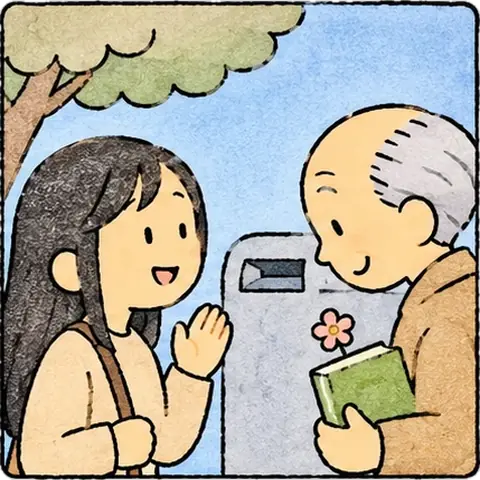
At the library where Yui works, a book returned every Monday holds a bookmark made from a pressed flower.
- ~11 minutes
- 19 sentences
- 804 characters
- 96 kanji
- 0 N1 words
Every word and every kanji is checked against the lists of N2 and the levels below; no word from a higher level. How we check →
Too hard? Try the N3 stories or the N4 stories.
The story
春に 市立図書館で アルバイトを 始めて 以来、ゆいは ずっと 不思議に 思っている ことが あった。
Ever since she had started a part-time job at the municipal library in the spring, something had been puzzling Yui.
毎週 月曜日の 朝一番に、へんきゃくポストを 開けると、押し花の しおりが 挟まった 本が 一冊 入っているのだ。
Every Monday, when the book drop was opened first thing in the morning, there was one book in it with a pressed-flower bookmark tucked inside.
花は チューリップの ときも あれば、名前の 分からない 小さな 白い 花の ときも あった。
Sometimes it was a tulip, sometimes a small white flower whose name she didn't know.
せんぱいの 中村さんは 「しおりを 挟んだ まま 返しちゃった だけに決まってるよ」と 笑った。
Her senior colleague, Nakamura-san, laughed. "Someone just returned it with the bookmark still inside, obviously."
せんぱいの 言う ことも 分からなくは ない ものの、毎週 同じ 曜日に しおりを 忘れる 人など、いる だろうか。
Yui could see the point, but would anyone really forget a bookmark every week, on the same day?
しおりの 裏には、花の 名前と 日付が えんぴつで 小さく 書いてあった。
On the back of each bookmark, the name of the flower and a date were written small, in pencil.
子どもの ころ、ゆいも この 図書館の 本に 挟まった 同じ ような しおりを 見つけては、喜んだ ものだ。
As a child, Yui too used to find similar bookmarks in this library's books, and each time she was delighted.
その しおりを いつの間にか 見かけなく なり、すっかり 忘れていたのだ。
Then, at some point, she had stopped coming across them, and she had forgotten them completely.
ただ、作り方は 家に 一枚だけ 残っていた 昔の しおりと 同じな ものの、裏の 字が 違っていた。
But although they were made just like the one old bookmark she still had at home, the handwriting on the back was different.
昔の 細くて きれいな 字が、今は 大きくて 少し 震えている ところを見ると、どうやら 別の 人が 作っている らしい。
Since the once fine, neat handwriting was now large and a little shaky, it seemed that someone else was making them.
週末、ゆいが この 話を すると、駅前の コンビニで 長年 働いていた やまださんは、しばらく 考えてから 口を 開いた。
That weekend, when Yui told this story to Yamada-san, who had worked for many years at the konbini by the station, he thought for a while before he spoke.
「そういえば、庭の 花と 図書館の 本の 話ばかり する お客さんが いたなあ」
"Come to think of it, there was a customer who only ever talked about the flowers in her garden and the books from the library."
「何年か 入院した あと、去年の 冬に 亡くなってね。それをきっかけに、花なんか 育てた ことも ない ご主人が、庭の 世話を 始めた そうだよ」
"After a few years in the hospital, she passed away last winter. Since then, I hear, her husband, who had never grown a single flower, has been looking after the garden."
次の 月曜日、ゆいが 朝 早く ポストの そばで 待っていると、おじいさんが 一人 歩いてきた。
The following Monday, as Yui waited by the book drop early in the morning, an old man came walking up.
手に した 本から 押し花の しおりが 少し 出ている ところを見ると、どうやら この 人 らしい。
Judging by the pressed-flower bookmark sticking out a little from the book in his hand, it seemed to be him.
ゆいが 声を かけると、おじいさんは 恥ずかしそうに 「妻が 好きだった 本を、一冊ずつ 読んでいるんです」と 言った。
When Yui spoke to him, he said, a little embarrassed, "I'm reading the books my wife loved, one at a time."
「次に 読む 人が 喜ぶ からと、妻は いつも しおりを 入れていたんですよ」
"My wife always put one in. She said it would make the next reader happy."
ゆいが 子どもの ころの 話を すると、おじいさんは 目を 赤く して、「妻に 聞かせてやりたかったなあ」と 小さな 声で 言った。
When Yui told him about her childhood, the old man's eyes reddened, and he said quietly, "I wish my wife could have heard that."
その 朝 返された 本を、最初に 借りたのは ゆいだった。
The book returned that morning was borrowed first by Yui.
Did you understand?
-
1 ゆいが 「今は 別の 人が しおりを 作っている」と 考えたのは なぜか。
Why did Yui think that someone else was making the bookmarks now?
See the answer
Answer: 3. しおりの 字が 昔と 違っていたから。 Because the bookmarks' handwriting had changed.
-
2 「それをきっかけに」の 「それ」は どんな ことか。
In "それを きっかけに", what does "それ" refer to?
See the answer
Answer: 1. 奥さんが 亡くなった こと His wife's death
-
3 おじいさんが 本に しおりを 入れていたのは なぜか。
Why did the old man put bookmarks in the books?
See the answer
Answer: 4. 奥さんが していた ことを 続けたかったから。 Because he wanted to carry on what his wife used to do.

Next story
 けんの一週間
Ken's Week
The manager of the ramen shop is in the hospital: for a week, Ken has to run the shop on his own.
Tappable words, synthetic voice and review.
Grammar in this story
-
どうやら どうやら: "apparently, it seems" (with らしい or ようだ); also "somehow, just barely".
昔の 細くて きれいな 字が、今は 大きくて 少し 震えている ところを見ると、どうやら 別の 人が 作っている らしい。
Since the once fine, neat handwriting was now large and a little shaky, it seemed that someone else was making them.
-
〜ところを見ると Plain form + ところを見ると: "seeing that…, judging from": a guess (often with らしい).
手に した 本から 押し花の しおりが 少し 出ている ところを見ると、どうやら この 人 らしい。
Judging by the pressed-flower bookmark sticking out a little from the book in his hand, it seemed to be him.
-
〜ものの Plain form + ものの: "although…, true… but": admits a fact, then what follows falls short.
せんぱいの 言う ことも 分からなくは ない ものの、毎週 同じ 曜日に しおりを 忘れる 人など、いる だろうか。
Yui could see the point, but would anyone really forget a bookmark every week, on the same day?
Vocabulary 122 words
- 春 はる
- spring
- 市立 しりつ
- municipal (run by the city)
- 図書館 としょかん
- library
- アルバイト
- part-time job
- 始める はじめる
- to start, to begin (something)
- 以来 いらい
- (〜て以来) ever since
- ずっと
- all the time; for a long time
- 不思議 ふしぎ
- strange, mysterious; 不思議でならない = "can't get over it"
- 思う おもう
- to think, to believe
- こと
- thing, matter; いい こと = "a good thing"
- ある
- there is, to be (for things)
- 毎週 まいしゅう
- every week; 毎週 土曜日 = "every Saturday"
- 月曜日 げつようび
- Monday
- 朝一番 あさいちばん
- first thing in the morning
- へんきゃく
- return (of something borrowed); へんきゃくポスト = book drop
- ポスト
- mailbox; drop box
- 開ける あける
- to open
- 押し花 おしばな
- pressed flower (dried between the pages of a book)
- しおり
- bookmark
- 挟まる はさまる
- to be tucked, caught (between two things)
- 本 ほん
- book
- 一 いち
- one
- 冊 さつ
- (counter for books, notebooks): 一冊 = "one book"
- 入る はいる
- to enter, to come in
- 花 はな
- flower
- チューリップ
- tulip
- とき
- time; 〜とき = "when…"
- 名前 なまえ
- name
- 分かる わかる
- to understand, to know
- 小さな ちいさな
- small, little (always before a noun)
- 白い しろい
- white
- せんぱい
- senior (colleague)
- さん
- Mr., Ms. (polite, after a name)
- 挟む はさむ
- to put between, to tuck in
- 返す かえす
- to give back, to return
- 笑う わらう
- to laugh, to smile
- 言う いう
- to say
- 同じ おなじ
- the same
- 曜日 ようび
- day of the week
- 忘れる わすれる
- to forget
- 人 ひと
- person; ゆうびんきょくの 人 = "the post office clerk"
- いる
- to be, to exist (living things)
- 裏 うら
- back, reverse side
- 日付 ひづけ
- date (written)
- えんぴつ
- pencil
- 小さい ちいさい
- small, little
- 書く かく
- to write
- 子供 こども
- child; 子どもの とき = "as a child"
- ころ
- time, days; 小さい ころ = "when I was little"
- この
- this… (near me, or the one just mentioned)
- 見つける みつける
- to find, to discover
- 喜ぶ よろこぶ
- to be delighted, to be glad
- その
- that (already mentioned, or near the listener)
- いつの間にか いつのまにか
- before one knows it, at some point
- 見かける みかける
- to come across, to happen to see
- なる
- to become
- すっかり
- completely
- ただ
- (at the start of a sentence) only, however
- 作る つくる
- to make
- 家 いえ
- house, home
- 枚 まい
- counter for flat things (sheets, stamps…)
- 残る のこる
- to remain, to stay behind; to be left
- 昔 むかし
- the old days, long ago
- 字 じ
- letter, written character; handwriting; 大きな 字で = "in big letters"
- 違う ちがう
- to be different; to be the wrong one
- 細い ほそい
- thin; 声が細い = "to have a thin, faint voice"
- きれい
- beautiful, pretty; clean
- 今 いま
- now
- 大きい おおきい
- big
- 少し すこし
- a little
- 震える ふるえる
- to tremble, to shake
- どうやら
- apparently, it seems that
- 別 べつ
- other, separate; (〜は 別として) setting aside
- 週末 しゅうまつ
- weekend
- 話 はなし
- talk, story; conversation
- する
- to do
- 駅前 えきまえ
- in front of the station, the station area
- コンビニ
- konbini, convenience store
- 長年 ながねん
- for many years
- 働く はたらく
- to work
- しばらく
- for a while, for a moment
- 考える かんがえる
- to think (about), to consider
- 口 くち
- mouth
- 開く ひらく
- to open (a book, a notebook, an umbrella); to open (a shop)
- そういえば
- come to think of it, speaking of which
- 庭 にわ
- garden, yard
- お客さん おきゃくさん
- customer
- 何 なん
- what; how many (before a counter: 何まい = "how many")
- 年 ねん
- year (counter): 五十年 = "fifty years"
- 入院 にゅういん
- hospitalization; (入院する) to be hospitalized
- あと
- after; the rest (あと 一つ = "one left"; あと 五分 = "five more minutes")
- 去年 きょねん
- last year
- 冬 ふゆ
- winter
- 亡くなる なくなる
- to pass away (polite)
- それ
- that (near the listener, or already mentioned)
- 育てる そだてる
- to grow (plants, flowers)
- ご主人 ごしゅじん
- husband (someone else's)
- 世話 せわ
- care; 〜の 世話を する = to look after
- 次 つぎ
- next; つぎの あさ = "the next morning"
- 朝 あさ
- morning
- 早い はやい
- early; はやく = "early", or "quickly, soon" (adverb)
- そば
- beside, near
- 待つ まつ
- to wait
- おじいさん
- old man; grandfather
- 一人 ひとり
- one person; alone (一人で, いつも 一人)
- 歩く あるく
- to walk
- 手 て
- hand
- 出る でる
- to go out, to leave
- 声 こえ
- voice
- かける
- (こえを かける) to speak to someone, to call out to someone
- 恥ずかしい はずかしい
- embarrassed; shy
- 妻 つま
- my wife (speaking of one's own)
- 好き すき
- to like
- ずつ
- at a time: すこしずつ = "little by little"
- 読む よむ
- to read
- いつも
- always
- 入れる いれる
- to put in
- 目 め
- eye
- 赤い あかい
- red
- 聞く きく
- to listen; to ask
- 最初 さいしょ
- the first; at first
- 借りる かりる
- to borrow