 hinoko
三本のかさ Three Umbrellas
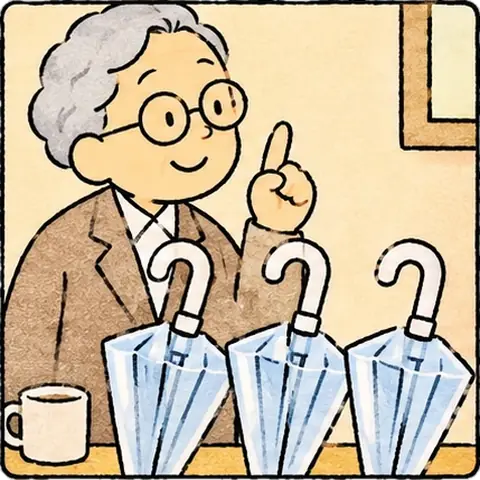
On a rainy day at his usual café, Yamada-san takes it upon himself to return three identical umbrellas to three customers.
- ~12 minutes
- 19 sentences
- 866 characters
- 85 kanji
- 0 N1 words
Every word and every kanji is checked against the lists of N2 and the levels below; no word from a higher level. How we check →
Too hard? Try the N3 stories or the N4 stories.
The story
七月の ある 午後、やまださんが いつもの 喫茶店で 本を 読んでいると、急に 夕立が 降り出した。
One July afternoon, as Yamada-san was reading in his usual café, a sudden summer downpour began.
雨が 少し 弱く なった 四時ごろ、三人の 客が 帰ろうと したが、小さな 問題が 起こった。
Around four o'clock, when the rain had eased a little, three customers got ready to leave, but a small problem came up.
入口の かさ立てに 同じ ビニールがさが 三本 並んでいて、どれが 自分の ものか、本人たちにも 分からないのだ。
In the umbrella stand by the door stood three identical clear plastic umbrellas, and even their owners couldn't tell which was theirs.
店の マスターからして、「どれも 同じに しか 見えませんね」と 頭を かいている。
Even the café owner was scratching his head. "They all look exactly the same to me."
みんなが 困っている ところに、やまださんが はりきって 「ちょっと 見せてください」と 声を かけた。
Just as everyone was at a loss, Yamada-san eagerly spoke up. "Let me have a look."
よく 見ると、一本には、値段の シールが 半分 残っていた。
Looking closely, he saw that one of them still had half of its price sticker on.
残りの 二本は、一本が ひどく ぬれていて、もう 一本は ほとんど ぬれていなかった。
Of the other two, one was soaking wet, and the other hardly wet at all.
客は、雨の 前から 店に いた おばあさん、肩が ぬれた スーツの 男性、そして 最後に 入ってきた 高校生の 女の子だ。
The customers were an old woman who had been there since before the rain, a man in a suit with wet shoulders, and a high-school girl who had come in last.
やまださんは まず、「来た 時間からすれば、これは 雨の 前から いらっしゃった お客様の かさです」と、ぬれていない かさを おばあさんに 渡した。
First, Yamada-san handed the dry umbrella to the old woman. "Judging by when everyone arrived, this one belongs to the customer who was here before the rain."
次に 「肩の ぬれ方からすると、あなたは 強い 雨の 中を 歩いてきた はずです」と、ひどく ぬれた かさを 男性に、新しい かさを 高校生に 渡した。
Next, he gave the soaking umbrella to the man ("From the way your shoulders are wet, you must have walked through heavy rain") and the new one to the high-school girl.
ところが、高校生が 「私の かさ、こんなに 新しくないです」と 首を ふると、やまださんは しばらく 考えて、ひざを たたいた。
But when the girl shook her head ("My umbrella isn't this new"), Yamada-san thought for a moment, then slapped his knee.
「私の かんちがいでした。肩が ぬれているのは、途中まで かさが なかった からです。要するに、雨に 降られてから、かさを 買ったんですね」
"I was mistaken. Your shoulders are wet because you had no umbrella for part of the way. In short, you got caught in the rain and then bought one, didn't you?"
男性は 目を 丸く して、「駅を 出たら 急に 降ってきて、コンビニで 買いました」と うなずいた。
The man's eyes went wide, and he nodded. "Right after I left the station, it suddenly started pouring, so I bought it at a konbini."
「この シールからして、駅前の コンビニの かさに相違ありません。ちなみに、私は 長年 あそこで 働いていたんですよ」
"Judging from this sticker, it's without a doubt an umbrella from the konbini by the station. Incidentally, I worked there for years."
要するに、新しい かさは 男性の、ひどく ぬれた かさは 最後に 来た 高校生の ものだったのだ。
In short, the new umbrella was the man's, and the soaking one belonged to the girl who had come in last.
マスターが 「たとえ 間違えた としても、どれも 同じ かさでしょう」と 言うと、やまださんは 首を ふった。
When the owner said, "Even if you'd mixed them up, they're all the same umbrella, aren't they?", Yamada-san shook his head.
「安い かさでも、自分の かさは 自分の かさです。それが 人 というものですよ」
"Cheap or not, your own umbrella is your own umbrella. That's people for you."
さて、帰ろうと した とき、やまださんは、雨の 前に 来た 自分が かさを 持っていない ことに 気づいた。
Then, as he got up to leave, Yamada-san realized that, having come before the rain, he had no umbrella himself.
マスターは 笑って、店の 奥から 忘れ物の ビニールがさを 一本 持ってきた。
The owner laughed and brought him a clear plastic umbrella from the back of the shop, one that someone had left behind.
Did you understand?
-
1 やまださんが 「それが 人 というものですよ」と 言ったのは、どういう 意味か。
What does Yamada-san mean by "That's people for you"?
See the answer
Answer: 3. 安くても、自分の ものは 大切だ。 Even if it's cheap, what's yours matters.
-
2 高校生の かさは どれだったか。
Which umbrella was the high-school girl's?
See the answer
Answer: 4. ひどく ぬれている かさ The one that was soaking wet
-
3 話の 最後に、やまださんは 何に 気づいたか。
At the end of the story, what did Yamada-san realize?
See the answer
Answer: 1. 自分が かさを 持たずに 来た こと That he had come without an umbrella

Next story
 夜の病院
The Hospital at Night
Natsumi, a nurse, works nights. In the last room down the corridor, an old man cannot sleep.
Tappable words, synthetic voice and review.
Grammar in this story
-
〜からして Noun + からして: "starting with, even…" (a first, telling example), or "judging from…".
店の マスターからして、「どれも 同じに しか 見えませんね」と 頭を かいている。
Even the café owner was scratching his head. "They all look exactly the same to me."
-
〜からすると/〜からすれば Noun + からすると / からすれば: "judging from…" or "from the point of view of…" (someone).
やまださんは まず、「来た 時間からすれば、これは 雨の 前から いらっしゃった お客様の かさです」と、ぬれていない かさを おばあさんに 渡した。
First, Yamada-san handed the dry umbrella to the old woman. "Judging by when everyone arrived, this one belongs to the customer who was here before the rain."
-
要するに "In short, to sum up": restates the gist simply (要するに、反対なんだね, "in short, you’re against it").
「私の かんちがいでした。肩が ぬれているのは、途中まで かさが なかった からです。要するに、雨に 降られてから、かさを 買ったんですね」
"I was mistaken. Your shoulders are wet because you had no umbrella for part of the way. In short, you got caught in the rain and then bought one, didn't you?"
Vocabulary 128 words
- 七 しち
- seven
- 月 がつ
- month (after a number): 二月 = "February", 三月 = "March"
- ある
- a certain, one (in a story)
- 午後 ごご
- afternoon, p.m.
- さん
- Mr., Ms. (polite, after a name)
- いつも
- always
- 喫茶店 きっさてん
- café, coffee shop
- 本 ほん
- book
- 読む よむ
- to read
- 急に きゅうに
- suddenly, all of a sudden
- 夕立 ゆうだち
- sudden summer shower (in the afternoon)
- 降る ふる
- to fall (rain, snow)
- 雨 あめ
- rain
- 少し すこし
- a little
- 弱い よわい
- weak
- なる
- to become
- 四 よん
- four
- 時 じ
- o'clock: 八時 = "eight o'clock"
- ごろ
- around, about (after a time: 十一時ごろ)
- 三 さん
- three
- 人 にん
- (after a number) counter for people: 三人 = "three people"
- 客 きゃく
- customer (of a restaurant, a shop)
- 帰る かえる
- to go home, to return
- する
- to do
- 小さな ちいさな
- small, little (always before a noun)
- 問題 もんだい
- problem, issue
- 起こる おこる
- to happen, to break out (applause, noise)
- 入口 いりぐち
- entrance
- かさ立て かさたて
- umbrella stand
- 同じ おなじ
- the same
- ビニールがさ
- clear plastic umbrella (cheap)
- 本 ほん
- counter for long objects (umbrellas, pencils, bottles…)
- 並ぶ ならぶ
- to be side by side, to be in a row: ならんで すわる = "to sit side by side"
- どれ
- which one? (among three or more)
- 自分 じぶん
- oneself; じぶんの = "one's own"
- もの
- thing
- 本人 ほんにん
- the person in question, oneself
- たち
- (after a noun) plural: どうぶつたち = "the animals"
- 分かる わかる
- to understand, to know
- 店 みせ
- shop, store; restaurant
- マスター
- owner (of a café or bar)
- 見える みえる
- to seem, to appear; (〜と みえる) it seems that
- 頭 あたま
- head
- かく
- to scratch; 頭を かく = to scratch one's head (embarrassment)
- みんな
- everyone; all
- 困る こまる
- to be in trouble, to be at a loss
- はりきる
- to be eager, to throw oneself into it
- ちょっと
- a little, a moment
- 見せる みせる
- to show
- 声 こえ
- voice
- かける
- (こえを かける) to speak to someone, to call out to someone
- よく
- well; often
- 見る みる
- to look, to see
- 一 いち
- one
- 値段 ねだん
- price
- シール
- sticker, label
- 半分 はんぶん
- half
- 残る のこる
- to remain, to stay behind; to be left
- 残り のこり
- the rest, the remainder
- 二 に
- two
- ひどい
- terrible; (ひどく) terribly, badly
- ぬれる
- to get wet
- もう
- another, more; もう 一度 = "once more"
- ほとんど
- almost; (with a negative) hardly
- 前 まえ
- front; before (入る 前に = "before going in")
- いる
- to be, to exist (living things)
- おばあさん
- old woman; grandmother
- 肩 かた
- shoulder
- スーツ
- suit
- 男性 だんせい
- man
- そして
- and then
- 最後 さいご
- last; the end
- 入る はいる
- to enter, to come in
- 高校生 こうこうせい
- high school student
- 女の子 おんなのこ
- girl
- まず
- first, to begin with
- 来る くる
- to come
- 時間 じかん
- time; hour (duration): 一時間 = "one hour"
- これ
- this (near me)
- いらっしゃる
- to come, to go, to be (honorific: said of others)
- お客様 おきゃくさま
- customer (very polite); you (to a customer)
- かさ
- umbrella
- 渡す わたす
- to hand (over)
- 次 つぎ
- next; つぎの あさ = "the next morning"
- あなた
- you (to someone you don't know well)
- 強い つよい
- strong, heavy (rain, wind)
- 中 なか
- inside
- 歩く あるく
- to walk
- 新しい あたらしい
- new
- ところが
- however, but (unexpectedly)
- 私 わたし
- I, me
- こんなに
- this much, so (as this)
- 首 くび
- neck; head (首を 横に ふる: to shake one's head)
- ふる
- to wave, to shake (a hand, one's head)
- しばらく
- for a while, for a moment
- 考える かんがえる
- to think (about), to consider
- ひざ
- knee; ひざを たたく = to slap one's knee (on realizing something)
- たたく
- to hit, to tap; 手を たたく = "to clap"
- かんちがい
- misunderstanding, mistaken idea
- 途中 とちゅう
- on the way, midway
- ある
- there is, to be (for things)
- 要するに ようするに
- in short, to sum up
- 買う かう
- to buy
- 目 め
- eye
- 丸い まるい
- round
- 駅 えき
- station
- 出る でる
- to go out, to leave
- コンビニ
- konbini, convenience store
- うなずく
- to nod
- この
- this… (near me, or the one just mentioned)
- 駅前 えきまえ
- in front of the station, the station area
- ちなみに
- by the way, incidentally
- 長年 ながねん
- for many years
- あそこ
- over there
- 働く はたらく
- to work
- たとえ
- (たとえ〜ても) even if
- 間違える まちがえる
- to make a mistake; (〜て) by mistake
- 言う いう
- to say
- 安い やすい
- cheap, inexpensive
- それ
- that (near the listener, or already mentioned)
- 人 ひと
- person; ゆうびんきょくの 人 = "the post office clerk"
- さて
- well, now (to move on to another topic)
- とき
- time; 〜とき = "when…"
- 持つ もつ
- to hold, to carry
- 気づく きづく
- to notice, to realize
- 笑う わらう
- to laugh, to smile
- 奥 おく
- the back, the inner part (of a room, a shop, a shelf)
- 忘れ物 わすれもの
- lost item, something left behind