 hinoko
十年前の手紙 The Letter from Ten Years Ago
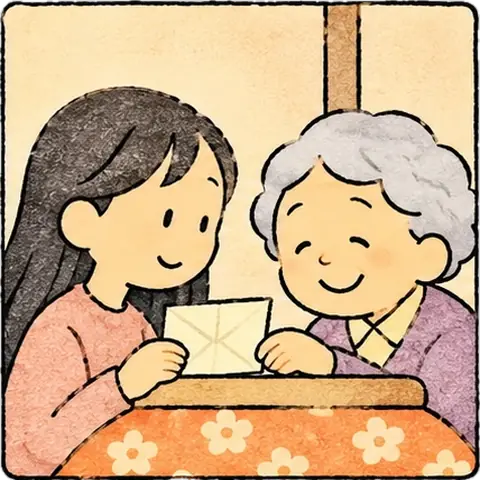
One winter evening, Yui's grandmother gives her back a letter she wrote to herself at the age of ten.
- ~12 minutes
- 19 sentences
- 810 characters
- 87 kanji
- 1 N1 word
Every word and every kanji is checked against the lists of N2 and the levels below; 1 word from N1, flagged in the vocabulary. How we check →
Too hard? Try the N3 stories or the N4 stories.
The story
二月の ある 夜、祖母の さちこが、すっかり 黄色く なった 封筒を ゆいの 前に 置いた。
One evening in February, her grandmother Sachiko set down in front of Yui an envelope that had turned completely yellow.
封筒には、子どもの 大きな 字で 「十年後の わたしへ」と 書いてあった。
On it, in a child's big handwriting, was written: "To me, ten years from now."
小学校 四年生の とき、「二分の一成人式」で 書いた 手紙だ。
It was the letter she had written in fourth grade, for her "half coming-of-age ceremony".
十歳に なった ことを 祝う この 学校行事で、ゆいたちは 将来の 夢を 一人ずつ 発表し、十年後の 自分に 手紙を 書いたのだった。
At this school event celebrating turning ten, Yui and her classmates had each presented their dream for the future, then written a letter to themselves ten years on.
「十年 たったら、一緒に 開けようね」と 言って 祖母に 預けた ことなど、ゆいは とっくに 忘れていた。
Yui had long since forgotten leaving it with her grandmother, saying, "In ten years, let's open it together."
十年というのは、長い ようで、過ぎてしまえば 短い ものだ。
Ten years seems long, but once it has gone by, it is short.
十年後の わたしへ。わたしの ゆめは、図書館の 人に なる ことです。
To me, ten years from now. My dream is to work at the library.
だって、図書館には 本が いっぱい あって、いくら 読んでも お金が かからないからです。
Because the library has lots of books, and however many you read, it doesn't cost any money.
お母さんには 「夜ふかしして 本ばかり 読んでいては、目が 悪く なるよ」と 言われるけど、やめられません。
Mom tells me, "If you keep staying up late reading books all the time, you'll ruin your eyes," but I can't stop.
今日は、見に 来てくれた おばあちゃんにも 子どもの ころの ゆめを 聞きたかったけど、どきどきして 聞けませんでした。
Today Grandma came to watch, and I wanted to ask her too what her dream was when she was little, but my heart was pounding so hard I couldn't.
十年後の わたしは、もう 聞きましたか。
Me ten years from now: have I asked her yet?
所々に ある 字の 間違いを 見て、ゆいは 思わず 笑ったが、最後の 質問だけは 気になって ならなかった。
Seeing the miswritten characters here and there, Yui couldn't help laughing, but the last question kept nagging at her.
小さい ころは 毎晩 祖母に 本を 読んでもらい、大きく なってからも、何かにつけ 相談してきたのに、その ことだけは 一度も 聞いた ことが なかったのだ。
When she was little, her grandmother had read to her every night, and even after she grew up she had gone to her for advice about everything; yet that one thing she had never once asked.
ゆいは 少し ためらってから、「おばあちゃん、子どもの ころの 夢って、何だったの?」と 聞いた。
After hesitating a little, Yui asked, "Grandma, what was your dream when you were little?"
祖母は おどろいた 顔を したが、やがて 「図書館で 働きたかったんだよ」と、恥ずかしそうに 笑った。
Her grandmother looked surprised, but after a moment she said with a shy smile, "I wanted to work in a library."
「高校を 出たら 家の 仕事を 手伝う ことに なって、あきらめたけどね。ゆいが 本を 読んでいる すがたを 見るにつけ、昔の 自分を 思い出していたよ」
"After high school I had to help with the family business, so I gave it up. Whenever I saw you reading, I remembered myself back then."
「だから、ゆいが 図書館で 働くと 言った ときは、どんなに うれしかったことか」と、祖母は 封筒の 字を 指で そっと なでた。
"So when you told me you were going to work at the library, you can't imagine how happy I was." Her grandmother gently ran her finger over the writing on the envelope.
何より、自分の 夢が 祖母の 夢でも あった ことが、ゆいには 不思議で ならなかった。
More than anything, Yui couldn't get over the fact that her dream had also been her grandmother's.
子どもというのは、大人が 思っているより ずっと、そばに いる 人の ことを 見ている ものだ。
Children watch the people close to them far more than adults think.
Did you understand?
-
1 十歳の ゆいが 図書館の 人に なりたかったのは、なぜか。
Why did ten-year-old Yui want to work at the library?
See the answer
Answer: 2. たくさんの 本を、お金を 使わずに 読めるから。 Because you can read lots of books there without spending money.
-
2 十歳の ゆいが、二分の一成人式の 日に できなかった ことは 何か。
What was ten-year-old Yui unable to do on the day of the ceremony?
See the answer
Answer: 4. 祖母に、子どもの ころの 夢を 聞く こと Ask her grandmother what her childhood dream was.
-
3 祖母が 「どんなに うれしかったことか」と 言ったのは、なぜか。
Why does the grandmother say "you can't imagine how happy I was"?
See the answer
Answer: 1. ゆいが、祖母が 昔 あきらめた 仕事を 始めたから。 Because Yui started the job her grandmother had once given up.

Next story
 火と本
Fire and Books
A new librarian wants Hinoko to leave the library. Then, one evening, a typhoon hits.
Tappable words, synthetic voice and review.
Grammar in this story
-
〜ものだ Plain form + ものだ: "that’s how things are" (a general truth or feeling), or "one should".
十年というのは、長い ようで、過ぎてしまえば 短い ものだ。
Ten years seems long, but once it has gone by, it is short.
-
〜てならない Te-form + ならない: "terribly, can’t help feeling…", for feelings (不思議でならない).
所々に ある 字の 間違いを 見て、ゆいは 思わず 笑ったが、最後の 質問だけは 気になって ならなかった。
Seeing the miswritten characters here and there, Yui couldn't help laughing, but the last question kept nagging at her.
-
〜につけ Dictionary form + につけ: "every time…", with a feeling that comes back (見るにつけ).
小さい ころは 毎晩 祖母に 本を 読んでもらい、大きく なってからも、何かにつけ 相談してきたのに、その ことだけは 一度も 聞いた ことが なかったのだ。
When she was little, her grandmother had read to her every night, and even after she grew up she had gone to her for advice about everything; yet that one thing she had never once asked.
Vocabulary 116 words
- 二 に
- two
- 月 がつ
- month (after a number): 二月 = "February", 三月 = "March"
- ある
- a certain, one (in a story)
- 夜 よる
- night, evening
- 祖母 そぼ
- grandmother (one's own, talking to someone outside the family; or in a narrative)
- すっかり
- completely
- 黄色い きいろい
- yellow
- なる
- to become
- 封筒 ふうとう
- envelope
- 前 まえ
- front; before (入る 前に = "before going in")
- 置く おく
- to put, to leave (somewhere)
- 子供 こども
- child; 子どもの とき = "as a child"
- 大きな おおきな
- big (always before a noun)
- 字 じ
- letter, written character; handwriting; 大きな 字で = "in big letters"
- 十 じゅう
- ten
- 年 ねん
- year (counter): 五十年 = "fifty years"
- 後 ご
- (after a length of time) later: 十年後 = "ten years later"
- わたし
- I, me
- 書く かく
- to write
- 小学校 しょうがっこう
- elementary school (six years, ages 6 to 12)
- 四 よん
- four
- 年生 ねんせい
- (after a number) …-year student: 四年生 = "fourth-year student, fourth grader"
- とき
- time; 〜とき = "when…"
- 二分の一成人式 にぶんのいちせいじんしき N1
- "half coming-of-age ceremony": a school event for ten-year-olds (4th grade)
- 手紙 てがみ
- letter
- 歳 さい
- years old: 六さい = "six years old"
- 祝う いわう
- to celebrate
- この
- this… (near me, or the one just mentioned)
- 学校 がっこう
- school
- 行事 ぎょうじ
- event, ceremony (set by tradition or the calendar)
- たち
- (after a noun) plural: どうぶつたち = "the animals"
- 将来 しょうらい
- the future (of a person); 将来の 夢 = "what you want to be later"
- 夢 ゆめ
- dream
- 一人 ひとり
- one person; alone (一人で, いつも 一人)
- ずつ
- at a time: すこしずつ = "little by little"
- 発表 はっぴょう
- presentation (in front of others), announcement; 発表する = to present, to announce
- する
- to do
- 自分 じぶん
- oneself; じぶんの = "one's own"
- たつ
- to pass (of time)
- 一緒に いっしょに
- together
- 開ける あける
- to open
- 言う いう
- to say
- 預ける あずける
- to leave (in someone's care), to deposit
- とっくに
- long ago, a long time since
- 忘れる わすれる
- to forget
- 長い ながい
- long
- 過ぎる すぎる
- to pass (time); to go past
- 短い みじかい
- short
- 図書館 としょかん
- library
- 人 ひと
- person; ゆうびんきょくの 人 = "the post office clerk"
- だって
- (at the start of a sentence) because, well, you see
- 本 ほん
- book
- いっぱい
- full; lots of
- ある
- there is, to be (for things)
- いくら
- (いくら〜ても) however much…, no matter how…
- 読む よむ
- to read
- お金 おかね
- money
- かかる
- (電話が かかる) a call comes in; (time, money) to take, to cost
- お母さん おかあさん
- mother; "mom" (children also call their own mother this)
- 夜更かし よふかし
- staying up late; 夜更かしする = to stay up late
- 目 め
- eye
- 悪い わるい
- bad
- やめる
- to stop (doing), to quit
- 今日 きょう
- today
- 見る みる
- to look, to see
- 来る くる
- to come
- おばあちゃん
- grandma (what a grandchild calls her)
- ころ
- time, days; 小さい ころ = "when I was little"
- 聞く きく
- to listen; to ask
- どきどき
- (heart) pounding; どきどきする = to be nervous, excited
- もう
- already; (with a negative) no longer
- 所々 ところどころ
- here and there, in places
- 間違い まちがい
- mistake, error; 字の 間違い = "a miswritten character"
- 思わず おもわず
- without meaning to, in spite of oneself
- 笑う わらう
- to laugh, to smile
- 最後 さいご
- last; the end
- 質問 しつもん
- question
- 気になる きになる
- to bother, to weigh on one's mind; to be curious about
- 小さい ちいさい
- small, little
- 毎晩 まいばん
- every night
- 大きい おおきい
- big
- 何か なにか
- something; (〜か何か) … or something
- 相談 そうだん
- consultation; 相談する = to ask for advice, to talk over
- その
- that (already mentioned, or near the listener)
- こと
- thing, matter; いい こと = "a good thing"
- 一度 いちど
- once; (一度も + negative) not even once
- 少し すこし
- a little
- ためらう
- to hesitate (before doing or saying something)
- 何 なん
- what; how many (before a counter: 何まい = "how many")
- おどろく
- to be surprised
- 顔 かお
- face
- やがて
- soon, before long; eventually
- 働く はたらく
- to work
- 恥ずかしい はずかしい
- embarrassed; shy
- 高校 こうこう
- high school
- 出る でる
- to graduate from: 大学を 出る = "to graduate from university"
- 家 いえ
- house, home
- 仕事 しごと
- work, job
- 手伝う てつだう
- to help (someone do something)
- あきらめる
- to give up (a plan, a dream)
- すがた
- figure, form (of a person)
- 昔 むかし
- the old days, long ago
- 思い出す おもいだす
- to remember, to recall
- だから
- so, that's why
- どんなに
- how (much); (どんなに〜ても) however much…, no matter how…
- うれしい
- glad, happy (about something)
- 指 ゆび
- finger
- そっと
- gently, quietly
- なでる
- to stroke, to run one's hand gently over
- 何より なにより
- more than anything, above all
- 不思議 ふしぎ
- strange, mysterious; 不思議でならない = "can't get over it"
- 大人 おとな
- adult, grown-up
- 思う おもう
- to think, to believe
- ずっと
- (in a comparison) much more, by far
- そば
- beside, near
- いる
- to be, to exist (living things)