 hinoko
いっすんぼうし Issun-bōshi, the One-Inch Boy, in easy Japanese
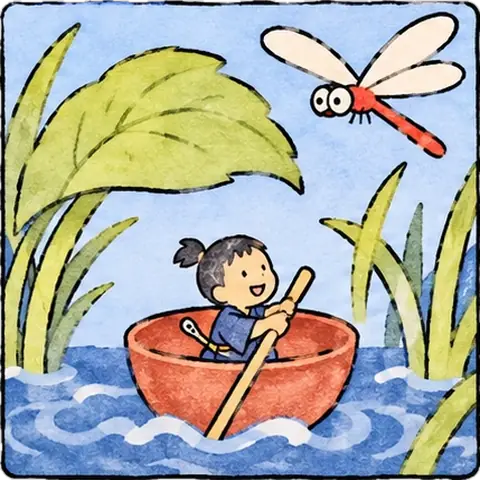
A boy no bigger than a finger sets off for the capital, with a needle for a sword.
- ~10 minutes
- 22 sentences
- 701 characters
- 55 kanji
- 1 N2 word
Every word and every kanji is checked against the lists of N3 and the levels below; 1 word from N2, flagged in the vocabulary. How we check →
Too hard? Try the N4 stories or the N5 stories.
The story
むかし、子どもの いない おじいさんと おばあさんが いた。
Long ago, there lived an old man and an old woman who had no children.
二人は 毎日、神さまに「子どもが ほしい」と 願った。
Every day, the two of them prayed to the gods: "We wish for a child."
すると、指 ほどの 小さな 男の子が 生まれた。
Then a little boy no bigger than a finger was born.
二人は その 子を「いっすんぼうし」と 呼んだ。
They named him "Issun-bōshi".
およそ 十二歳に なっても、いっすんぼうしの 体は 少しも 大きく ならなかった。
Even at around twelve, Issun-bōshi's body had not grown at all.
「みやこへ 行って、強い 男に なりたい」と、いっすんぼうしは 言った。
"I want to go to the capital and become a strong man," said Issun-bōshi.
「みやこへ 行く には、この 川の 流れに 乗って 行けば いい」と、おじいさんは 教えた。
"To get to the capital, you just ride the current of this river," the old man told him.
おばあさんは、はりを かたなに して、いっすんぼうしの こしに つけてやった。
The old woman turned a needle into a sword and fastened it at Issun-bōshi's waist.
はりは、小さな 身を 守る、ゆいいつの ぶきだった。
The needle was the only weapon to protect his small body.
いっすんぼうしは おわんの ふねに 乗り、はしを 使って、みやこへ 向かった。
Issun-bōshi got into a bowl for a boat and, using chopsticks, headed for the capital.
みやこに 着く と、いっすんぼうしは、位の 高い だいじんの 家で 働く ことに なった。
When he reached the capital, Issun-bōshi went to work in the house of a high-ranking lord.
ある 日、だいじんの むすめと おてらへ 行った 帰りに、大きな おにが 飛び出してきた。
One day, on the way back from a temple with the lord's daughter, a huge ogre leaped out.
おには むすめを うばおう と して、長い 手を のばした。
The ogre stretched out his long arms to snatch the girl.
おにを 見ても、いっすんぼうしは 少しも こわく なかった。
Even at the sight of the ogre, Issun-bōshi was not the least bit afraid.
ところが、おには、前に 出た いっすんぼうしを 飲んでしまった。
But the ogre swallowed Issun-bōshi, who had stepped forward.
いっすんぼうしは、おにの 腹の 中を、はりの かたなで さしたり、突いたり した。
Inside the ogre's belly, Issun-bōshi pricked and jabbed with his needle sword.
「痛い、痛い」と、おには いっすんぼうしを 口から はいた。
"Ow! Ow!" cried the ogre, and he spat Issun-bōshi out of his mouth.
いっすんぼうしが ふたたび かたなを 持って 立つ と、おには 何かを 残して 逃げていった。
When Issun-bōshi stood up again, sword in hand, the ogre ran away, leaving something behind.
それは、ほしい ものが 何でも 出てくる、うちでのこづちだった。
It was the magic mallet, from which anything you wish for comes out.
「体を 大きく する には、これを ふれば いい のです」と、むすめは 言った。
"To make your body bigger, all we need to do is shake this," said the girl.
むすめが それを ふる たびに、いっすんぼうしの 体は のびて、背の 高い 若者に なった。
Each time the girl shook the mallet, Issun-bōshi's body grew, until he became a tall young man.
いっすんぼうしは むすめと けっこんし、おじいさんと おばあさんを みやこに 呼んで、ふたたび いっしょに しあわせに 暮らした。
Issun-bōshi married the girl, brought the old man and the old woman to the capital, and they lived happily together once more.
Did you understand?
-
1 いっすんぼうしが みやこへ 行った のは なぜか。
Why did Issun-bōshi go to the capital?
See the answer
Answer: 4. 強い 男に なりたかった から Because he wanted to become a strong man.
-
2 いっすんぼうしは、おにの 腹の 中で 何を したか。
What did Issun-bōshi do inside the ogre's belly?
See the answer
Answer: 1. はりの かたなで さした He pricked it with his needle sword.
-
3 いっすんぼうしの 体が 大きく なった のは、なぜか。
Why did Issun-bōshi's body grow?
See the answer
Answer: 3. むすめが うちでのこづちを ふった から Because the girl had shaken the mallet.

Next story
 ももたろう
Momotarō
A boy born from a peach sets off to fight the ogres who steal his village's treasures.
Tappable words, synthetic voice and review.
About this tale
Issun-bōshi (一寸法師) is the hero of one of the Otogizōshi, the short illustrated stories of the Muromachi period (14th to 16th centuries), later printed in the Edo period. His name tells you his size: an issun (一寸) is about three centimeters, roughly an inch, hence his English name, the One-Inch Boy. In that old text, a childless couple pray to the god of Sumiyoshi, and the son they receive is still tiny at twelve or thirteen. There, the little hero is also far more cunning, and not always honest; it is the picture books Japanese children read today that made him a model of courage.
Issun-bōshi decides to seek his fortune in the capital. He floats down the river in a rice bowl, paddling with chopsticks, with a sewing needle for a sword. In the capital, he enters the service of a high-ranking lord. One day, as he walks home from a temple with the lord’s daughter, a huge oni (ogre) leaps out and reaches for the girl. Issun-bōshi is not the least bit afraid… but the ogre is a hundred times his size.
The tale shows that courage and wit matter more than size. Like Momotarō, Issun-bōshi is a miraculous child given to an old couple, a figure Japanese folklore loves. Look out, too, for the uchide no kozuchi (打ち出の小槌), a magic mallet that grants wishes, also carried by Daikokuten, one of the Seven Lucky Gods. hinoko tells the picture-book version at JLPT N3 level, in 22 sentences, with three grammar points: すこしも〜ない (not at all), ふたたび (once again) and 〜には (in order to). The only word above N3 is that mallet, うちでのこづち.
Grammar in this story
-
すこしも〜ない 少しも + negative: "not in the least, not one bit" (少しも怖くない, "not the least bit scared").
およそ 十二歳に なっても、いっすんぼうしの 体は 少しも 大きく ならなかった。
Even at around twelve, Issun-bōshi's body had not grown at all.
-
ふたたび 再び: "again, once more", a more formal また (再び訪れる, "to visit again").
いっすんぼうしが ふたたび かたなを 持って 立つ と、おには 何かを 残して 逃げていった。
When Issun-bōshi stood up again, sword in hand, the ogre ran away, leaving something behind.
-
〜には(目的) Dictionary form + には: "in order to", what it takes to do something (駅に行くには, "to get to the station").
「みやこへ 行く には、この 川の 流れに 乗って 行けば いい」と、おじいさんは 教えた。
"To get to the capital, you just ride the current of this river," the old man told him.
Vocabulary 103 words
- むかし
- the old days, long ago
- 子供 こども
- child; 子どもの とき = "as a child"
- いる
- to be, to exist (living things)
- おじいさん
- old man; grandfather
- おばあさん
- old woman; grandmother
- 二人 ふたり
- two people; 二人で = "the two of them"
- 毎日 まいにち
- every day
- 神 かみ
- god, deity; 神さま = god (respectful)
- さま
- (after a noun) mark of great respect
- ほしい
- to want (something)
- 願う ねがう
- to wish, to hope for
- すると
- then, thereupon (what follows happens right after)
- 指 ゆび
- finger
- 小さな ちいさな
- small, little (always before a noun)
- 男の子 おとこのこ
- boy
- 生まれる うまれる
- to be born; 生まれて 初めて = "for the first time in one's life"
- その
- that (already mentioned, or near the listener)
- 子 こ
- child; この 子 = "this child"
- 呼ぶ よぶ
- to call (someone)
- およそ
- about, roughly
- 十 じゅう
- ten
- 二 に
- two
- 歳 さい
- years old: 六さい = "six years old"
- なる
- to become
- 体 からだ
- body
- 少しも すこしも
- (+ negative) not at all, not in the least
- 大きい おおきい
- big
- みやこ
- the capital (in old times, Kyoto)
- 行く いく
- to go
- 強い つよい
- strong, heavy (rain, wind)
- 男 おとこ
- man; 男の 方 = "a gentleman" (polite)
- 言う いう
- to say
- この
- this… (near me, or the one just mentioned)
- 川 かわ
- river
- 流れ ながれ
- current, flow (of a river)
- 乗る のる
- to get on, to ride, to take (a bus)
- いい
- good, fine
- 教える おしえる
- to teach; to tell, to show
- はり
- needle
- かたな
- sword
- する
- to do
- こし
- hips, lower back
- つける
- to attach, to fix (to)
- 身 み
- body, oneself; 身を 守る = to protect oneself
- 守る まもる
- to keep (a rule, a promise); to protect
- ゆいいつ
- only, sole
- ぶき
- weapon
- わん
- (wooden) bowl; おわん
- ふね
- boat (especially a small one): 小さな ふね = "a small boat"
- はし
- chopsticks
- 使う つかう
- to use
- 向かう むかう
- to face; to head for
- 着く つく
- to arrive
- 位 くらい
- rank; 位の 高い 人 = a person of high rank
- 高い たかい
- high, tall; expensive
- だいじん
- minister; (in tales) great lord of the court
- 家 いえ
- house, home
- 働く はたらく
- to work
- ある
- a certain, one (in a story)
- 日 ひ
- day
- むすめ
- daughter; young woman
- おてら
- (Buddhist) temple
- 帰り かえり
- the way back; 帰りに = "on the way back"
- 大きな おおきな
- big (always before a noun)
- おに
- ogre, demon (of Japanese tales)
- 飛び出す とびだす
- to jump out, to rush out
- うばう
- to snatch, to take by force
- 長い ながい
- long
- 手 て
- hand
- のばす
- to stretch out, to extend
- 見る みる
- to look, to see
- こわい
- scary; scared
- ある
- there is, to be (for things)
- ところが
- however, but (unexpectedly)
- 前 まえ
- front; before (入る 前に = "before going in")
- 出る でる
- to go out, to leave
- 飲む のむ
- to drink
- 腹 はら
- belly, stomach
- 中 なか
- inside
- さす
- to prick, to stab
- 突く つく
- to poke, to jab
- 痛い いたい
- painful, sore
- 口 くち
- mouth
- はく
- to spit out; to vomit
- ふたたび
- again, once more (written)
- 持つ もつ
- to hold, to carry
- 立つ たつ
- to stand
- 何か なにか
- something; (〜か何か) … or something
- 残す のこす
- to leave (behind, uneaten)
- 逃げる にげる
- to run away, to escape
- それ
- that (near the listener, or already mentioned)
- もの
- thing
- 何でも なんでも
- anything, everything
- うちでのこづち N2
- magic mallet (that brings forth whatever one wishes)
- これ
- this (near me)
- ふる
- to wave, to shake (a hand, one's head)
- のびる
- to stretch, to extend
- 背 せい
- height (of a person): せいが 高い = "to be tall"
- 若者 わかもの
- young man, young people
- けっこん
- marriage; (〜する) to get married
- いっしょに
- together
- しあわせ
- happy; happiness
- 暮らす くらす
- to live, to get by