 hinoko
ねずみのよめいり The Mouse’s Wedding in easy Japanese
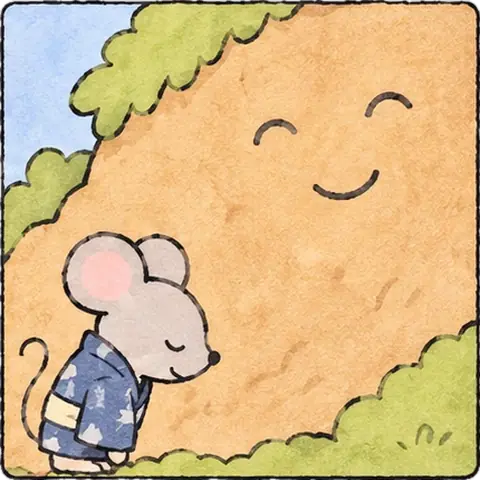
A father mouse looks for the strongest match in the world for his daughter, and knocks on the grandest doors.
- ~8 minutes
- 16 sentences
- 576 characters
- 48 kanji
- 1 N2 word
Every word and every kanji is checked against the lists of N3 and the levels below; 1 word from N2, flagged in the vocabulary. How we check →
Too hard? Try the N4 stories or the N5 stories.
The story
昔、ある ところに、ねずみの 父親と 母親と、かわいい 娘が いた。
Once upon a time, somewhere, there lived a father mouse, a mother mouse and their lovely daughter.
父親は、じまんの 娘に、世の中で いちばん 強い 相手を 見つけてあげたかった。
The father, so proud of his daughter, wanted to find her the strongest match in the world.
ねずみは ほかの 動物にくらべて、体が 小さく、力も よわいからだ。
For compared with other animals, mice have small bodies and little strength.
父親は 「強いと 言えば、やはり 太陽だ」と、まず 太陽の ところへ 出かけた。
"When it comes to strength, it has to be the sun," said the father, and off he went to the sun first.
「太陽さんこそ、世の中で いちばん 強い 方です。ぜひ 娘と けっこんして ください」
"Mr. Sun, you are the strongest in the world. Please marry my daughter."
すると 太陽は 「私よりも、くもさんの ほうが 強いですよ。くもさんが 来ると、私は かくされてしまうのです」と 答えた。
Then the sun answered, "Mr. Cloud is stronger than I am, you know. When he comes, I get hidden away."
くもは 太陽にくらべて ずっと よわそうに 見えたので、父親は おどろいた。
The father was surprised, for compared with the sun, the cloud looked much weaker.
くもの ところへ 行くと、くもは 「私なんか、風さんに すぐ 飛ばされてしまいます」と 言った。
When he went to the cloud, the cloud said, "Me? Mr. Wind blows me away in no time."
風の ところへ 行くと、風も 「私が いちばん 強い わけでは ありません。かべさんは、どんなに 吹いても 動かないのです」と 言った。
When he went to the wind, the wind said too, "I'm not really the strongest. However hard I blow, Mr. Wall won't move."
最後に、父親は かべの 前に 立って、「いったい だれが いちばん 強いのですか」と 聞いた。
At last, the father stood before the wall and asked, "Who on earth is the strongest, then?"
かべは 笑って 答えた。
The wall answered with a laugh.
「ねずみさんこそ、いちばん 強いのですよ。あなを 開けられたら、私は もう だめですから」
"It's you mice who are the strongest! If you make a hole in me, I'm done for."
家に 帰ると、母親が 「みんな、それぞれ 自分より 強い ものが いるんですね」と 言った。
Back home, the mother said, "So everyone has someone stronger than themselves."
父親は 「別に、ねずみが だめだと 思っていた わけでは ない」と、少し 恥ずかしそうに 答えた。
"It's not as if I thought mice were no good," the father answered, looking a little embarrassed.
こうして 娘は、自分と 同じくらい 小さな 若い ねずみと けっこんした。
And so the daughter married a young mouse, just as small as she was.
遠くまで 探した 相手は、すぐ 近くに いたのだ。
The match they had searched for so far away had been close by all along.
Did you understand?
-
1 太陽が 「くもさんの ほうが 強い」と 言ったのは なぜか。
Why did the sun say that the cloud was stronger?
See the answer
Answer: 2. くもに かくされてしまうから because the cloud hides him
-
2 かべによると、いちばん 強いのは だれか。
According to the wall, who is the strongest?
See the answer
Answer: 4. ねずみ mice
-
3 この 話から 分かる ことは 何か。
What does this story tell us?
See the answer
Answer: 1. いい 相手は、近くに いる ことも ある。 The right match is sometimes close by.

Next story
 雨の日の本屋
The Rainy-Day Bookshop
One rainy night, Saki, an exhausted office worker, steps into a small bookshop she had never noticed.
Tappable words, synthetic voice and review.
About this tale
Nezumi no yomeiri (鼠の嫁入り), "the mouse’s wedding", is a very old fable. In Japan, it appears as early as the late 13th century in the Shasekishū, a collection of Buddhist tales compiled by the monk Mujū, and a very similar story is told in India in the Panchatantra, a famous collection of fables: good stories travel far. Its structure, a chain of characters each stronger than the last, makes it easy to follow and fun to read aloud. The word yomeiri (嫁入り) itself means a bride leaving her parents’ home to join her husband’s family.
A father mouse is so proud of his daughter that he wants to marry her to the strongest being in the world. Who could be stronger than the sun? But the sun says the cloud is stronger, because it can hide him. The cloud sends the father to the wind, which blows clouds away, and the wind sends him to the wall, which never moves however hard the wind blows. So the father stands before the wall and asks who, in the end, is the strongest of all…
The fable plays with the idea of strength: everyone has someone stronger than themselves, and what we look for far away is often close at hand. It is also a gentle lesson in self-esteem for the small. hinoko’s N3 version, in 16 sentences, follows the classic order (sun, cloud, wind, wall) and gives the mother mouse a wise word. The father’s polite requests to each suitor are perfect for practicing 〜こそ (precisely, it is… who), 〜に比べて (compared with) and 〜わけではない (it is not that…). Only one word is above N3: 嫁入り itself.
Grammar in this story
-
〜こそ Noun + こそ: stresses that word, "precisely, this very" (今年こそ, "this year for sure").
「太陽さんこそ、世の中で いちばん 強い 方です。ぜひ 娘と けっこんして ください」
"Mr. Sun, you are the strongest in the world. Please marry my daughter."
-
〜に比べて Noun + に比べて: "compared with" (去年に比べて, "compared with last year").
ねずみは ほかの 動物にくらべて、体が 小さく、力も よわいからだ。
For compared with other animals, mice have small bodies and little strength.
-
〜わけではない Plain form + わけではない: "it’s not that…", rules out a wrong conclusion (嫌いなわけではない, "it’s not that I dislike it").
風の ところへ 行くと、風も 「私が いちばん 強い わけでは ありません。かべさんは、どんなに 吹いても 動かないのです」と 言った。
When he went to the wind, the wind said too, "I'm not really the strongest. However hard I blow, Mr. Wall won't move."
Vocabulary 78 words
- よめいり N2
- wedding (a bride joining her husband's family)
- 昔 むかし
- the old days, long ago
- ある
- a certain, one (in a story)
- ところ
- place; ゆいの ところ = "where Yui is"
- ねずみ
- mouse, rat
- 父親 ちちおや
- father
- 母親 ははおや
- mother
- かわいい
- cute
- 娘 むすめ
- daughter; young woman
- いる
- to be, to exist (living things)
- じまん
- pride; (じまんの) one's pride and joy
- 世の中 よのなか
- the world, society
- いちばん
- the most; いちばん 上 = "the very top"
- 強い つよい
- strong, powerful
- 相手 あいて
- partner; (for a marriage) the future husband or wife
- 見つける みつける
- to find, to discover
- ほか
- other; ほかの 人 = "other people"
- 動物 どうぶつ
- animal
- 体 からだ
- body
- 小さい ちいさい
- small, little
- 力 ちから
- strength, power
- よわい
- weak
- 言う いう
- to say
- やはり
- as expected, of course; after all
- 太陽 たいよう
- sun
- まず
- first, to begin with
- 出かける でかける
- to go out, to set off
- さん
- Mr., Ms. (polite, after a name)
- 方 かた
- person (polite); その 方 = "that person"
- ぜひ
- by all means, definitely
- けっこん
- marriage; (〜する) to get married
- する
- to do
- すると
- then, thereupon (what follows happens right after)
- 私 わたし
- I, me
- くも
- cloud
- 来る くる
- to come
- かくす
- to hide
- 答える こたえる
- to answer
- ずっと
- (in a comparison) much more, by far
- 見える みえる
- to be visible, to be in sight
- おどろく
- to be surprised
- 行く いく
- to go
- 風 かぜ
- wind
- すぐ
- right away; right (すぐ 前 = "right in front")
- 飛ばす とばす
- to make fly, to blow away
- ある
- there is, to be (for things)
- かべ
- wall
- どんなに
- how (much); (どんなに〜ても) however much…, no matter how…
- 吹く ふく
- to blow
- 動く うごく
- to move; to work, to run (a machine)
- 最後 さいご
- last; the end
- 前 まえ
- front; before (入る 前に = "before going in")
- 立つ たつ
- to stand
- いったい
- (in a question) on earth, ever
- だれ
- who
- 聞く きく
- to listen; to ask
- 笑う わらう
- to laugh, to smile
- あな
- hole
- 開ける あける
- to open
- もう
- already; (with a negative) no longer
- だめ
- no, you can't; no good
- 家 いえ
- house, home
- 帰る かえる
- to go home, to return
- みんな
- everyone; all
- それぞれ
- each, respectively
- 自分 じぶん
- oneself; じぶんの = "one's own"
- もの
- person, one who…; (humble, about oneself) 〜した 者です = "I am the one who…"
- 別に べつに
- (with a negative) not particularly
- 思う おもう
- to think, to believe
- 少し すこし
- a little
- 恥ずかしい はずかしい
- embarrassed; shy
- こうして
- and so, in this way
- 同じ おなじ
- the same
- 小さな ちいさな
- small, little (always before a noun)
- 若い わかい
- young
- 遠く とおく
- far away; とおくの 町 = "a faraway town"
- 探す さがす
- to look for, to search
- 近く ちかく
- near, nearby