 hinoko
雨の日の本屋 The Rainy-Day Bookshop
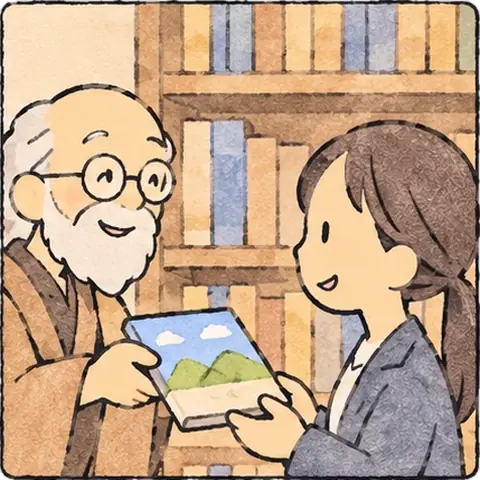
One rainy night, Saki, an exhausted office worker, steps into a small bookshop she had never noticed.
- ~8 minutes
- 18 sentences
- 544 characters
- 69 kanji
- 0 N2 words
Every word and every kanji is checked against the lists of N3 and the levels below; no word from a higher level. How we check →
Too hard? Try the N4 stories or the N5 stories.
The story
さきは 二十八歳の 会社員で、毎晩 十一時ごろまで 働いていた。
Saki was a twenty-eight-year-old office worker who worked until around eleven every night.
その 夜も、駅から 歩いて 帰っている 最中に、急に 強い 雨が 降りだした。
That night too, while she was walking home from the station, heavy rain suddenly began to fall.
かさの ない さきは、毎日 通る 道なのに 一度も 気づかなかった 本屋に かけこんだ。
With no umbrella, Saki rushed into a bookshop she had never once noticed, even though she walked down that street every day.
てんじょうまで 古い 本が ならぶ 店の おくから、白い ひげの おじいさんが 出てきた。
From the back of the shop, where old books were stacked up to the ceiling, an old man with a white beard came out.
「この 店は、雨の 日しか 開けないんですよ」と おじいさんは 笑った。
"I only open this shop on rainy days," the old man said with a smile.
「じゃあ、晴れの 日は……」と 聞きかけた さきに、おじいさんは だまって うすい 絵本を 渡した。
"Then on sunny days…" Saki began to ask, but the old man silently handed her a thin picture book.
最初の ページの すみに、えんぴつで 「さき」と 書いてあった。
In a corner of the first page, "Saki" was written in pencil.
七歳の とき、電車に 忘れたきり、出てこなかった 本だった。
It was the book she had left on a train when she was seven, and which had never turned up again.
小さい ころは、寝る 前に 毎晩 母に 読んでもらったものだ。
When she was little, her mother used to read it to her every night before bed.
中の ねこの 絵も、何度も まねして かいたものだ。
She also used to copy the cat drawn inside it, over and over again.
さきは つい 立ったまま 読みはじめてしまった。
Without meaning to, Saki started reading it right there, standing up.
最後の ページを 読んでいる 最中に、雨の 音が 小さく なってきた。
As she was reading the last page, the sound of the rain began to fade.
「雨が やみかけていますね。その 本は、どうぞ お持ちください」と おじいさんが 言った。
"The rain is letting up. Please, take that book with you," said the old man.
晴れた 次の 朝、行ってみると、店の あった 場所は、何年も 前から 空き地だった ように 見えた。
The next morning, under a clear sky, she went back to look: the spot where the shop had stood looked as if it had been a vacant lot for years.
昨日 あった 店が 消える わけが ない。
A shop that had been there the day before couldn't just disappear.
でも、絵本は 確かに かばんの 中に あった。
And yet the picture book was definitely in her bag.
昨日は 何も なかった 最後の ページの すみに、七歳の さきの 字で 「がんばりすぎないで」と 書いてあった。
In a corner of the last page, where there had been nothing the day before, was written in seven-year-old Saki's handwriting: "Don't push yourself too hard."
その 夜、さきは 何年ぶりかに 十時 前に 寝た。
That night, for the first time in years, Saki went to bed before ten.
Did you understand?
-
1 次の 朝、店の あった 場所は どう なっていたか。
The next morning, what had become of the place where the shop had been?
See the answer
Answer: 1. 空き地に なっていた。 It was a vacant lot.
-
2 おじいさんが 渡した 絵本は、どんな 本だったか。
What kind of book was the picture book the old man handed her?
See the answer
Answer: 2. さきが 子どもの ころ なくした 本。 A book Saki had lost as a child.
-
3 最後の ページの 言葉は、だれの 字で 書いてあったか。
Whose handwriting were the words on the last page written in?
See the answer
Answer: 4. 七歳の さきの 字。 Saki's at seven.

Next story
 けんが選んだ道
The Path Ken Chose
In his last year of high school, Ken tells his father he doesn't want to go to university.
Tappable words, synthetic voice and review.
Grammar in this story
-
〜最中に Noun + の最中に, verb + ている最中に: right in the middle of, often interrupted (食事の最中に, "in the middle of a meal").
その 夜も、駅から 歩いて 帰っている 最中に、急に 強い 雨が 降りだした。
That night too, while she was walking home from the station, heavy rain suddenly began to fall.
-
〜かける Verb stem + かける: half-done, or starting to happen (読みかけの本, "a half-read book").
「じゃあ、晴れの 日は……」と 聞きかけた さきに、おじいさんは だまって うすい 絵本を 渡した。
"Then on sunny days…" Saki began to ask, but the old man silently handed her a thin picture book.
-
〜たものだ Ta-form + ものだ: "used to", recalling a past habit with nostalgia (よく遊んだものだ, "we often played").
小さい ころは、寝る 前に 毎晩 母に 読んでもらったものだ。
When she was little, her mother used to read it to her every night before bed.
Vocabulary 97 words
- 二 に
- two
- 十 じゅう
- ten
- 八 はち
- eight
- 歳 さい
- years old: 六さい = "six years old"
- 会社員 かいしゃいん
- office worker, company employee
- 毎晩 まいばん
- every night
- 一 いち
- one
- 時 じ
- o'clock: 八時 = "eight o'clock"
- ごろ
- around, about (after a time: 十一時ごろ)
- 働く はたらく
- to work
- その
- that (already mentioned, or near the listener)
- 夜 よる
- night, evening
- 駅 えき
- station
- 歩く あるく
- to walk
- 帰る かえる
- to go home, to return
- 急に きゅうに
- suddenly, all of a sudden
- 強い つよい
- strong, heavy (rain, wind)
- 雨 あめ
- rain
- 降る ふる
- to fall (rain, snow)
- かさ
- umbrella
- ある
- there is, to be (for things)
- 毎日 まいにち
- every day
- 通る とおる
- to pass (along, through)
- 道 みち
- path, road
- 一度 いちど
- once; (一度も + negative) not even once
- 気づく きづく
- to notice, to realize
- 本屋 ほんや
- bookshop
- かける
- to run, to dash
- てんじょう
- ceiling
- 古い ふるい
- old (for things)
- 本 ほん
- book
- ならぶ
- to be side by side, to be in a row: ならんで すわる = "to sit side by side"
- 店 みせ
- shop, store; restaurant
- おく
- the back, the inner part (of a room, a shop, a shelf)
- 白い しろい
- white
- ひげ
- whiskers (of a cat); beard
- おじいさん
- old man; grandfather
- 出る でる
- to go out, to leave
- この
- this… (near me, or the one just mentioned)
- 日 ひ
- day
- 開ける あける
- to open
- 笑う わらう
- to laugh, to smile
- じゃあ
- well then, so
- 晴れ はれ
- sunny weather
- 聞く きく
- to listen; to ask
- だまる
- to fall silent
- うすい
- pale, light (a color); thin
- 絵本 えほん
- picture book
- 渡す わたす
- to hand (over)
- 最初 さいしょ
- the first; at first
- ページ
- page
- すみ
- corner
- えんぴつ
- pencil
- 書く かく
- to write
- 七 しち
- seven
- とき
- time; 〜とき = "when…"
- 電車 でんしゃ
- train
- 忘れる わすれる
- to forget
- 小さい ちいさい
- small, little
- ころ
- time, days; 小さい ころ = "when I was little"
- 寝る ねる
- to sleep, to go to bed
- 前 まえ
- front; before (入る 前に = "before going in")
- 母 はは
- my mother
- 読む よむ
- to read
- 中 なか
- inside
- ねこ
- cat
- 絵 え
- picture, drawing
- 何 なん
- what; how many (before a counter: 何まい = "how many")
- 度 ど
- time(s) (counter); degree (temperature); 何度も = "many times"
- まね
- imitation; まねする = "to imitate, to copy"
- する
- to do
- かく
- to draw (えを かく)
- つい
- without meaning to, can't help (doing)
- 立つ たつ
- to stand
- 最後 さいご
- last; the end
- 音 おと
- sound, noise
- なる
- to become
- やむ
- to stop (rain, snow, wind)
- どうぞ
- please; here you are; go ahead
- 持つ もつ
- to hold, to carry
- 言う いう
- to say
- 晴れる はれる
- to clear up (the sky)
- 次 つぎ
- next; つぎの あさ = "the next morning"
- 朝 あさ
- morning
- 行く いく
- to go
- 場所 ばしょ
- place, spot; ばしょを とる = "to save a spot"
- 年 ねん
- year (counter): 五十年 = "fifty years"
- 空き地 あきち
- vacant lot
- 見える みえる
- to be visible, to be in sight
- 昨日 きのう
- yesterday
- 消える きえる
- to go out (a light); to disappear
- でも
- but
- 確かに たしかに
- certainly, indeed
- かばん
- bag, school bag
- 何も なにも
- nothing (with a negative verb)
- 字 じ
- letter, written character; handwriting; 大きな 字で = "in big letters"
- がんばる
- to do your best, to hang in there