 hinoko
雪女 Yuki-onna: the Snow Woman legend in easy Japanese
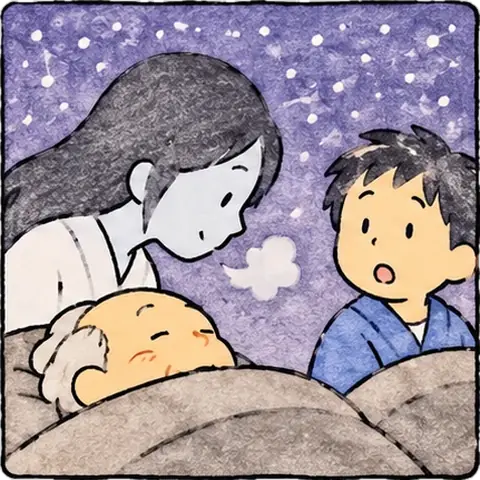
Caught in a snowstorm, two woodcutters spend the night in a hut by a river.
- ~10 minutes
- 22 sentences
- 714 characters
- 83 kanji
- 1 N2 word
Every word and every kanji is checked against the lists of N3 and the levels below; 1 word from N2, flagged in the vocabulary. How we check →
Too hard? Try the N4 stories or the N5 stories.
The story
昔、むさしの 国の ある むらに、木を 切る 仕事を する、年寄りの もさくと、十八の みのきちが いた。
Long ago, in a village in the province of Musashi, there lived two woodcutters: old Mosaku and Minokichi, who was eighteen.
二人が かよう もりへは、大きな 川を 船で 渡らなければ ならなかった。
To reach the forest where they worked, they had to cross a wide river by boat.
ある 冬の 夕方、二人が 帰ろうと すると、ひどい 吹雪に なった。
One winter evening, just as they were about to head home, a terrible snowstorm blew up.
船を 出す 男は もう 帰ってしまい、船は 川の 向こうに あった。
The ferryman had already gone home, and his boat was on the far side of the river.
「船が あれば、帰れるのに」と 言いながら、二人は 窓も 火も ない その 男の 小屋に 入った。
"If only we had the boat, we could get home," they said, as they went into the ferryman's hut, which had neither window nor fire.
夜中、顔に 雪が 当たって、みのきちは 目を 覚ました。
In the middle of the night, snow struck his face, and Minokichi woke up.
小屋の 入口が あいていて、白い 着物の 女が 立っていた。
The door of the hut stood open, and a woman in a white kimono was standing there.
女が もさくの 顔に 白い 息を 吹くと、もさくは その まま 動かなく なった。
When the woman blew her white breath onto Mosaku's face, he moved no more.
次に、女は みのきちの 顔を しばらく じっと 見ていた。
Next, the woman stared at Minokichi's face for some time.
「まだ 若いから、今夜は 助けよう。でも、たとえ 相手が 母親でも、この ことを 話したら、命は ない」
"You are still young, so tonight I will spare you. But if you ever speak of this to anyone, even to your mother, you will die."
そう 言うと、女は 外へ 出ていった。
With that, the woman went outside.
あの 夜の ことが 夢だったと したら、どんなに いいだろうと、みのきちは 思った。
"How good it would be if that night had only been a dream," Minokichi thought.
でも、女の 言葉が 怖くて、その ことを だれにも 話す わけには いかなかった。
But the woman's words frightened him, and he could not tell anyone about it.
次の 冬、みのきちは えどへ 行く 途中の お雪という 娘と 出会い、けっこんした。
The next winter, Minokichi met a young woman called O-Yuki, who was on her way to Edo, and he married her.
二人には 色の 白い 子どもが 十人 生まれた。
Ten fair-skinned children were born to them.
いくら 年が 経っても、お雪は 若い まま だった。
No matter how many years went by, O-Yuki stayed as young as ever.
ある 夜、明かりの そばで 仕事を する お雪を 見ながら、みのきちが 言った。
One night, watching O-Yuki at work by the lamplight, Minokichi said:
「十八の とき、お前に よく 似た 白い 女を 見た ことが ある。夢で なかったと すれば、あれは 雪女だったのだろう」
"When I was eighteen, I saw a woman all in white who looked a lot like you. If it wasn't a dream, it must have been the snow woman."
話を 聞いた とたん、お雪は 立ち上がって さけんだ。
The moment she heard this, O-Yuki stood up and cried out:
「それは 私、私でした。子どもたちが いなければ、今 すぐ 殺すのに。たとえ 何が あっても、子どもたちを 大切に して ください」
"It was me, it was me! If it weren't for the children, I would kill you right now. Whatever happens, take good care of them."
お雪の 声は 風の 音の ように なり、その 体は 白い きりに なって、やねへ 上がり、煙を 出す あなから 消えていった。
O-Yuki's voice became like the sound of the wind; her body turned into a white mist that rose toward the roof and vanished through the smoke hole.
それきり、お雪の すがたを 見た 人は いない。
No one ever saw O-Yuki again.
Did you understand?
-
1 二人が 小屋に 入ったのは なぜか。
Why did the two men go into the hut?
See the answer
Answer: 2. 川を 渡る 船が なかったから because there was no boat to cross the river
-
2 雪女が みのきちに 言った ことは 何か。
What did the snow woman tell Minokichi?
See the answer
Answer: 1. この ことを だれにも 話しては いけない。 He must not tell anyone about this.
-
3 話の 最後で、お雪が みのきちを 殺さなかったのは なぜか。
At the end of the story, why didn't O-Yuki kill Minokichi?
See the answer
Answer: 3. 子どもたちの ことを 考えたから because she thought of the children

Next story
 いっすんぼうし
Issun-bōshi
A boy no bigger than a finger sets off for the capital, with a needle for a sword.
Tappable words, synthetic voice and review.
About this tale
Yuki-onna (雪女), the "snow woman", is a spirit of the Japanese winter: a pale, beautiful figure who appears in snowstorms, in legends told wherever snow falls heavily in Japan. Her best-known story was written in English by Lafcadio Hearn (1850-1904), a writer of Irish and Greek descent who settled in Japan in 1890, became a Japanese citizen and took the name Koizumi Yakumo. It appears in Kwaidan (1904), his book of strange tales, whose preface says a farmer from Chōfu, in the old province of Musashi, told it to him as a legend of his village. In 1964, director Kobayashi Masaki brought it to the screen in his film Kwaidan.
Two woodcutters, old Mosaku and his young apprentice Minokichi, eighteen, are caught in a blizzard. The ferryman has left his boat on the far side of the river, so they take shelter in his hut, which has neither window nor fire. In the night, Minokichi wakes to find the door open and a woman all in white bending over his companion, breathing out a cold white breath. Then she turns to him. Because he is young, she spares him, on one condition: he must never speak of that night to anyone, not even to his mother. The next winter, Minokichi meets a gentle girl, O-Yuki, on her way to Edo…
More than a horror story, Yuki-onna is a tale about a promise and a secret, and about the cold beauty of winter, as gentle as it is dangerous. hinoko’s version, at JLPT N3 level, follows Hearn closely: the province of Musashi, the ferryman’s hut, the road to Edo. In 22 sentences, it lets you practice ways of imagining and supposing: 〜とすれば and 〜としたら (if, supposing), 〜ば〜のに (if only…) and たとえ〜ても (even if). Only one word is above N3: 吹雪 (fubuki, a blizzard).
Grammar in this story
-
〜とすれば/〜としたら Plain form + としたら / とすれば: "supposing that, if it’s the case that" (行くとしたら, "if I were to go").
あの 夜の ことが 夢だったと したら、どんなに いいだろうと、みのきちは 思った。
"How good it would be if that night had only been a dream," Minokichi thought.
-
〜ば〜のに Ba-form + … のに: "if only…", wishing things were different (船があれば帰れるのに).
「船が あれば、帰れるのに」と 言いながら、二人は 窓も 火も ない その 男の 小屋に 入った。
"If only we had the boat, we could get home," they said, as they went into the ferryman's hut, which had neither window nor fire.
-
たとえ〜ても たとえ + te-form + も: "even if", the result stays the same (たとえ雨でも行く, "I’ll go even if it rains").
「まだ 若いから、今夜は 助けよう。でも、たとえ 相手が 母親でも、この ことを 話したら、命は ない」
"You are still young, so tonight I will spare you. But if you ever speak of this to anyone, even to your mother, you will die."
Vocabulary 123 words
- 昔 むかし
- the old days, long ago
- 国 くに
- country
- ある
- a certain, one (in a story)
- むら
- village
- 木 き
- tree
- 切る きる
- to cut
- 仕事 しごと
- work, job
- する
- to do
- 年寄り としより
- old person
- 十 じゅう
- ten
- 八 はち
- eight
- いる
- to be, to exist (living things)
- 二人 ふたり
- two people; 二人で = "the two of them"
- かよう
- to go regularly (somewhere), to frequent
- もり
- forest, woods
- 大きな おおきな
- big (always before a noun)
- 川 かわ
- river
- 船 ふね
- boat, ship
- 渡る わたる
- to cross (a river, a street, a bridge)
- 冬 ふゆ
- winter
- 夕方 ゆうがた
- late afternoon, early evening
- 帰る かえる
- to go home, to return
- ひどい
- terrible; (ひどく) terribly, badly
- 吹雪 ふぶき N2
- snowstorm, blizzard
- なる
- to become
- 出す だす
- to take out, to bring out
- 男 おとこ
- man; 男の 方 = "a gentleman" (polite)
- もう
- already; (with a negative) no longer
- 向こう むこう
- the other side, over there; (on the phone) at the other end
- ある
- there is, to be (for things)
- 言う いう
- to say
- 窓 まど
- window
- 火 ひ
- fire; flame
- その
- that (already mentioned, or near the listener)
- 小屋 こや
- hut, cabin
- 入る はいる
- to enter, to come in
- 夜中 よなか
- the middle of the night
- 顔 かお
- face
- 雪 ゆき
- snow
- 当たる あたる
- to hit; (〜に当たる) to correspond to, to be (someone's son, daughter…)
- 目 め
- eye
- 覚ます さます
- (目を 覚ます) to wake up
- 入口 いりぐち
- entrance
- あく
- to open (by itself)
- 白い しろい
- white
- 着物 きもの
- kimono
- 女 おんな
- woman; 女の 人 = "a woman"
- 立つ たつ
- to stand
- 息 いき
- breath; 息を すう = "breathe in"
- 吹く ふく
- to blow
- 動く うごく
- to move; to work, to run (a machine)
- 次 つぎ
- next; つぎの あさ = "the next morning"
- しばらく
- for a while, for a moment
- じっと
- still, without moving; intently
- 見る みる
- to look, to see
- まだ
- still; (with a negative) not yet
- 若い わかい
- young
- 今夜 こんや
- tonight
- 助ける たすける
- to save, to help
- でも
- but
- たとえ
- (たとえ〜ても) even if
- 相手 あいて
- the other person, partner (in a conversation)
- 母親 ははおや
- mother
- この
- this… (near me, or the one just mentioned)
- こと
- thing, matter; いい こと = "a good thing"
- 話す はなす
- to speak, to talk
- 命 いのち
- life
- そう
- so, like that; そうですか = "I see"
- 外 そと
- outside
- 出る でる
- to go out, to leave
- あの
- that… (over there)
- 夜 よる
- night, evening
- 夢 ゆめ
- dream
- どんなに
- how (much); (どんなに〜ても) however much…, no matter how…
- いい
- good, fine
- 思う おもう
- to think, to believe
- 言葉 ことば
- word, words; a short message
- 怖い こわい
- scary; scared
- だれ
- who
- 行く いく
- to go
- 途中 とちゅう
- on the way, midway
- 娘 むすめ
- daughter; young woman
- 出会う であう
- to meet, to come across
- けっこん
- marriage; (〜する) to get married
- 色 いろ
- color
- 子供 こども
- child; 子どもの とき = "as a child"
- 人 にん
- (after a number) counter for people: 三人 = "three people"
- 生まれる うまれる
- to be born; 生まれて 初めて = "for the first time in one's life"
- いくら
- (いくら〜ても) however much…, no matter how…
- 年 とし
- year
- 経つ たつ
- to pass (of time)
- 明かり あかり
- light, lamp
- そば
- beside, near
- とき
- time; 〜とき = "when…"
- お前 おまえ
- you (casual, used by a man to someone close or younger)
- よく
- well; often
- 似る にる
- to resemble; 〜に 似ている = "to look like"
- あれ
- that (over there)
- 雪女 ゆきおんな
- the snow woman (a winter spirit of folk tales)
- 話 はなし
- talk, story; conversation
- 聞く きく
- to listen; to ask
- 立ち上がる たちあがる
- to stand up
- さけぶ
- to shout, to cry out
- それ
- that (near the listener, or already mentioned)
- 私 わたし
- I, me
- たち
- (after a noun) plural: どうぶつたち = "the animals"
- 今 いま
- now
- すぐ
- right away; right (すぐ 前 = "right in front")
- 殺す ころす
- to kill
- 何 なに
- what
- 大切 たいせつ
- important, precious
- 声 こえ
- voice
- 風 かぜ
- wind
- 音 おと
- sound, noise
- 体 からだ
- body
- きり
- mist, fog
- やね
- roof
- 上がる あがる
- to rise, to go up
- 煙 けむり
- smoke
- あな
- hole
- 消える きえる
- to go out (a light); to disappear
- すがた
- figure, form (of a person)
- 人 ひと
- person; ゆうびんきょくの 人 = "the post office clerk"