 hinoko
したきりすずめ The Tongue-Cut Sparrow in easy Japanese
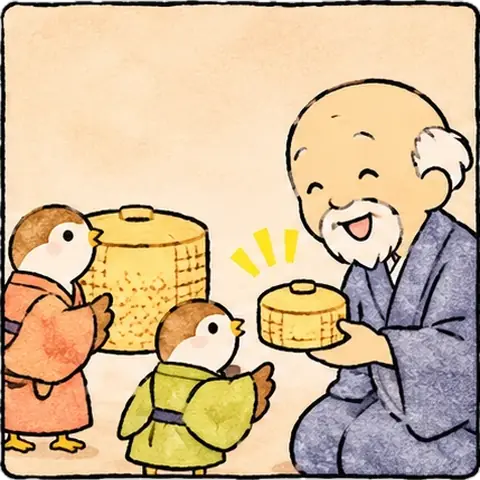
A kind old man takes care of a sparrow, but his wife has no love for the bird.
- ~9 minutes
- 19 sentences
- 632 characters
- 50 kanji
- 2 N2 words
Every word and every kanji is checked against the lists of N3 and the levels below; 2 words from N2, flagged in the vocabulary. How we check →
Too hard? Try the N4 stories or the N5 stories.
The story
昔、ある むらに、すずめを 大事に している 優しい おじいさんと、意地悪な おばあさんが いた。
Long ago, in a certain village, there lived a kind old man who took great care of a sparrow, and a mean old woman.
ある 日、すずめが、おばあさんの 作った のりを 食べてしまった。
One day, the sparrow ate the starch paste the old woman had made.
おばあさんは ひどく 怒った。
The old woman was furious.
「すずめの くせに、私の のりを 食べるなんて!出ていけ!」
"A mere sparrow, eating my starch! Get out!"
おばあさんに したを 切られた すずめは、なきながら 山へ 飛んでいった。
The sparrow, whose tongue the old woman had cut, flew off to the mountains, crying.
帰ってきて その 話を 聞いた おじいさんは、すずめが 心配で しょうがなかった。
When the old man came home and heard what had happened, he was terribly worried about the sparrow.
次の 日、おじいさんは 「どこを 探せば いいのだろう」と、山へ 探しに 行った。
The next day, wondering "Where should I look?", the old man went into the mountains to search.
山の 中を 歩いて 疲れきった とき、やっと すずめたちの 家が 見つかった。
He walked through the mountains, and just when he was completely worn out, he finally found the sparrows' house.
すずめたちは 喜んで、食べきれない ほどの 料理を 出してくれた。
The sparrows were delighted and served him more food than he could eat.
帰る とき、「大きい 箱と 小さい 箱、どちらか お土産に どうぞ」と 言われた。
When it was time to leave, he was told, "A big box and a small box: please take either one as a gift."
「私は 年寄りですから」と 言って、おじいさんが 選んだのは 小さい ほうだった。
"I'm an old man, you see," he said, and it was the small one he chose.
家で 開けてみると、中には たからが いっぱい 入っていた。
When he opened it at home, it was full of treasure.
それを 見た おばあさんは 「大きい ほうを もらってくれば よかったのに」と もんくを 言った。
When she saw this, the old woman complained, "You should have brought back the big one!"
「もしかしたら、大きい 箱には もっと 入っているかもしれない」と、おばあさんは すずめたちの 家へ 出かけた。
"Maybe there's even more in the big box," thought the old woman, and she set off for the sparrows' house.
自分が すずめを いじめた くせに、大きい 箱を もらいに 行ったのだ。
She was the one who had been cruel to the sparrow, and yet off she went to get the big box!
すずめたちに 「家に 着くまで 開けては いけません」と 言われたのに、帰る 途中で がまんできなく なった。
The sparrows had told her, "Don't open it until you get home," and yet on the way back she couldn't wait any longer.
道で 大きい 箱を 開けた とたん、中から 恐ろしい ものや むしが 次々に 出てきた。
The moment she opened the box on the road, terrifying things and insects came out one after another.
おばあさんは 「開けなければ よかった」と なきながら 逃げて 帰った。
"I shouldn't have opened it!" wailed the old woman as she fled home.
けっきょく、困ったのは、意地悪な おばあさんの ほうだった。
In the end, it was the mean old woman who came off worst.
Did you understand?
-
1 おじいさんが 小さい 箱を 選んだのは なぜか。
Why did the old man choose the small box?
See the answer
Answer: 4. 自分は 年寄りだから because he was old
-
2 「大きい ほうを もらってくれば よかったのに」と 言った とき、おばあさんは どんな 気持ちだったか。
When she said "You should have brought back the big one!", how did the old woman feel?
See the answer
Answer: 1. もっと たからが 欲しかった。 She wanted more treasure.
-
3 おばあさんは 大きい 箱を どこで 開けたか。
Where did the old woman open the big box?
See the answer
Answer: 3. 帰る 途中の 道 on the road home

Next story
 名前のないねこ
The Cat with No Name
On a quiet street where the neighbors hardly ever talk to each other lives a rather mysterious gray cat.
Tappable words, synthetic voice and review.
About this tale
Shitakiri suzume (舌切り雀), "the tongue-cut sparrow", is one of Japan’s most famous folktales, often counted among the "five great tales" (五大昔話) along with Momotarō. It follows a pattern Japanese storytellers love: a kind character and a greedy one face the same test, and each gets what they deserve. A related story, in which a grateful sparrow rewards an old woman with gourd seeds that yield endless rice, already appears in the Uji shūi monogatari, a collection of tales from the 13th century.
A kind old man takes care of a little sparrow, but his wife cannot stand the bird. One day, the sparrow eats the starch paste she has made for her washing. Furious, she cuts its tongue and chases it away. The next day, the old man goes into the mountains to look for his friend and, worn out, at last finds the sparrows’ house, where he is treated to a feast. As he leaves, the sparrows offer him a gift: a big box or a small one. Being old, he picks the small one, and at home he finds it full of treasures. When his wife hears of it, she sets off to claim the big box…
The moral is clear: kindness and modesty are rewarded, greed is punished, and the one who asks for less receives more. In the classic tale, the boxes are tsuzura (葛籠), woven baskets with lids. hinoko’s N3 version keeps the course of the story in 19 sentences and simply calls them 箱 (boxes). It is a good tale for practicing reproach and regret: 〜くせに (even though, with reproach), 〜ばよかった (should have) and 〜のは〜のほうだ (the one who… was). Two words are above N3: 雀 (suzume, sparrow) and 糊 (nori, starch paste).
Grammar in this story
-
〜くせに Plain form (noun + の) + くせに: "even though", with blame or contempt (知っているくせに, "even though you know").
「すずめの くせに、私の のりを 食べるなんて!出ていけ!」
"A mere sparrow, eating my starch! Get out!"
-
〜ばよかった Ba-form + よかった: "I should have…", regret about the past (行けばよかった, "I should have gone").
それを 見た おばあさんは 「大きい ほうを もらってくれば よかったのに」と もんくを 言った。
When she saw this, the old woman complained, "You should have brought back the big one!"
-
〜のは〜のほうだ …のは…(の)ほうだ: "it’s the… one that", singling out one of two (選んだのは小さいほうだった, "it was the small one he chose").
「私は 年寄りですから」と 言って、おじいさんが 選んだのは 小さい ほうだった。
"I'm an old man, you see," he said, and it was the small one he chose.
Vocabulary 80 words
- 昔 むかし
- the old days, long ago
- ある
- a certain, one (in a story)
- むら
- village
- すずめ N2
- sparrow
- 大事 だいじ
- important, precious
- する
- to do
- 優しい やさしい
- kind, gentle; やさしく = "gently"
- おじいさん
- old man; grandfather
- 意地悪 いじわる
- mean, nasty (on purpose)
- おばあさん
- old woman; grandmother
- いる
- to be, to exist (living things)
- 日 ひ
- day
- 作る つくる
- to make
- のり N2
- starch paste (for glue or for stiffening cloth)
- 食べる たべる
- to eat
- ひどい
- terrible; (ひどく) terribly, badly
- 怒る おこる
- to get angry
- 私 わたし
- I, me
- 出る でる
- to go out, to leave
- した
- tongue
- 切る きる
- to cut
- なく
- to cry
- 山 やま
- mountain
- 飛ぶ とぶ
- to fly; to jump, to leap
- 帰る かえる
- to go home, to return
- その
- that (already mentioned, or near the listener)
- 話 はなし
- talk, story; conversation
- 聞く きく
- to listen; to ask
- 心配 しんぱい
- worry; (〜する) to worry
- 次 つぎ
- next; つぎの あさ = "the next morning"
- どこ
- where
- 探す さがす
- to look for, to search
- いい
- good, fine
- 行く いく
- to go
- 中 なか
- inside
- 歩く あるく
- to walk
- 疲れる つかれる
- to get tired; (〜ている) to be tired
- とき
- time; 〜とき = "when…"
- やっと
- at last, finally (after waiting or effort)
- たち
- (after a noun) plural: どうぶつたち = "the animals"
- 家 いえ
- house, home
- 見つかる みつかる
- to be found
- 喜ぶ よろこぶ
- to be delighted, to be glad
- 料理 りょうり
- cooking; dish
- 出す だす
- to take out, to bring out
- 大きい おおきい
- big
- 箱 はこ
- box
- 小さい ちいさい
- small, little
- どちら
- which (of two); どちらか = either one
- お土産 おみやげ
- gift, souvenir (to take home)
- どうぞ
- please; here you are; go ahead
- 言う いう
- to say
- 年寄り としより
- old person
- 選ぶ えらぶ
- to choose
- 開ける あける
- to open
- たから
- treasure
- いっぱい
- full; lots of
- 入る はいる
- to enter, to come in
- それ
- that (near the listener, or already mentioned)
- 見る みる
- to look, to see
- もらう
- to receive, to get
- もんく
- complaint; (〜を 言う) to complain
- もしかしたら
- perhaps, maybe
- もっと
- more, even more
- 出かける でかける
- to go out, to set off
- 自分 じぶん
- oneself; じぶんの = "one's own"
- いじめる
- to bully, to be cruel to
- 着く つく
- to arrive
- 途中 とちゅう
- on the way, midway
- がまん
- patience; (〜する) to put up with, to make do
- できる
- can do, to manage
- なる
- to become
- 道 みち
- path, road
- 恐ろしい おそろしい
- frightening, terrible
- もの
- thing
- むし
- insect, bug
- 次々 つぎつぎ
- one after another
- 逃げる にげる
- to run away, to escape
- けっきょく
- in the end, after all
- 困る こまる
- to be in trouble, to be at a loss