 hinoko
名前のないねこ The Cat with No Name
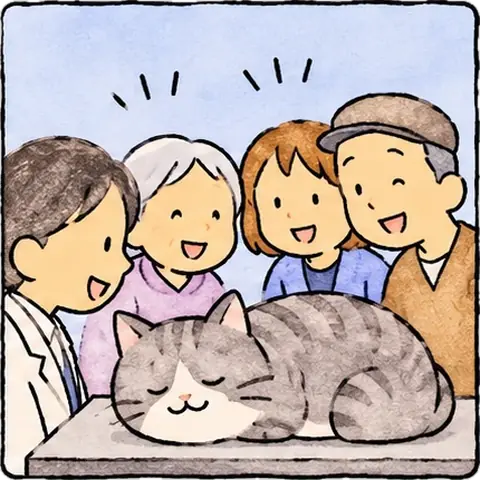
On a quiet street where the neighbors hardly ever talk to each other lives a rather mysterious gray cat.
- ~8 minutes
- 19 sentences
- 594 characters
- 59 kanji
- 0 N2 words
Every word and every kanji is checked against the lists of N3 and the levels below; no word from a higher level. How we check →
Too hard? Try the N4 stories or the N5 stories.
The story
静かな 通りに、名前の ない ねこが いた。
On a quiet street, there was a cat with no name.
いや、本当は 五つも あった。
Or rather, it actually had five.
その グレーの ねこは、毎日 通りの 五つの 家に かよっていた。
Every day, the gray cat made its way to five houses on the street.
何と 呼ばれるかは、家によって 違ったのだ。
And what it was called depended on the house.
パン屋では 「くも」、一人暮らしの おじいさんの 家では 「タマ」、小さい 子どもの いる 家では 「だいふく」。
At the bakery it was "Kumo"; at the home of the old man who lived alone, "Tama"; at the house with a small child, "Daifuku."
ほかの ねこと 違って 人が 大好きで、どの 家の 人も 「うちの ねこ」だと 思っていた。
Unlike other cats, it loved people, and every household thought of it as "our cat."
でも、この 通りの 人たちは、となりどうしでも ほとんど 話を しなかった。
But on this street, even next-door neighbors hardly ever talked to each other.
道で 会っても、見ない ふりを して 通り過ぎていた。
When they ran into each other, they pretended not to see one another and walked on by.
ところが、その ねこが 急に 元気を なくした。
Then, suddenly, the cat lost all its energy.
パン屋の 小川さんが 動物病院へ 連れていくと、それを 見た ほかの 家の 人たちも あとから かけこんできた。
When Ogawa-san from the bakery took it to the animal hospital, people from the other houses, who had seen her, came rushing in after her.
五人が それぞれ 違う 名前で ねこを 呼ぶので、病院の 先生は 笑いだした。
As each of the five called the cat by a different name, the vet burst out laughing.
「五つの 家で ご飯を もらっていたんですね。太っている わけです。一週間 薬を 飲ませれば、治りますよ」
"So it's been eating at five houses! No wonder it's so fat. Give it medicine for a week and it'll get better."
五人は 待合室で、初めて ちゃんと 話した。
In the waiting room, the five of them really talked for the first time.
同じ ねこが 好きな 人どうしだから、話が 合う わけだ。
No wonder they got along: they all loved the same cat.
「小川さん 一人じゃなくて、みんなで 薬を 飲ませませんか。曜日ごとに 家を 決めて」と おじいさんが 言った。
"Instead of leaving it all to Ogawa-san, why don't we all give it the medicine? We could pick a house for each day of the week," said the old man.
それから、通りの 人たちは 道で 会うと、あいさつを する ように なった。
From then on, the people on the street started saying hello when they ran into each other.
ねこは 元気に なると、また 五つの 家に かよいはじめた。
Once it was well again, the cat went back to making its rounds of the five houses.
今は、名前を 呼ばれても 呼ばれなくても、来たい ときに 来て、帰りたい ときに 帰る。
Now, whether it's called by name or not, it comes when it likes and leaves when it likes.
「この 通りを 変えたのは あの ねこだ」と みんなは 言うが、ねこは 知らない ふりを している。
"It was that cat who changed this street," everyone says, but the cat pretends to know nothing about it.
Did you understand?
-
1 ねこが 太っていたのは なぜか。
Why was the cat fat?
See the answer
Answer: 3. 五つの 家で ご飯を もらっていたから。 Because it was being fed at five houses.
-
2 待合室で、おじいさんは 何と 言ったか。
In the waiting room, what did the old man say?
See the answer
Answer: 4. 「みんなで 薬を 飲ませませんか」 "Why don't we all give it the medicine?"
-
3 ねこが 病気に なった あと、通りの 人たちは どう 変わったか。
After the cat fell ill, how did the people on the street change?
See the answer
Answer: 2. 道で 会うと、あいさつを する ように なった。 When they met, they started saying hello.

Next story
 つるのおんがえし
The Grateful Crane
One snowy day, a poor old man frees a crane caught in a trap. Soon after, a visitor knocks at his door.
Tappable words, synthetic voice and review.
Grammar in this story
-
〜ふりをする Plain form + ふりをする: pretend, act as if (寝たふりをする, "pretend to be asleep"; 見ないふり).
道で 会っても、見ない ふりを して 通り過ぎていた。
When they ran into each other, they pretended not to see one another and walked on by.
-
〜わけだ Plain form + わけだ: "no wonder, so that’s why", a logical conclusion (寒いわけだ, "no wonder it’s cold").
「五つの 家で ご飯を もらっていたんですね。太っている わけです。一週間 薬を 飲ませれば、治りますよ」
"So it's been eating at five houses! No wonder it's so fat. Give it medicine for a week and it'll get better."
-
〜同士 Noun + 同士: among people of the same kind, with each other (友だち同士, "among friends"; となり同士).
でも、この 通りの 人たちは、となりどうしでも ほとんど 話を しなかった。
But on this street, even next-door neighbors hardly ever talked to each other.
Vocabulary 88 words
- 静か しずか
- quiet
- 通り とおり
- street
- 名前 なまえ
- name
- ある
- there is, to be (for things)
- ねこ
- cat
- いる
- to be, to exist (living things)
- いや
- no, well… (correcting oneself)
- 本当 ほんとう
- true, the truth; ほんとうは = "actually"
- 五つ いつつ
- five (things)
- その
- that (already mentioned, or near the listener)
- グレー
- gray
- 毎日 まいにち
- every day
- 家 いえ
- house, home
- かよう
- to go regularly (somewhere), to frequent
- 何 なん
- what; how many (before a counter: 何まい = "how many")
- 呼ぶ よぶ
- to call (someone)
- 違う ちがう
- to be different; to be the wrong one
- パン
- bread
- 屋 や
- shop, after what it sells: はなや = "flower shop"
- 一人暮らし ひとりぐらし
- living alone
- おじいさん
- old man; grandfather
- 小さい ちいさい
- small, little
- 子供 こども
- child; 子どもの とき = "as a child"
- ほか
- other; ほかの 人 = "other people"
- 人 ひと
- person; ゆうびんきょくの 人 = "the post office clerk"
- 大好き だいすき
- to love, to like very much
- どの
- which…?; (どの〜も) every…
- うち
- home; うちで = "at home"
- 思う おもう
- to think, to believe
- でも
- but
- この
- this… (near me, or the one just mentioned)
- たち
- (after a noun) plural: どうぶつたち = "the animals"
- となり
- next to, next door
- ほとんど
- almost; (with a negative) hardly
- 話 はなし
- talk, story; conversation
- する
- to do
- 道 みち
- path, road
- 会う あう
- to meet, to see (someone)
- 見る みる
- to look, to see
- ふり
- appearance; (〜ふりを する) to pretend to
- 通り過ぎる とおりすぎる
- to pass by (without stopping)
- ところが
- however, but (unexpectedly)
- 急に きゅうに
- suddenly, all of a sudden
- 元気 げんき
- healthy, lively
- なくす
- to lose (something); 元気を なくす = "to lose one's energy"
- さん
- Mr., Ms. (polite, after a name)
- 動物病院 どうぶつびょういん
- animal hospital, vet clinic
- 連れる つれる
- to take (someone) along; つれていく = "to take someone somewhere"
- それ
- that (near the listener, or already mentioned)
- あと
- after; the rest (あと 一つ = "one left"; あと 五分 = "five more minutes")
- かける
- to run, to dash
- 五 ご
- five
- 人 にん
- (after a number) counter for people: 三人 = "three people"
- それぞれ
- each, respectively
- 病院 びょういん
- hospital, clinic
- 先生 せんせい
- teacher
- 笑う わらう
- to laugh, to smile
- ご飯 ごはん
- meal; cooked rice
- もらう
- to receive, to get
- 太る ふとる
- to put on weight; 太っている = "to be fat"
- 一 いち
- one
- 週間 しゅうかん
- week (duration): 一週間 = "one week"
- 薬 くすり
- medicine; 薬を 飲む = "to take medicine"
- 飲む のむ
- to drink
- 治る なおる
- to get better, to recover
- 待合室 まちあいしつ
- waiting room
- 初めて はじめて
- for the first time
- ちゃんと
- properly, really
- 話す はなす
- to speak, to talk
- 同じ おなじ
- the same
- 好き すき
- to like
- 合う あう
- to match, to fit; 話が 合う = "to get along"
- 一人 ひとり
- one person; alone (一人で, いつも 一人)
- みんな
- everyone; all
- 曜日 ようび
- day of the week
- 決める きめる
- to decide, to choose
- 言う いう
- to say
- それから
- and then, after that
- あいさつ
- greeting; (〜する) to greet
- なる
- to become
- また
- again
- 今 いま
- now
- 来る くる
- to come
- とき
- time; 〜とき = "when…"
- 帰る かえる
- to go home, to return
- 変える かえる
- to change (something)
- あの
- that… (over there)
- 知る しる
- to know; you say しっています