 hinoko
つるのおんがえし The Grateful Crane (Crane Wife) in easy Japanese
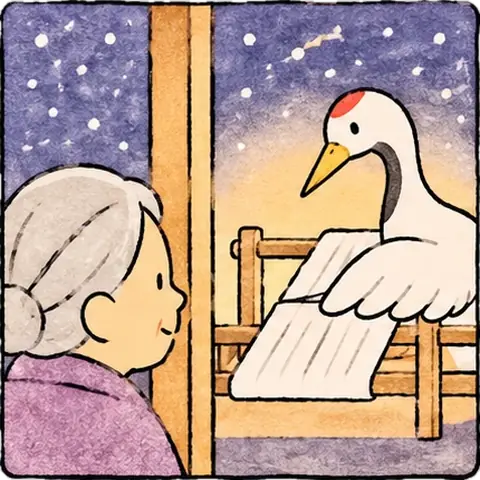
One snowy day, a poor old man frees a crane caught in a trap. Soon after, a visitor knocks at his door.
- ~9 minutes
- 20 sentences
- 633 characters
- 57 kanji
- 2 N2 words
Every word and every kanji is checked against the lists of N3 and the levels below; 2 words from N2, flagged in the vocabulary. How we check →
Too hard? Try the N4 stories or the N5 stories.
The story
昔、雪の 多い むらに、貧しい おじいさんと おばあさんが いた。
Long ago, in a snowy village, there lived a poor old man and old woman.
ある 雪の 日、山で 切った 木を 町へ 売りに 行く 途中で、おじいさんは わなに かかった つるを 見つけた。
One snowy day, on his way to town to sell the wood he had cut in the mountains, the old man found a crane caught in a trap.
苦しそうな つるを 見て、おじいさんは 助けずには いられなかった。
Seeing the crane in pain, the old man couldn't help but save it.
「人に 見つからない うちに、早く 逃げなさい」と わなを 外してあげると、つるは 空へ 飛んでいった。
"Hurry and get away before anyone finds you," he said as he opened the trap, and the crane flew off into the sky.
雪の 降る 夜、美しい 娘が 一人、家を 訪ねてきた。
One snowy night, a beautiful young woman came alone to their door.
「道に 迷ってしまいました。今夜、とめていただけませんか」
"I've lost my way. Could you possibly put me up for the night?"
娘は その まま 家に 残り、二人の 娘に なった。
The young woman stayed on with them and became their daughter.
ある 日、娘は いとを 買ってきてもらうと、おくの 部屋に 入る 前に、こう 言った。
One day, after they had bought her some thread, the young woman said this before going into the back room:
「ぬのを おっている 間は、決して 中を 見ないで ください」
"While I am weaving, you must never look inside."
それから 娘は 何日も 部屋から 出ずに、ぬのを おってばかり いた。
From then on, for days on end, she never left the room and did nothing but weave.
できた ぬのは、まるで 光の ように 美しかった。
The finished cloth was as beautiful as light.
町で 売ると、一まいの ぬのにしては、おどろく ほど 高く 売れた。
When it was sold in town, it fetched a surprisingly high price for a single piece of cloth.
次の ぬのは、さらに 高く 売れた。
The next one sold for even more.
ところが、娘は ぬのを おる たびに やせていったので、二人は 心配せずには いられなかった。
But each time she wove, the young woman grew thinner, and the old couple couldn't help worrying.
ある 夜、おばあさんは ついに、部屋の 中を そっと のぞいてしまった。
One night, the old woman finally took a quiet peek into the room.
そこに いたのは、自分の はねを 抜いて、ぬのに おりこんでいる つるだった。
What she saw there was a crane, pulling out its own feathers and weaving them into the cloth.
その 体には、すでに はねが ほとんど 残っていなかった。
There were already hardly any feathers left on its body.
「私は、あの 日 助けていただいた つるです。すがたを 見られてしまったので、もう ここには いられません」
"I am the crane you saved that day. Now that you have seen me as I really am, I cannot stay here any longer."
「この おんは、決して 忘れません」と 言うと、つるは 空へ 飛んでいき、それきり 戻らなかった。
"I will never forget your kindness," she said; then the crane flew off into the sky and never came back.
人にしては 美しすぎた あの 娘の ことは、二人にとって 忘れがたい 思い出に なった。
That young woman, too beautiful to have been human, became a memory the old couple could never forget.
Did you understand?
-
1 おじいさんは なぜ つるを 助けたか。
Why did the old man save the crane?
See the answer
Answer: 2. つるが 苦しそうだったから because the crane seemed to be in pain
-
2 部屋を のぞいた おばあさんは、そこで 何を 見たか。
When she peeked into the room, what did the old woman see?
See the answer
Answer: 3. 自分の はねで ぬのを おる つる a crane weaving with its own feathers
-
3 最後に、娘は どう なったか。
What became of the young woman in the end?
See the answer
Answer: 4. 家を 出ていき、もう 戻らなかった。 She left the house and never came back.

Next story
 雪女
The Snow Woman
Caught in a snowstorm, two woodcutters spend the night in a hut by a river.
Tappable words, synthetic voice and review.
About this tale
Tsuru no ongaeshi (鶴の恩返し), "the crane returns a kindness", belongs to a large family of Japanese tales in which an animal takes human form to live among people. In a well-known variant, Tsuru nyōbō (鶴女房), a poor young man saves a crane and a mysterious woman becomes his wife: hence the English title The Crane Wife. Children’s books usually tell the version with an old couple, also known as The Grateful Crane. In 1949, the playwright Kinoshita Junji drew on the wife’s version for Yūzuru (Twilight Crane), a classic of modern Japanese theater.
One snowy day, a poor old man finds a crane caught in a hunter’s trap and sets it free. On a snowy night soon after, a beautiful young woman who has lost her way knocks at the old couple’s door. She stays and becomes their daughter. One day she asks for thread and shuts herself in the back room to weave, with one request: never look inside while she is working. Her cloth is as beautiful as light and sells for a surprising price, and the next piece for even more. But each time she weaves, she grows thinner, and the old couple cannot help worrying…
The tale speaks of gratitude, a central value in Japan (恩, on, is the debt you owe to someone who has helped you), of trust, and of a promise that is hard to keep. The forbidden look is a motif as old as Japan’s founding myths, and the crane, a symbol of long life and good fortune, gives of herself without counting. hinoko tells the old couple’s version at JLPT N3 level, in 20 sentences. You will meet けっして〜ない (never), 〜ずにはいられない (cannot help doing) and 〜にしては (for a…), and only two words above N3: 鶴 (tsuru, crane) and 罠 (wana, trap).
Grammar in this story
-
けっして〜ない けっして + negative: "never, by no means", a strong denial or promise.
「ぬのを おっている 間は、決して 中を 見ないで ください」
"While I am weaving, you must never look inside."
-
〜ずにはいられない Nai-form minus ない + ずにはいられない: "can’t help doing" (笑わずにはいられない, "can’t help laughing").
苦しそうな つるを 見て、おじいさんは 助けずには いられなかった。
Seeing the crane in pain, the old man couldn't help but save it.
-
〜にしては Noun or plain form + にしては: "for a…", unexpected given the standard (初めてにしては上手, "good for a first try").
町で 売ると、一まいの ぬのにしては、おどろく ほど 高く 売れた。
When it was sold in town, it fetched a surprisingly high price for a single piece of cloth.
Vocabulary 99 words
- おんがえし
- repaying a kindness, gratitude
- 昔 むかし
- the old days, long ago
- 雪 ゆき
- snow
- 多い おおい
- many, a lot; 人が おおい = "crowded"
- むら
- village
- 貧しい まずしい
- poor
- おじいさん
- old man; grandfather
- おばあさん
- old woman; grandmother
- いる
- to be, to exist (living things)
- ある
- a certain, one (in a story)
- 日 ひ
- day
- 山 やま
- mountain
- 切る きる
- to cut
- 木 き
- tree
- 町 まち
- town; まちへ 行く = "go into town"
- 売る うる
- to sell
- 行く いく
- to go
- 途中 とちゅう
- on the way, midway
- わな N2
- trap, snare
- かかる
- (わなに かかる) to be caught (in a trap)
- つる N2
- crane (the bird)
- 見つける みつける
- to find, to discover
- 苦しい くるしい
- painful, suffering
- 見る みる
- to look, to see
- 助ける たすける
- to save, to help
- 人 ひと
- person; ゆうびんきょくの 人 = "the post office clerk"
- 見つかる みつかる
- to be found
- 早い はやい
- early; はやく = "early", or "quickly, soon" (adverb)
- 逃げる にげる
- to run away, to escape
- 外す はずす
- to remove, to take off
- 空 そら
- sky
- 飛ぶ とぶ
- to fly; to jump, to leap
- 降る ふる
- to fall (rain, snow)
- 夜 よる
- night, evening
- 美しい うつくしい
- beautiful
- 娘 むすめ
- daughter; young woman
- 一人 ひとり
- one person; alone (一人で, いつも 一人)
- 家 いえ
- house, home
- 訪ねる たずねる
- to visit, to call on
- 道 みち
- path, road
- 迷う まよう
- to get lost; to hesitate
- 今夜 こんや
- tonight
- とめる
- to put up (for the night)
- その
- that (already mentioned, or near the listener)
- 残る のこる
- to remain, to stay behind; to be left
- 二人 ふたり
- two people; 二人で = "the two of them"
- なる
- to become
- いと
- thread
- 買う かう
- to buy
- おく
- the back, the inner part (of a room, a shop, a shelf)
- 部屋 へや
- room
- 入る はいる
- to enter, to come in
- 前 まえ
- front; before (入る 前に = "before going in")
- こう
- like this, as follows
- 言う いう
- to say
- ぬの
- cloth, fabric
- おる
- to weave
- 間 あいだ
- during, while; between
- 決して けっして
- (with a negative) never, by no means
- 中 なか
- inside
- それから
- and then, after that
- 何日 なんにち
- how many days?; what day (of the month)?
- 出る でる
- to go out, to leave
- できる
- can do, to manage
- まるで
- just like, as if (with 〜ようだ, 〜ように)
- 光 ひかり
- light, glow
- 一 いち
- one
- まい
- counter for flat things (sheets, stamps…)
- おどろく
- to be surprised
- 高い たかい
- high, tall; expensive
- 売れる うれる
- to sell, to be sold
- 次 つぎ
- next; つぎの あさ = "the next morning"
- さらに
- even more, further
- ところが
- however, but (unexpectedly)
- やせる
- to get thin
- 心配 しんぱい
- worry; (〜する) to worry
- する
- to do
- ついに
- at last, finally
- そっと
- gently, quietly
- のぞく
- to peek, to peep
- そこ
- there, that place
- 自分 じぶん
- oneself; じぶんの = "one's own"
- はね
- feather; wing
- 抜く ぬく
- to pull out
- 体 からだ
- body
- すでに
- already
- ほとんど
- almost; (with a negative) hardly
- 私 わたし
- I, me
- あの
- that… (over there)
- すがた
- figure, form (of a person)
- もう
- already; (with a negative) no longer
- ここ
- here
- この
- this… (near me, or the one just mentioned)
- おん
- kindness received, debt of gratitude
- 忘れる わすれる
- to forget
- それ
- that (near the listener, or already mentioned)
- 戻る もどる
- to return, to go back (to a place, a state)
- こと
- thing, matter; いい こと = "a good thing"
- 思い出 おもいで
- memory