 hinoko
かさじぞう Kasa-jizō: the straw hat tale in easy Japanese
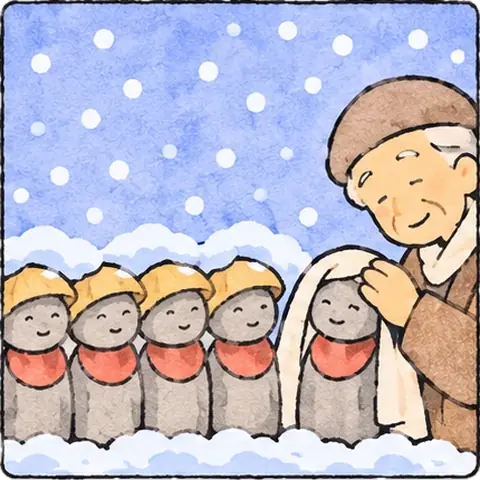
On the last day of the year, a poor old man sets off to town to sell the straw hats he has made.
- ~8 minutes
- 17 sentences
- 578 characters
- 57 kanji
- 2 N2 words
Every word and every kanji is checked against the lists of N3 and the levels below; 2 words from N2, flagged in the vocabulary. How we check →
Too hard? Try the N4 stories or the N5 stories.
The story
昔、ある むらに、貧しい おじいさんと おばあさんが いた。
Long ago, in a certain village, there lived a poor old man and old woman.
一年の 最後の 日なのに、家には 正月の 食べ物が 何も なかった。
It was the last day of the year, and yet there was no New Year food in the house at all.
そこで 二人は、夏に 取っておいた 草で かさを 五つ 作った。
So, with grass they had put aside in the summer, the two of them made five straw hats.
おじいさんは 「これを 売って、正月の 食べ物を 買ってくるよ」と、雪の 中を 町へ 出かけていった。
"I'll sell these and bring back food for the New Year," said the old man, and he set off for town through the snow.
町で、おじいさんは かさを 売ろうと したが、だれも 買ってくれなかった。
In town, he tried to sell the hats, but nobody bought any.
けっきょく、かさは 一つも 売れなかったので、おじいさんは 何も 買わずに 町を 出た。
In the end, since not a single hat had sold, the old man left town without buying anything.
帰る 途中で ふと 見ると、道の そばに じぞうさまが 六人、雪を かぶった まま 立っていた。
On the way home, his eyes happened to fall on six jizō standing by the road, covered in snow.
おじいさんは 「じぞうさまも きっと 寒いに違いない。この まま 帰る わけには いかない」と 思った。
"The jizō must be cold too. I can't just go home like this," thought the old man.
そして、売れなかった かさを、一人ずつ 頭に のせてあげた。
Then, one by one, he put the unsold hats on their heads.
でも、かさは 五つしか なく、最後の 一人の 頭は 雪で 白い まま だった。
But there were only five hats, and the last one's head stayed white with snow.
おじいさんは 「かさの 代わりに、これで がまんして ください」と 言って、自分の 古い ぬのを その 頭に まいてあげた。
"Instead of a hat, please make do with this," he said, and he wrapped his own old cloth around its head.
家に 帰って じぞうさまの 話を すると、おばあさんは 怒らずに、にっこり 笑った。
When he got home and told her about the jizō, the old woman didn't get angry; she gave him a big smile.
「かさは 売れなかったけど、その 代わりに、いい ことを しましたね」
"The hats didn't sell, but you did a good deed instead."
その 夜中、外から 重い 物を 引く 音と、歌う 声が 聞こえてきた。
In the middle of that night, they heard from outside the sound of something heavy being pulled, and voices singing.
二人が 外を 見ると、かさを かぶった じぞうさまたちが 雪の 中を 帰っていく ところだった。
When the two of them looked outside, the jizō in their straw hats were heading back through the snow.
家の 前には、正月の 食べ物や やさいや みそが 山の ように 置いてあった。
In front of the house, New Year food, vegetables and miso had been left, piled up like a mountain.
こうして 二人は、いい 正月を 迎える ことが できた。
And so the old couple were able to see in a happy New Year.
Did you understand?
-
1 最後の じぞうさまの 頭に、おじいさんは 何を まいたか。
What did the old man wrap around the last jizō's head?
See the answer
Answer: 3. 自分の 古い ぬの his own old cloth
-
2 おじいさんの 話を 聞いて、おばあさんは どう 思ったか。
When she heard the old man's story, what did the old woman think?
See the answer
Answer: 1. いい ことを したと 思った。 She thought he had done a good deed.
-
3 「その 代わりに」の 「その」は、何を 指しているか。
In "その 代わりに", what does "その" refer to?
See the answer
Answer: 4. かさが 一つも 売れなかった こと the fact that not a single hat had sold

Next story
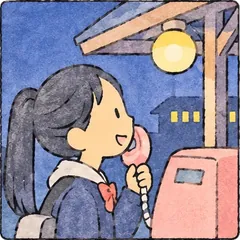 九時の電話
The Nine O'Clock Call
Every night, Mio walks past an old telephone in front of a small station. One Friday, at nine o'clock sharp, it rings.
Tappable words, synthetic voice and review.
About this tale
Kasa-jizō (笠地蔵), "the jizō in straw hats", is one of Japan’s best-loved winter tales, told in many regional variants: the number of statues and the old man’s trade change from one telling to another. Jizō is a Buddhist bodhisattva who protects children and travelers; his stone statues, often in groups of six, one for each of the six worlds of rebirth, stand along country roads, sometimes wearing a red bib. The best-known version today is Kasako jizō (かさこじぞう), a picture book by Iwasaki Kyōko published in 1967, which generations of Japanese children have read in the second year of elementary school.
On the last day of the year, a poor old couple have nothing to eat for the New Year. With grass saved since the summer, they make five kasa, the wide hats worn against rain and snow, and the old man sets off through the snow to sell them in town. Nobody buys a single one. On his way home, he passes six jizō standing by the road, their heads covered in snow. Unable to leave them like that, he places his unsold hats on their heads, one by one. But there are only five hats for six jizō…
The tale celebrates kindness that expects nothing in return, even from those who have almost nothing, and the old woman, far from scolding her husband, praises his good deed. It takes place on ōmisoka (大晦日), the last day of the year, one of the most important moments of the Japanese calendar. hinoko’s version, at JLPT N3 level, follows the course of Iwasaki’s picture book in 17 sentences, with simpler words for the New Year food and the old man’s cloth. Watch for three grammar points: 〜ずに (without doing), 〜まま (leaving something as it is) and 〜代わりに (instead of). Two words are above N3: 地蔵 and 笠.
Grammar in this story
-
〜ずに Nai-form minus ない + ずに: "without doing", more written than ないで (言わずに, "without saying"); する: せずに.
けっきょく、かさは 一つも 売れなかったので、おじいさんは 何も 買わずに 町を 出た。
In the end, since not a single hat had sold, the old man left town without buying anything.
-
〜まま "As is, unchanged": a state continues while something else happens.
帰る 途中で ふと 見ると、道の そばに じぞうさまが 六人、雪を かぶった まま 立っていた。
On the way home, his eyes happened to fall on six jizō standing by the road, covered in snow.
-
〜代わりに Noun + の代わりに, verb + 代わりに: instead of, or in return for (肉の代わりに魚, "fish instead of meat").
おじいさんは 「かさの 代わりに、これで がまんして ください」と 言って、自分の 古い ぬのを その 頭に まいてあげた。
"Instead of a hat, please make do with this," he said, and he wrapped his own old cloth around its head.
Vocabulary 93 words
- 昔 むかし
- the old days, long ago
- ある
- a certain, one (in a story)
- むら
- village
- 貧しい まずしい
- poor
- おじいさん
- old man; grandfather
- おばあさん
- old woman; grandmother
- いる
- to be, to exist (living things)
- 一 いち
- one
- 年 ねん
- year (counter): 五十年 = "fifty years"
- 最後 さいご
- last; the end
- 日 ひ
- day
- 家 いえ
- house, home
- 正月 しょうがつ
- New Year (the first days of the year)
- 食べ物 たべもの
- food
- 何も なにも
- nothing (with a negative verb)
- ある
- there is, to be (for things)
- そこで
- so, therefore (and one acts accordingly)
- 二人 ふたり
- two people; 二人で = "the two of them"
- 夏 なつ
- summer
- 取る とる
- to take
- 草 くさ
- grass, plant
- かさ N2
- woven straw hat (wide and conical)
- 五つ いつつ
- five (things)
- 作る つくる
- to make
- これ
- this (near me)
- 売る うる
- to sell
- 買う かう
- to buy
- 雪 ゆき
- snow
- 中 なか
- inside
- 町 まち
- town; まちへ 行く = "go into town"
- 出かける でかける
- to go out, to set off
- する
- to do
- だれ
- who
- けっきょく
- in the end, after all
- 一つ ひとつ
- one (thing)
- 売れる うれる
- to sell, to be sold
- 出る でる
- to go out, to leave
- 帰る かえる
- to go home, to return
- 途中 とちゅう
- on the way, midway
- ふと
- suddenly, by chance, without thinking
- 見る みる
- to look, to see
- 道 みち
- path, road
- そば
- beside, near
- じぞう N2
- jizō (Buddhist stone statue, a protector, by the roadside)
- さま
- (after a noun) mark of great respect
- 六 ろく
- six
- 人 にん
- (after a number) counter for people: 三人 = "three people"
- かぶる
- to put on, to wear (a hat)
- 立つ たつ
- to stand
- きっと
- surely, certainly
- 寒い さむい
- cold (weather, air)
- この
- this… (near me, or the one just mentioned)
- いく
- to go
- 思う おもう
- to think, to believe
- そして
- and then
- 一人 ひとり
- one person; alone (一人で, いつも 一人)
- ずつ
- at a time: すこしずつ = "little by little"
- 頭 あたま
- head
- のせる
- to put, to place (on top of something)
- でも
- but
- 白い しろい
- white
- 代わり かわり
- (〜の代わりに) instead of; (その代わりに) instead, in exchange, on the other hand
- がまん
- patience; (〜する) to put up with, to make do
- 言う いう
- to say
- 自分 じぶん
- oneself; じぶんの = "one's own"
- 古い ふるい
- old (for things)
- ぬの
- cloth, fabric
- その
- that (already mentioned, or near the listener)
- まく
- to wrap, to wind (around)
- 話 はなし
- talk, story; conversation
- 怒る おこる
- to get angry
- にっこり
- with a big smile
- 笑う わらう
- to laugh, to smile
- いい
- good, fine
- こと
- thing, matter; いい こと = "a good thing"
- 夜中 よなか
- the middle of the night
- 外 そと
- outside
- 重い おもい
- heavy
- 物 もの
- thing
- 引く ひく
- to pull; かぜを ひく = "to catch a cold"
- 音 おと
- sound, noise
- 歌う うたう
- to sing
- 声 こえ
- voice
- 聞こえる きこえる
- to be heard, to be audible
- たち
- (after a noun) plural: どうぶつたち = "the animals"
- 前 まえ
- front; before (入る 前に = "before going in")
- やさい
- vegetable
- みそ
- miso (fermented soybean paste)
- 山 やま
- mountain
- 置く おく
- to put, to leave (somewhere)
- こうして
- and so, in this way
- 迎える むかえる
- to welcome; (正月を 迎える) to see in the New Year
- できる
- can do, to manage