 hinoko
九時の電話 The Nine O'Clock Call
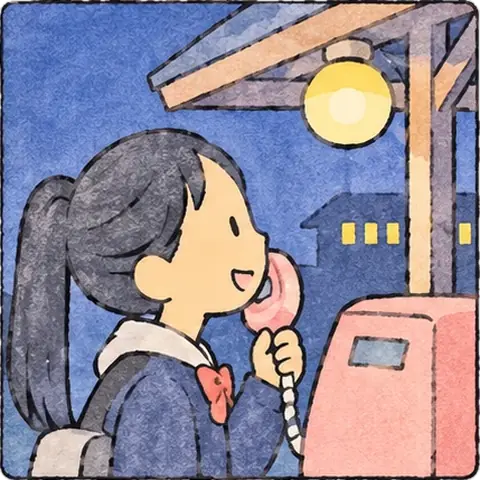
Every night, Mio walks past an old telephone in front of a small station. One Friday, at nine o'clock sharp, it rings.
- ~7 minutes
- 17 sentences
- 502 characters
- 66 kanji
- 0 N2 words
Every word and every kanji is checked against the lists of N3 and the levels below; no word from a higher level. How we check →
Too hard? Try the N4 stories or the N5 stories.
The story
高校生の みおは、毎晩 九時ごろ、アルバイトの 帰りに 小さな 駅の 前を 通っていた。
Every night around nine, on her way home from her part-time job, Mio, a high school student, walked past a small station.
駅の 前には、だれでも 使える 古い 電話が 一台 あった。
In front of the station stood an old telephone that anyone could use.
その 前を 通る たびに、みおは だれかに 呼ばれている ような 気が した。
Every time she walked past it, Mio felt as if someone were calling her.
金曜日の 夜、ちょうど 九時に、だれも いない 駅の 前で、その 電話が 鳴った。
One Friday night, at exactly nine o'clock, in front of the deserted station, that phone rang.
電話に 出た とたん、「あ、間違えました」という 男の子の 声が した。
The moment she answered, a boy's voice said, "Oh, wrong number."
それから、九時に 電話が 鳴る たびに、二人は 三分 だけ 話した。
After that, every time the phone rang at nine, the two of them talked for just three minutes.
相手は ゆうとという 十七歳の 男の子で、来週 大事な 試験が ある らしい。
The caller was a seventeen-year-old boy named Yūto, who apparently had an important exam the following week.
話している うちに、ゆうとが 「スマホって なに?」と 聞いた。
As they talked, Yūto asked, "What's a smartphone?"
まさかと 思って「今、何年?」と 聞くと、ゆうとが 答えた 年は、三十年も 前だった。
Thinking "No way…," she asked, "What year is it?" The year Yūto gave was a full thirty years back.
「試験って、いつだっけ?」と みおが 聞くと、ゆうとは 「明日」と 答えた。
"When's your exam again?" Mio asked. "Tomorrow," Yūto replied.
みおは 「ゆうとなら だいじょうぶ」と 言って、電話を 切った。
Mio said, "You'll be fine, Yūto," and hung up.
次の 日、駅の 前に 行くと、電話は なくなっていた。
The next day, when she went to the station, the phone was gone.
古く なったので、外された らしい。
It had apparently been taken away because it had grown old.
夕食の とき、父が 「駅の 古い 電話、なくなったんだって?」と 言った。
At dinner, her father said, "I hear the old phone at the station is gone?"
「高校の とき、試験の 前の 晩に、あの 電話で 知らない 女の子と 話したんだ。名前は 何だったっけ……」
"In high school, the night before an exam, I talked with a girl I didn't know on that phone. What was her name again…"
父は 「声が みおに 似ていた ような 気が するなあ」と 笑った。
"I have a feeling her voice sounded like yours, Mio," her father said with a laugh.
父の 名前は、ゆうとという。
Mio's father's name is Yūto.
Did you understand?
-
1 みおが 電話に 出た とき、男の子は 何と 言ったか。
When Mio answered the phone, what did the boy say?
See the answer
Answer: 4. 「あ、間違えました」 "Oh, wrong number."
-
2 みおが 「まさか」と 思ったのは なぜか。
Why did Mio think, "No way"?
See the answer
Answer: 1. ゆうとが スマホを 知らなかったから。 Because Yūto didn't know what a smartphone was.
-
3 父が 高校の とき 電話で 話した 女の子は、だれだったと 考えられるか。
Who was, most likely, the girl the father talked to on the phone in high school?
See the answer
Answer: 3. みお Mio

Next story
 エマのブログ
Emma's Blog
Emma goes to teach English on a small Japanese island. On her blog, she writes about her new life.
Tappable words, synthetic voice and review.
Grammar in this story
-
〜たびに Dictionary form or noun + の + たびに: "every time" (会うたびに, "every time we meet").
その 前を 通る たびに、みおは だれかに 呼ばれている ような 気が した。
Every time she walked past it, Mio felt as if someone were calling her.
-
〜ような気がする Plain form + ような気がする: "I have a feeling that…", a vague impression (会ったような気がする).
父は 「声が みおに 似ていた ような 気が するなあ」と 笑った。
"I have a feeling her voice sounded like yours, Mio," her father said with a laugh.
-
〜っけ Plain form + っけ: casual, checking something you half remember (いつだっけ?, "when was it again?").
「試験って、いつだっけ?」と みおが 聞くと、ゆうとは 「明日」と 答えた。
"When's your exam again?" Mio asked. "Tomorrow," Yūto replied.
Vocabulary 78 words
- 高校生 こうこうせい
- high school student
- 毎晩 まいばん
- every night
- 九 く
- nine (read く: 九時 = くじ)
- 時 じ
- o'clock: 八時 = "eight o'clock"
- ごろ
- around, about (after a time: 十一時ごろ)
- アルバイト
- part-time job
- 帰り かえり
- the way back; 帰りに = "on the way back"
- 小さな ちいさな
- small, little (always before a noun)
- 駅 えき
- station
- 前 まえ
- front; before (入る 前に = "before going in")
- 通る とおる
- to pass (along, through)
- だれでも
- anyone, anybody
- 使う つかう
- to use
- 古い ふるい
- old (for things)
- 電話 でんわ
- telephone; phone call
- 一 いち
- one
- 台 だい
- counter for machines and vehicles (phones, cars…)
- ある
- there is, to be (for things)
- その
- that (already mentioned, or near the listener)
- だれか
- someone
- 呼ぶ よぶ
- to call (someone)
- 気 き
- mind, feeling; (〜ような 気が する) to have a feeling that
- する
- to do
- 金曜日 きんようび
- Friday
- 夜 よる
- night, evening
- ちょうど
- exactly, just (ちょうど 七時に = "at seven o'clock sharp")
- だれ
- who
- いる
- to be, to exist (living things)
- 鳴る なる
- to ring (a phone, a bell)
- 出る でる
- to answer (the phone): 電話に 出る
- あ
- ah!, oh! (noticing something)
- 間違える まちがえる
- to make a mistake; (〜て) by mistake
- 男の子 おとこのこ
- boy
- 声 こえ
- voice
- それから
- and then, after that
- 二人 ふたり
- two people; 二人で = "the two of them"
- 三 さん
- three
- 分 ふん
- minute: 五分 = "five minutes"
- 話す はなす
- to speak, to talk
- 相手 あいて
- the other person, partner (in a conversation)
- 十 じゅう
- ten
- 七 しち
- seven
- 歳 さい
- years old: 六さい = "six years old"
- 来週 らいしゅう
- next week
- 大事 だいじ
- important, precious
- 試験 しけん
- exam
- スマホ
- smartphone, phone
- なに
- what
- 聞く きく
- to listen; to ask
- まさか
- no way!, it can't be…
- 思う おもう
- to think, to believe
- 今 いま
- now
- 何 なん
- what; how many (before a counter: 何まい = "how many")
- 年 ねん
- year (counter): 五十年 = "fifty years"
- 答える こたえる
- to answer
- 年 とし
- year
- いつ
- when
- 明日 あした
- tomorrow
- だいじょうぶ
- all right, okay
- 言う いう
- to say
- 切る きる
- to cut
- 次 つぎ
- next; つぎの あさ = "the next morning"
- 日 ひ
- day
- 行く いく
- to go
- なくなる
- to run out, to be gone
- なる
- to become
- 外す はずす
- to remove, to take off
- 夕食 ゆうしょく
- dinner, evening meal
- とき
- time; 〜とき = "when…"
- 父 ちち
- father (one's own, in a story)
- 高校 こうこう
- high school
- 晩 ばん
- evening
- あの
- that… (over there)
- 知る しる
- to know; you say しっています
- 女の子 おんなのこ
- girl
- 名前 なまえ
- name
- 似る にる
- to resemble; 〜に 似ている = "to look like"
- 笑う わらう
- to laugh, to smile