 hinoko
旅の始まり The Journey Begins
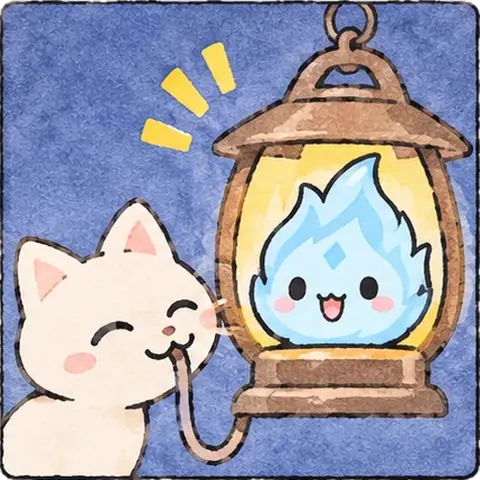
One summer night at the library, Hinoko reads something that makes her dream of a long journey.
- ~8 minutes
- 17 sentences
- 535 characters
- 66 kanji
- 1 N2 word
Every word and every kanji is checked against the lists of N3 and the levels below; 1 word from N2, flagged in the vocabulary. How we check →
Too hard? Try the N4 stories or the N5 stories.
The story
「千二百年も……」 夏の 夜の 図書館で、ひのこは 思わず 声を 出した。
"Twelve hundred years…" One summer night at the library, Hinoko said it out loud without meaning to.
読んでいた 本によると、ひえいざんという 山の えんりゃくじに、とても 古い 火が あるそうだ。
According to the book she was reading, there was a very old fire at Enryaku-ji, on a mountain called Mount Hiei.
千二百年以上 前に、さいちょうという 人が つけた 火が、今も もえているのだ。
A fire lit more than twelve hundred years ago by a man named Saichō is still burning today.
ひのこは 自分の 小さな 青い 体を 見て、「私も、そんなに 長く もえていられるかな」と 思った。
Hinoko looked at her own small blue body and thought, "Could I burn that long, too?"
そして、その 火に 会うために、旅に 出ることに した。
And she decided to set off on a journey to meet that fire.
話を 聞いた シロは、「じゃあ、行くしか ないね」と 笑った。
When Shiro heard about it, he laughed. "Well then, we'll just have to go."
でも、ひのこは 雨に ぬれたら 消えてしまう。
But if Hinoko got wet in the rain, she would go out.
旅の ために、図書館の おばあさんが 古い てつの ランタンを 貸してくれた。
For the journey, the old lady at the library lent her an old iron lantern.
「紙の ランタンなら もえてしまうけど、これなら 安心よ」
"A paper lantern would burn, but with this one, you'll be safe."
シロが 口に くわえて 運べるように、二人は ランタンの 上に ひもを 付けた。
So that Shiro could carry it in his mouth, the two of them tied a string to the top of the lantern.
天気予報によると、しばらくは 晴れの 日が 続くそうだ。
According to the weather forecast, there would be sunny days for a while.
「雨に ぬれないように、なるべく 晴れた 日に 進もう。少しずつ 行けば、いつか 着くよ」と ひのこは 言った。
"So we don't get wet, let's travel on sunny days as much as we can. If we go little by little, we'll get there someday," said Hinoko.
でも、ひえいざんの ある しがは、とても 遠い。
But Shiga, where Mount Hiei is, was very far away.
「バスか 何かに 乗れたら いいのにね」と シロが 言った。
"If only we could take a bus or something," said Shiro.
その とき、図書館に 本を 運んでくる 友だちの 中川さんが、「明日、トラックで しがまで 行くよ」と 言った。
Just then, their friend Nakagawa-san, who brings books to the library, said, "Tomorrow I'm driving my truck to Shiga."
「私たちも 乗っても 構いませんか」と ひのこが 聞くと、中川さんは 「もちろん」と 笑った。
"Would it be all right if we rode with you?" asked Hinoko, and Nakagawa-san laughed. "Of course."
二人の 旅は、明日の 朝 始まる。
Their journey begins tomorrow morning.
Did you understand?
-
1 ひのこが 旅に 出ることに したのは なぜか。
Why did Hinoko decide to go on a journey?
See the answer
Answer: 2. 古い 火に 会いたかったから。 Because she wanted to meet an old fire.
-
2 ランタンの 上に ひもを 付けたのは なぜか。
Why did they tie a string to the top of the lantern?
See the answer
Answer: 3. シロが 口で 運べるように So that Shiro could carry it in his mouth.
-
3 ひのこと シロは、どうやって しがへ 行くか。
How will Hinoko and Shiro get to Shiga?
See the answer
Answer: 1. 中川さんの トラックで 行く。 In Nakagawa-san's truck.

Next story
 ねずみのよめいり
The Mouse's Wedding
A father mouse looks for the strongest match in the world for his daughter, and knocks on the grandest doors.
Tappable words, synthetic voice and review.
Grammar in this story
-
〜によると "According to" a source, often ending with そうだ or らしい.
読んでいた 本によると、ひえいざんという 山の えんりゃくじに、とても 古い 火が あるそうだ。
According to the book she was reading, there was a very old fire at Enryaku-ji, on a mountain called Mount Hiei.
-
〜ために "In order to, for" (purpose), or "because of" (cause).
そして、その 火に 会うために、旅に 出ることに した。
And she decided to set off on a journey to meet that fire.
-
〜ように(目的) Dictionary or nai-form + ように: "so that", for a result you can’t fully control (忘れないように, "so as not to forget").
シロが 口に くわえて 運べるように、二人は ランタンの 上に ひもを 付けた。
So that Shiro could carry it in his mouth, the two of them tied a string to the top of the lantern.
Vocabulary 89 words
- 始まり はじまり
- beginning, start
- 千 せん
- thousand (1,000)
- 二 に
- two
- 百 ひゃく
- one hundred (100)
- 年 ねん
- year (counter): 五十年 = "fifty years"
- 夏 なつ
- summer
- 夜 よる
- night, evening
- 図書館 としょかん
- library
- 思わず おもわず
- without meaning to, in spite of oneself
- 声 こえ
- voice
- 出す だす
- to take out, to bring out
- 読む よむ
- to read
- 本 ほん
- book
- 山 やま
- mountain
- とても
- very
- 古い ふるい
- old (for things)
- 火 ひ
- fire; flame
- ある
- there is, to be (for things)
- 以上 いじょう
- more than, or more (after a number)
- 前 まえ
- front; before (入る 前に = "before going in")
- 人 ひと
- person; ゆうびんきょくの 人 = "the post office clerk"
- つける
- to turn on (a light, a device); to light (a fire)
- 今 いま
- now
- もえる
- to burn, be on fire
- 自分 じぶん
- oneself; じぶんの = "one's own"
- 小さな ちいさな
- small, little (always before a noun)
- 青い あおい
- blue
- 体 からだ
- body
- 見る みる
- to look, to see
- 私 わたし
- I, me
- そんなに
- that much, so
- 長い ながい
- long
- 思う おもう
- to think, to believe
- そして
- and then
- その
- that (already mentioned, or near the listener)
- 会う あう
- to meet, to see (someone)
- 旅 たび
- journey, travel
- 出る でる
- to go out, to leave
- する
- to do
- 話 はなし
- talk, story; conversation
- 聞く きく
- to listen; to ask
- じゃあ
- well then, so
- 行く いく
- to go
- 笑う わらう
- to laugh, to smile
- でも
- but
- 雨 あめ
- rain
- ぬれる
- to get wet
- 消える きえる
- to go out (a light); to disappear
- おばあさん
- old woman; grandmother
- てつ
- iron
- ランタン N2
- lantern (portable, with glass panes)
- 貸す かす
- to lend
- 紙 かみ
- paper, a piece of paper
- これ
- this (near me)
- 安心 あんしん
- relieved, at ease; safe
- 口 くち
- mouth
- くわえる
- to hold in one's mouth
- 運ぶ はこぶ
- to carry
- 二人 ふたり
- two people; 二人で = "the two of them"
- 上 うえ
- top, above
- ひも
- string, cord
- 付ける つける
- to attach, to fix (to)
- 天気予報 てんきよほう
- weather forecast
- しばらく
- for a while, for a moment
- 晴れ はれ
- sunny weather
- 日 ひ
- day
- 続く つづく
- to continue, to go on
- なるべく
- as much as possible, if possible
- 晴れる はれる
- to clear up (the sky)
- 進む すすむ
- to move forward, to advance
- 少し すこし
- a little
- ずつ
- at a time: すこしずつ = "little by little"
- いつか
- someday, sooner or later
- 着く つく
- to arrive
- 言う いう
- to say
- 遠い とおい
- far, distant
- バス
- bus
- 何か なにか
- something; (〜か何か) … or something
- 乗る のる
- to get on, to ride, to take (a bus)
- いい
- good, fine
- とき
- time; 〜とき = "when…"
- 友達 ともだち
- friend
- さん
- Mr., Ms. (polite, after a name)
- 明日 あした
- tomorrow
- トラック
- truck
- たち
- (after a noun) plural: どうぶつたち = "the animals"
- もちろん
- of course; (〜は もちろん) not to mention
- 朝 あさ
- morning
- 始まる はじまる
- to begin, to start