 hinoko
信楽のたぬき The Tanuki of Shigaraki
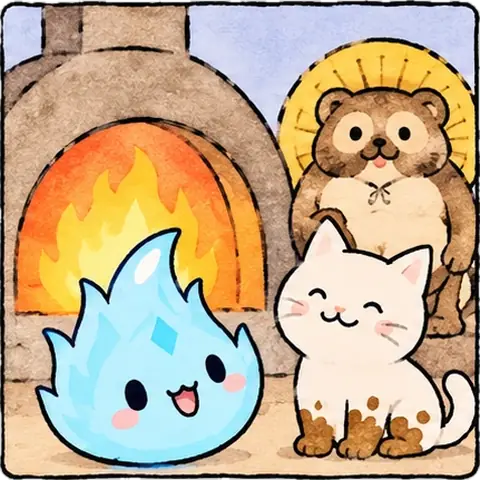
Hinoko and Shiro arrive in a small pottery town, where a big fire is burning in an old kiln.
- ~9 minutes
- 18 sentences
- 617 characters
- 69 kanji
- 2 N2 words
Every word and every kanji is checked against the lists of N3 and the levels below; 2 words from N2, flagged in the vocabulary. How we check →
Too hard? Try the N4 stories or the N5 stories.
The story
中川さんの おかげで、ひのこと シロは しがの 信楽という 町に 着いた。
Thanks to Nakagawa-san, Hinoko and Shiro arrived in a town in Shiga called Shigaraki.
信楽は やきもので 有名な 町で、店には ちゃわんをはじめ、いろいろな やきものが ならんでいた。
Shigaraki is a town famous for its pottery, and the shops were lined with all kinds of ceramics, starting with bowls.
店の 前にも 道の 横にも たぬきが 立っていて、町は たぬきだらけだった。
Tanuki stood in front of the shops and along the streets: the town was full of them.
たぬきの 顔は、作る 人によって 違った。
The tanuki's faces differed depending on who had made them.
「この 町は、たぬきでも 有名なんだね」と シロが 笑った。
"So this town is famous for tanuki, too," Shiro said with a laugh.
しばらく 歩くと、さかの 上から 煙の においが してきた。
After walking for a while, they smelled smoke coming from the top of the slope.
古い かまが、かいだんの ように さかの 上まで 続いていて、中では 大きな 火が 強く もえていた。
An old kiln ran up the slope like a staircase, and inside it a big fire was burning hard.
かまの まわりは 土だらけで、シロの 白い 足は すぐ 茶色に なった。
Around the kiln there was clay everywhere, and Shiro's white paws soon turned brown.
「小さな 火だなあ。どこから 来た?」と かまの 火が 言った。
"My, what a little fire! Where did you come from?" said the fire in the kiln.
「遠くからです。大きな 火は 家を もやすから、少し 怖いです」と ひのこは 小さな 声で 答えた。
"From far away. Big fires burn houses, so I'm a little scared," Hinoko answered in a small voice.
「火は 家を もやすばかりでなく、毎日 使う ちゃわんや おさらも 作るんだよ。土は、火の おかげで かたい やきものに なるんだ」
"Fire doesn't only burn houses. It also makes the bowls and plates you use every day. It's thanks to fire that clay becomes hard pottery."
その とき、「わあ、火が しゃべってる!」と 女の子の 声が した。
Just then, a little girl's voice cried out, "Wow, the fire's talking!"
見ると、やきものを 作っている ふみさんと、夏休みに 来ている まごの あおいが いた。
When they looked, they saw Fumi, a potter, and her granddaughter Aoi, who had come to stay for summer vacation.
ふみさんは、夫が この かまで 最後に 作り上げた ちゃわんで、お茶を 飲んでいた。
Fumi was drinking tea from the last bowl her husband had finished in this kiln.
この かまが 大好きだった 夫は、今年の 春に 亡くなったのだ。
Her husband, who had loved this kiln so much, had died that spring.
ちゃわんは 全体的に 赤っぽく、火の 色が そのまま 残っている ように 見えた。
The bowl was reddish all over, as if the color of the fire had stayed in it just as it was.
「明日は 京都へ 送り火を 見に 行くの。毎年、夫と 行っていたのよ。一緒に 来ない?」と ふみさんが 言った。
"Tomorrow we're going to Kyoto to see the send-off fires. I used to go every year with my husband. Will you come with us?" said Fumi.
京都から ひえいざんは すぐ そこなので、ひのこは うれしくて 大きく もえた。
Mount Hiei is right next to Kyoto, so Hinoko was so happy that her flame grew big.
Did you understand?
-
1 かまの 火が ひのこに 言いたかった ことは 何か。
What did the fire in the kiln want to tell Hinoko?
See the answer
Answer: 4. 火は、毎日 使う 物も 作っている。 Fire also makes things we use every day.
-
2 ふみさんが お茶を 飲んでいた ちゃわんは、だれが 作ったか。
Who had made the bowl Fumi was drinking tea from?
See the answer
Answer: 1. ふみさんの 夫 Fumi's husband.
-
3 ふみさんと あおいは、次の 日、何を するか。
What will Fumi and Aoi do the next day?
See the answer
Answer: 3. 京都で 送り火を 見る。 See the send-off fires in Kyoto.

Next story
 したきりすずめ
The Tongue-Cut Sparrow
A kind old man takes care of a sparrow, but his wife has no love for the bird.
Tappable words, synthetic voice and review.
Grammar in this story
-
〜おかげで "Thanks to": a cause that led to a good result.
中川さんの おかげで、ひのこと シロは しがの 信楽という 町に 着いた。
Thanks to Nakagawa-san, Hinoko and Shiro arrived in a town in Shiga called Shigaraki.
-
〜は〜で有名 A は B で有名だ: "A is famous for B" (京都はお寺で有名だ, "Kyoto is famous for its temples").
信楽は やきもので 有名な 町で、店には ちゃわんをはじめ、いろいろな やきものが ならんでいた。
Shigaraki is a town famous for its pottery, and the shops were lined with all kinds of ceramics, starting with bowls.
-
〜だらけ Noun + だらけ: full of or covered with something unpleasant (間違いだらけ, "full of mistakes").
店の 前にも 道の 横にも たぬきが 立っていて、町は たぬきだらけだった。
Tanuki stood in front of the shops and along the streets: the town was full of them.
Vocabulary 89 words
- さん
- Mr., Ms. (polite, after a name)
- 町 まち
- town; まちへ 行く = "go into town"
- 着く つく
- to arrive
- やきもの
- pottery, ceramics (fired in a kiln)
- 有名 ゆうめい
- famous
- 店 みせ
- shop, store; restaurant
- ちゃわん
- bowl (for tea or rice)
- いろいろ
- various, all kinds of; いろいろな 人 = "all kinds of people"
- ならぶ
- to be side by side, to be in a row: ならんで すわる = "to sit side by side"
- 前 まえ
- front; before (入る 前に = "before going in")
- 道 みち
- path, road
- 横 よこ
- side; sideways
- たぬき N2
- tanuki (raccoon dog); tanuki statue
- 立つ たつ
- to stand
- 顔 かお
- face
- 作る つくる
- to make
- 人 ひと
- person; ゆうびんきょくの 人 = "the post office clerk"
- 違う ちがう
- to be different; to be the wrong one
- この
- this… (near me, or the one just mentioned)
- 笑う わらう
- to laugh, to smile
- しばらく
- for a while, for a moment
- 歩く あるく
- to walk
- さか
- slope, hill
- 上 うえ
- top, above
- 煙 けむり
- smoke
- におい
- smell
- する
- to do
- 古い ふるい
- old (for things)
- かま N2
- kiln
- かいだん
- stairs
- 続く つづく
- to continue, to go on
- 中 なか
- inside
- 大きな おおきな
- big (always before a noun)
- 火 ひ
- fire; flame
- 強い つよい
- strong, heavy (rain, wind)
- もえる
- to burn, be on fire
- まわり
- surroundings, around; まわりの 人 = "the people around"
- 土 つち
- earth, soil; clay
- 白い しろい
- white
- 足 あし
- foot, leg; paw
- すぐ
- right away; right (すぐ 前 = "right in front")
- 茶色 ちゃいろ
- brown
- なる
- to become
- 小さな ちいさな
- small, little (always before a noun)
- どこ
- where
- 来る くる
- to come
- 言う いう
- to say
- 遠く とおく
- far away; とおくの 町 = "a faraway town"
- 家 いえ
- house, home
- もやす
- to burn (something)
- 少し すこし
- a little
- 怖い こわい
- scary; scared
- 声 こえ
- voice
- 答える こたえる
- to answer
- 毎日 まいにち
- every day
- 使う つかう
- to use
- おさら
- plate
- かたい
- hard, solid
- その
- that (already mentioned, or near the listener)
- とき
- time; 〜とき = "when…"
- わあ
- Oh! Wow! (surprise, joy)
- しゃべる
- to talk, to chat
- 女の子 おんなのこ
- girl
- 見る みる
- to look, to see
- 夏休み なつやすみ
- summer vacation
- まご
- grandchild
- いる
- to be, to exist (living things)
- 夫 おっと
- husband (one's own)
- 最後 さいご
- last; the end
- お茶 おちゃ
- (green) tea
- 飲む のむ
- to drink
- 大好き だいすき
- to love, to like very much
- 今年 ことし
- this year
- はる
- to stick, to paste
- 亡くなる なくなる
- to pass away (polite)
- 全体 ぜんたい
- the whole; 全体的に = "on the whole, overall"
- 赤い あかい
- red
- 色 いろ
- color
- 残る のこる
- to remain, to stay behind; to be left
- 見える みえる
- to be visible, to be in sight
- 明日 あした
- tomorrow
- 京都 きょうと
- Kyoto, the old capital
- 送り火 おくりび
- send-off fire (at the end of お盆, to see the departed off)
- 行く いく
- to go
- 毎年 まいとし
- every year
- 一緒に いっしょに
- together
- そこ
- there, that place
- うれしい
- glad, happy (about something)
- 大きい おおきい
- big