 hinoko
夏まつりの夜 Summer Festival Night
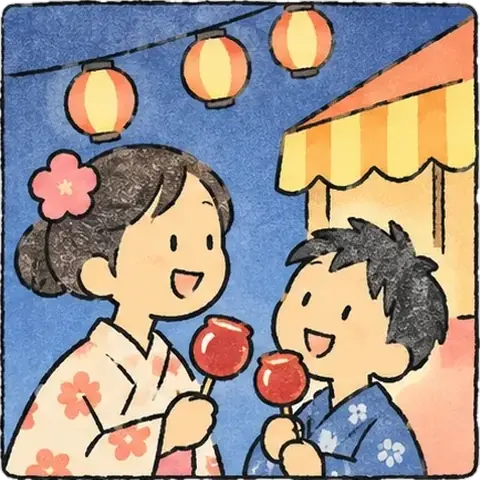
Yui takes her little brother Sora to the summer festival at the shrine.
- ~6 minutes
- 16 sentences
- 421 characters
- 33 kanji
- 0 N3 words
Every word and every kanji is checked against the lists of N4 and the levels below; no word from a higher level. How we check →
The story
夏まつりの 夜、ゆいと 六さいの 弟の そらは、ゆかたを 着て じんじゃへ 行きました。
On the night of the summer festival, Yui and her six-year-old brother Sora went to the shrine in yukata.
じんじゃの 前には 屋台が たくさん ならんでいて、とても にぎやかでした。
In front of the shrine, lots of stalls were lined up, and it was very lively.
「やきそば、食べよう!」と そらが 言いました。
"Let's eat yakisoba!" said Sora.
二人は やきそばや たこやきを 食べながら、屋台を 見て 歩きました。
Eating yakisoba and takoyaki, the two of them walked around looking at the stalls.
りんごあめの 屋台の 前で、ゆいは クラスの 友だちに 会いました。
In front of the candy apple stall, Yui ran into a friend from her class.
少し 話して、となりを 見たら、そらが いませんでした。
After chatting a little, she looked beside her, and Sora wasn't there.
ゆいは 「そら!」と よびながら、たくさんの 人の 中を さがしました。
Calling "Sora!", Yui searched through the crowd.
「トイレに 行ったかもしれない」と 思って、トイレまで 走りました。
Thinking "Maybe he went to the bathroom," she ran to the restrooms.
でも、そこにも そらは いませんでした。
But Sora wasn't there either.
「一人で うちに 帰ったかもしれない」
"Maybe he went home by himself…"
ゆいは お母さんに 電話しようと 思いました。
Yui thought she would call her mother.
その とき、後ろから 「あ、いた!」と そらの こえが しました。
Just then, she heard Sora's voice behind her: "Oh, there you are!"
そらは 自分の お金で 買った りんごあめを 二つ 持っていました。
Sora was holding two candy apples that he had bought with his own money.
「これ、一つ あげる。どこに 行ってたの?さがしたよ」
"Here, one's for you. Where were you? I was looking for you!"
「さがしたのは 私だよ」と、ゆいは わらいました。
"I'm the one who was looking for you!" Yui laughed.
二人は りんごあめを 食べながら、うちに 帰りました。
The two of them walked home eating their candy apples.
Did you understand?
-
1 ゆいは どこで クラスの 友だちに 会いましたか。
Where did Yui run into her classmate?
See the answer
Answer: 4. りんごあめの 屋台の 前 in front of the candy apple stall
-
2 ゆいは はじめに、そらが どこに 行ったと 思いましたか。
Where did Yui first think Sora had gone?
See the answer
Answer: 2. トイレ to the bathroom
-
3 さいごに、そらは ゆいに 何と 言いましたか。
At the end, what did Sora say to Yui?
See the answer
Answer: 3. 「さがしたよ」 "I was looking for you!"

Next story
 てるてるぼうず
The Teru-Teru-Bōzu
It has been raining for days, and Hinoko can't go out. One evening, Shiro comes over…
Tappable words, synthetic voice and review.
Grammar in this story
-
〜かもしれない "Maybe, might": a possibility, less certain than でしょう.
「トイレに 行ったかもしれない」と 思って、トイレまで 走りました。
Thinking "Maybe he went to the bathroom," she ran to the restrooms.
-
〜ながら Stem + ながら: doing two things at once, "while…", by the same person.
二人は やきそばや たこやきを 食べながら、屋台を 見て 歩きました。
Eating yakisoba and takoyaki, the two of them walked around looking at the stalls.
-
意向形 Volitional form: "let’s…" or "I’ll…", the plain form of 〜ましょう (行こう).
「やきそば、食べよう!」と そらが 言いました。
"Let's eat yakisoba!" said Sora.
Vocabulary 62 words
- 夏まつり なつまつり
- summer festival
- 夜 よる
- night, evening
- 六 ろく
- six
- さい
- years old: 六さい = "six years old"
- 弟 おとうと
- younger brother
- ゆかた
- yukata, light cotton summer kimono
- 着る きる
- to put on, to wear (clothes: a shirt, a kimono…)
- じんじゃ
- Shinto shrine
- 行く いく
- to go
- 前 まえ
- front; before (入る 前に = "before going in")
- 屋台 やたい
- food stall, stand (at a festival, in the street)
- たくさん
- a lot, many
- ならぶ
- to be side by side, to be in a row: ならんで すわる = "to sit side by side"
- とても
- very
- にぎやか
- lively, bustling
- やきそば
- yakisoba, fried noodles
- 食べる たべる
- to eat
- 言う いう
- to say
- 二人 ふたり
- two people; 二人で = "the two of them"
- たこやき
- takoyaki (octopus balls, an Osaka specialty)
- 見る みる
- to look, to see
- 歩く あるく
- to walk
- りんご
- apple; りんごあめ = "candy apple"
- あめ
- candy; りんごあめ = "candy apple"
- クラス
- class (the students)
- 友だち ともだち
- friend
- 会う あう
- to meet, to see (someone)
- 少し すこし
- a little
- 話す はなす
- to speak, to talk
- となり
- next to, next door
- いる
- to be, to exist (living things)
- よぶ
- to call (someone)
- 人 ひと
- person; ゆうびんきょくの 人 = "the post office clerk"
- 中 なか
- inside
- さがす
- to look for, to search
- トイレ
- toilet, restroom
- 思う おもう
- to think, to believe
- 走る はしる
- to run
- でも
- but
- そこ
- there, that place
- 一人 ひとり
- one person; alone (一人で, いつも 一人)
- うち
- home; うちで = "at home"
- 帰る かえる
- to go home, to return
- お母さん おかあさん
- mother; "mom" (children also call their own mother this)
- 電話 でんわ
- telephone; phone call
- する
- to do
- その
- that (already mentioned, or near the listener)
- とき
- time; 〜とき = "when…"
- 後ろ うしろ
- behind
- あ
- ah!, oh! (noticing something)
- こえ
- voice
- 自分 じぶん
- oneself; じぶんの = "one's own"
- お金 おかね
- money
- 買う かう
- to buy
- 二つ ふたつ
- two (things)
- 持つ もつ
- to hold, to carry
- これ
- this (near me)
- 一つ ひとつ
- one (thing)
- あげる
- to give (to someone else)
- どこ
- where
- 私 わたし
- I, me
- わらう
- to laugh, to smile