 hinoko
ひのこのかぜ Hinoko's Cold
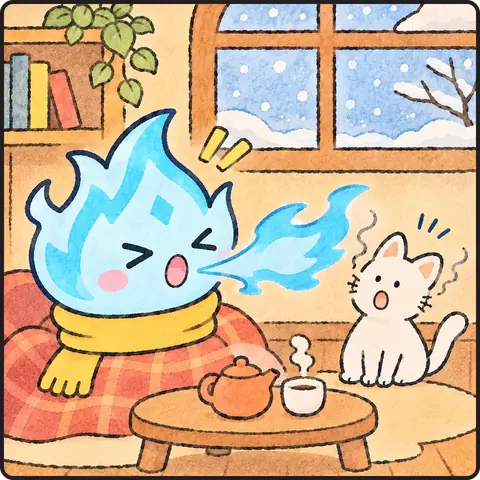
One winter morning, Hinoko catches a cold. She can't even heat the water for Shiro's tea…
- ~5 minutes
- 15 sentences
- 360 characters
- 21 kanji
- 1 N3 word
Every word and every kanji is checked against the lists of N4 and the levels below; 1 word from N3, flagged in the vocabulary. How we check →
The story
冬の さむい 朝、青い 火の ひのこは、かぜを ひいてしまいました。
One cold winter morning, Hinoko the blue flame caught a cold.
体が いつもの 半分の 大きさしか なくて、色も うすく なっていました。
She was only half her usual size, and her color had faded.
白い ねこの シロが、いつもの ように お茶を 飲みに 来ました。
Shiro the white cat came to drink his tea, as usual.
「ごめんね、シロ。今日は おゆが わかせないと 思う」
"Sorry, Shiro. I don't think I can heat the water today."
ひのこの こえも、とても 小さかったです。
Her voice was very small, too.
「お茶は いいよ。早く 元気に なってね」
"Never mind the tea. Get well soon."
シロは 「ひのこが きえてしまうかもしれない」と 思って、ひのこの すぐ そばに すわりました。
Shiro thought, "Hinoko might go out," and he sat down right beside her.
その とき、ひのこが くしゃみを しました。
At that moment, Hinoko sneezed.
くしゃみと いっしょに、大きな 青い 火が 出ました。
Along with the sneeze, a big blue flame burst out.
「わあ、なおった!」
"Oh! I'm better!"
ひのこの 体は、いつもの 大きさに もどっていました。
Hinoko was back to her usual size.
でも、すぐ そばに いた シロの ひげが やけて、みじかく なってしまいました。
But Shiro had been right beside her, and his whiskers got burned short.
「ごめんね、シロ!」
"Sorry, Shiro!"
「いいよ。ひのこが きえなくて、よかった」
"It's fine. I'm glad you didn't go out."
その 朝、みじかい ひげの シロは、やっと あつい お茶が 飲めました。
That morning, Shiro, with his short whiskers, was finally able to drink some hot tea.
Did you understand?
-
1 かぜを ひいた とき、ひのこは どう なっていましたか。
When she caught the cold, what had happened to Hinoko?
See the answer
Answer: 3. 体が 小さく なっていました。 She had shrunk.
-
2 シロは どうして 「お茶は いいよ」と 言いましたか。
Why did Shiro say "Never mind the tea"?
See the answer
Answer: 1. ひのこが しんぱいだったから。 Because he was worried about Hinoko.
-
3 シロの ひげは どうして みじかく なりましたか。
Why did Shiro's whiskers become short?
See the answer
Answer: 4. ひのこの 火で やけたから。 Because Hinoko's flame had burned them.

Next story
 エマ先生
Miss Emma
On Saturdays, Emma teaches English to children.
Tappable words, synthetic voice and review.
Grammar in this story
-
可能形 Potential form, "can, be able to" (書ける, 食べられる); the object often takes が.
「ごめんね、シロ。今日は おゆが わかせないと 思う」
"Sorry, Shiro. I don't think I can heat the water today."
-
〜てしまう Te-form + しまう: do something completely, or with regret (by mistake); spoken: 〜ちゃう.
冬の さむい 朝、青い 火の ひのこは、かぜを ひいてしまいました。
One cold winter morning, Hinoko the blue flame caught a cold.
-
〜と思う Plain form + と思う: "I think that…"; と marks what is thought.
シロは 「ひのこが きえてしまうかもしれない」と 思って、ひのこの すぐ そばに すわりました。
Shiro thought, "Hinoko might go out," and he sat down right beside her.
Vocabulary 53 words
- 冬 ふゆ
- winter
- さむい
- cold (weather, air)
- 朝 あさ
- morning
- 青い あおい
- blue
- 火 ひ
- fire; flame
- かぜ
- cold (the illness)
- ひく
- to pull; かぜを ひく = "to catch a cold"
- 体 からだ
- body
- いつも
- always
- 半分 はんぶん
- half
- 大きい おおきい
- big
- ある
- there is, to be (for things)
- 色 いろ
- color
- うすい
- pale, light (a color); thin
- なる
- to become
- 白い しろい
- white
- ねこ
- cat
- お茶 おちゃ
- (green) tea
- 飲む のむ
- to drink
- 来る くる
- to come
- ごめん
- sorry (between close people)
- 今日 きょう
- today
- おゆ
- hot water
- わかす
- to heat, to boil (water)
- 思う おもう
- to think, to believe
- こえ
- voice
- とても
- very
- 小さい ちいさい
- small, little
- いい
- good, fine
- 早い はやい
- early; はやく = "early", or "quickly, soon" (adverb)
- 元気 げんき
- healthy, lively
- きえる
- to go out (a light); to disappear
- すぐ
- right away; right (すぐ 前 = "right in front")
- そば
- beside, near
- すわる
- to sit down
- その
- that (already mentioned, or near the listener)
- とき
- time; 〜とき = "when…"
- くしゃみ N3
- sneeze; くしゃみを する = "to sneeze"
- する
- to do
- いっしょに
- together
- 大きな おおきな
- big (always before a noun)
- 出る でる
- to go out, to leave
- わあ
- Oh! Wow! (surprise, joy)
- なおる
- to get better, to recover
- もどる
- to return, to go back (to a place, a state)
- でも
- but
- いる
- to be, to exist (living things)
- ひげ
- whiskers (of a cat); beard
- やける
- to burn, to be grilled; to bake (over a fire)
- みじかい
- short
- よかった
- Phew! Thank goodness!
- やっと
- at last, finally (after waiting or effort)
- あつい
- hot (to the touch, a drink)