 hinoko
エマ先生 Miss Emma
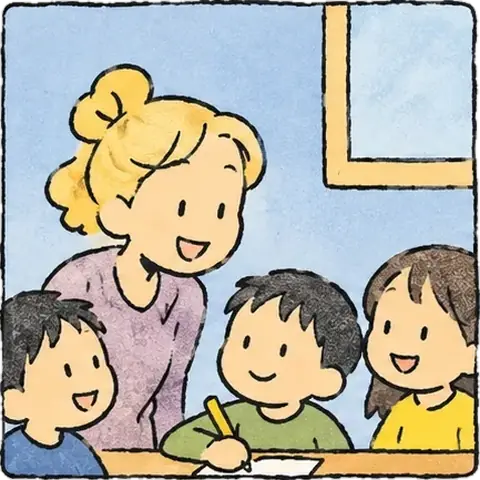
On Saturdays, Emma teaches English to children.
- ~6 minutes
- 14 sentences
- 387 characters
- 32 kanji
- 0 N3 words
Every word and every kanji is checked against the lists of N4 and the levels below; no word from a higher level. How we check →
The story
毎週 土曜日、エマは 小さな 教室で 子どもたちに 英語を 教えていました。
Every Saturday, Emma taught English to children in a small classroom.
エマが 日本語を まちがえると、子どもたちは わらいながら なおしてくれました。
When Emma made a mistake in Japanese, the children corrected her, laughing.
エマは 子どもたちに 日本の あそびや 歌も 教えてもらいました。
The children also taught her Japanese games and songs.
でも、はるとという 六さいの 男の子は、いつも 何も 話しませんでした。
But a six-year-old boy called Haruto never said anything.
エマが 質問しても、へんじを しませんでした。
Even when Emma asked him a question, he didn't answer.
じゅぎょうの あいだ、はるとは 下を 見ながら、ノートに えを かいていました。
During class, Haruto drew in his notebook, looking down.
エマは、はるとにも 話してもらいたいと 思っていました。
Emma wished that Haruto would talk too.
夏休みの 前の さいごの 土曜日、じゅぎょうが 終わると、はるとが エマの ところへ 来ました。
On the last Saturday before the summer vacation, when class was over, Haruto came up to Emma.
そして、何も 言わないで、紙を 一まい くれました。
And without a word, he gave her a sheet of paper.
エマと 子どもたちの えでした。
It was a drawing of Emma and the children.
えの 下には、英語で 「ありがとう」と 書いてありました。
Under the drawing, it said "Thank you" in English.
エマが さいしょの じゅぎょうで 教えた ことばでした。
Those were the words Emma had taught in the very first class.
「はるとくん、聞いていてくれたんだね。ありがとう」
"Haruto, so you were listening. Thank you."
エマが そう 言うと、はるとは はじめて わらいました。
When Emma said that, Haruto smiled for the first time.
Did you understand?
-
1 エマが 日本語を まちがえると、子どもたちは どう しましたか。
When Emma made a mistake in Japanese, what did the children do?
See the answer
Answer: 4. わらいながら、なおしてくれました。 They corrected her, laughing.
-
2 じゅぎょうの あいだ、はるとは 何を していましたか。
What was Haruto doing during class?
See the answer
Answer: 2. えを かいていました。 He was drawing.
-
3 はるとが くれた 紙には、何と 書いてありましたか。
What was written on the sheet of paper Haruto gave Emma?
See the answer
Answer: 3. 英語で 「ありがとう」 "Thank you" in English

Next story
 ならのしか
The Deer of Nara
The next day in Nara, Ken and Yui discover the deer in the park and their funny ways.
Tappable words, synthetic voice and review.
Grammar in this story
-
〜てくれる Te-form + くれる: someone does something for me or my side.
エマが 日本語を まちがえると、子どもたちは わらいながら なおしてくれました。
When Emma made a mistake in Japanese, the children corrected her, laughing.
-
〜てもらう Te-form + もらう: get someone to do something for you (doer + に).
エマは 子どもたちに 日本の あそびや 歌も 教えてもらいました。
The children also taught her Japanese games and songs.
-
〜ながら Stem + ながら: doing two things at once, "while…", by the same person.
じゅぎょうの あいだ、はるとは 下を 見ながら、ノートに えを かいていました。
During class, Haruto drew in his notebook, looking down.
Vocabulary 54 words
- 先生 せんせい
- teacher
- 毎週 まいしゅう
- every week; 毎週 土曜日 = "every Saturday"
- 土曜日 どようび
- Saturday
- 小さな ちいさな
- small, little (always before a noun)
- 教室 きょうしつ
- classroom; class, small school (英語教室: English class)
- 子ども こども
- child; 子どもの とき = "as a child"
- たち
- (after a noun) plural: どうぶつたち = "the animals"
- 英語 えいご
- English (the language)
- 教える おしえる
- to teach; to tell, to show
- 日本語 にほんご
- Japanese (language)
- まちがえる
- to make a mistake; (〜て) by mistake
- わらう
- to laugh, to smile
- なおす
- to correct, to fix
- 日本 にほん
- Japan
- あそび
- game, play
- 歌 うた
- song
- でも
- but
- 六 ろく
- six
- さい
- years old: 六さい = "six years old"
- 男の子 おとこのこ
- boy
- いつも
- always
- 何も なにも
- nothing (with a negative verb)
- 話す はなす
- to speak, to talk
- 質問 しつもん
- question
- する
- to do
- へんじ
- answer, reply (when spoken to); (〜を する) to answer
- じゅぎょう
- class, lesson
- あいだ
- during, while; between
- 下 した
- under, below
- 見る みる
- to look, to see
- ノート
- notebook
- え
- picture, drawing
- かく
- to draw (えを かく)
- 思う おもう
- to think, to believe
- 夏休み なつやすみ
- summer vacation
- 前 まえ
- front; before (入る 前に = "before going in")
- さいご
- last; the end
- 終わる おわる
- to end, to be over
- ところ
- place; ゆいの ところ = "where Yui is"
- 来る くる
- to come
- そして
- and then
- 言う いう
- to say
- 紙 かみ
- paper, a piece of paper
- 一 いち
- one
- まい
- counter for flat things (sheets, stamps…)
- くれる
- to give (to me or my side)
- ありがとう
- thank you
- 書く かく
- to write
- さいしょ
- the first; at first
- ことば
- word, words; a short message
- くん
- friendly, familiar suffix after the name of a boy or young man
- 聞く きく
- to listen; to ask
- そう
- so, like that; そうですか = "I see"
- はじめて
- for the first time