 hinoko
はじめてのおんせん First Time in a Hot Spring
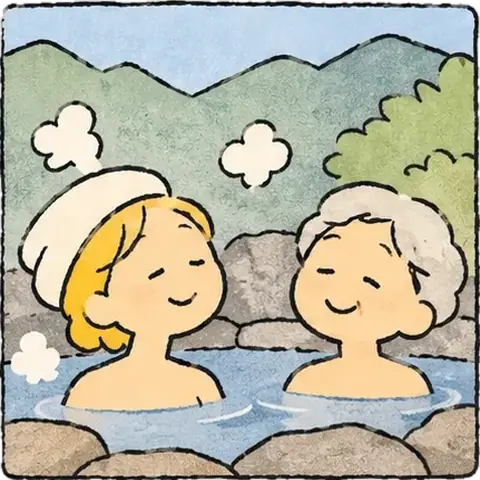
Emma is staying at a mountain inn. For the first time, she is going to bathe in a hot spring.
- ~5 minutes
- 17 sentences
- 367 characters
- 25 kanji
- 0 N3 words
Every word and every kanji is checked against the lists of N4 and the levels below; no word from a higher level. How we check →
The story
エマと 友だちの マリアは、山の 中の 小さな 旅館に とまりました。
Emma and her friend Maria stayed at a small inn in the mountains.
エマは、おんせんに 入るのは はじめてでした。
It was Emma's first time going into a hot spring.
「ほかの 人の 前で 服を ぬぐの?はずかしいよ」
"We take our clothes off in front of other people? That's embarrassing."
「さいしょは はずかしくても、入ってみれば 分かるよ」
"Even if it's embarrassing at first, you'll understand once you try it."
おんせんには、おばあさんが 一人 いました。
In the hot spring, there was an old woman.
エマは 体を あらってから、タオルを 持って おゆに 入りました。
Emma washed herself, then got into the water holding her towel.
おばあさんが やさしく 言いました。
The old woman said kindly:
「タオルは、おゆに 入れないで くださいね」
"Please don't put your towel in the water."
「でも、タオルが なければ、はずかしいです」
"But without a towel, I feel embarrassed."
「タオルなら、ここですよ」
"The towel? It goes here."
おばあさんの あたまの 上には、白い タオルが ありました。
On top of the old woman's head was a white towel.
エマは わらって、同じ ように しました。
Emma laughed and did the same.
おゆの 中から、山と 空が 見えました。
From the water, she could see the mountains and the sky.
おゆは あたたかくて、とても 気持ちよかったです。
The water was warm, and it felt very good.
一時間が すぎても、エマは おゆから 出ませんでした。
Even after an hour had passed, Emma still didn't get out of the water.
マリアは 「エマ、もう ばんごはんの 時間だよ」と 言いました。
Maria said, "Emma, it's already time for dinner."
「ばんごはんなら、ここで 食べたい」
"Dinner? Then I want to eat it here."
Did you understand?
-
1 エマは おゆに 入る 前に、何を しましたか。
What did Emma do before getting into the water?
See the answer
Answer: 1. 体を あらいました。 She washed herself.
-
2 おばあさんの タオルは どこに ありましたか。
Where was the old woman's towel?
See the answer
Answer: 3. あたまの 上 on her head
-
3 エマは、ばんごはんを どこで 食べたいと 言いましたか。
Where did Emma say she wanted to eat dinner?
See the answer
Answer: 4. おゆの 中 in the bath water

Next story
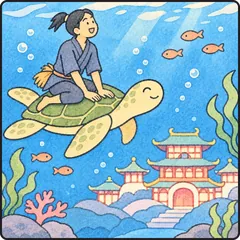 うらしまたろう
Urashima Tarō
A young man from a village by the sea sees some children bullying a turtle.
Tappable words, synthetic voice and review.
Grammar in this story
-
〜ば Ba-form: "if", a general or hypothetical condition (行けば, 安ければ).
「さいしょは はずかしくても、入ってみれば 分かるよ」
"Even if it's embarrassing at first, you'll understand once you try it."
-
〜ても Te-form + も: "even if, even though"; B happens regardless of A.
一時間が すぎても、エマは おゆから 出ませんでした。
Even after an hour had passed, Emma still didn't get out of the water.
-
〜なら "If (that’s the case)", "as for": builds on what was just said or known.
「タオルなら、ここですよ」
"The towel? It goes here."
Vocabulary 49 words
- 友だち ともだち
- friend
- 山 やま
- mountain
- 中 なか
- inside
- 小さな ちいさな
- small, little (always before a noun)
- 旅館 りょかん
- Japanese inn (ryokan)
- とまる
- to stay (overnight), to lodge
- おんせん
- hot spring; hot-spring bath
- 入る はいる
- to enter, to come in
- はじめて
- for the first time
- ほか
- other; ほかの 人 = "other people"
- 人 ひと
- person; ゆうびんきょくの 人 = "the post office clerk"
- 前 まえ
- front; before (入る 前に = "before going in")
- 服 ふく
- clothes
- ぬぐ
- to take off (clothes, shoes)
- はずかしい
- embarrassed; shy
- さいしょ
- the first; at first
- 分かる わかる
- to understand, to know
- おばあさん
- old woman; grandmother
- 一人 ひとり
- one person; alone (一人で, いつも 一人)
- いる
- to be, to exist (living things)
- 体 からだ
- body
- あらう
- to wash
- タオル
- towel
- 持つ もつ
- to hold, to carry
- おゆ
- hot water
- やさしい
- kind, gentle; やさしく = "gently"
- 言う いう
- to say
- 入れる いれる
- to put in
- でも
- but
- ある
- there is, to be (for things)
- ここ
- here
- あたま
- head
- 上 うえ
- top, above
- 白い しろい
- white
- わらう
- to laugh, to smile
- 同じ おなじ
- the same
- する
- to do
- 空 そら
- sky
- 見える みえる
- to be visible, to be in sight
- あたたかい
- warm (pleasantly)
- とても
- very
- 気持ちいい きもちいい
- pleasant, feels good
- 一 いち
- one
- 時間 じかん
- time; hour (duration): 一時間 = "one hour"
- すぎる
- to pass (time); to go past
- 出る でる
- to go out, to leave
- もう
- already; (with a negative) no longer
- ばんごはん
- dinner
- 食べる たべる
- to eat