 hinoko
土曜日のパン屋 The Saturday Bakery
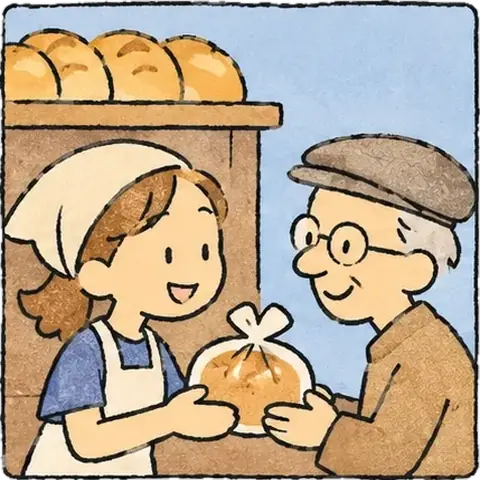
On Saturday mornings, Maria works at a bakery near the station.
- ~7 minutes
- 15 sentences
- 486 characters
- 39 kanji
- 1 N3 word
Every word and every kanji is checked against the lists of N4 and the levels below; 1 word from N3, flagged in the vocabulary. How we check →
The story
マリアは 毎週 土曜日の 朝、駅の 近くの パン屋で、パンを やいたり 売ったり していました。
Every Saturday morning, Maria baked and sold bread at a bakery near the station.
ちょうど 七時に なると、かならず おじいさんが 一人 来て、同じ パンを 二つ 買っていきました。
At seven o'clock sharp, an old man came in without fail and left with two loaves of bread, always the same kind.
マリアが 「いつもの パンですね」と 言うと、おじいさんは うれしそうに わらいました。
When Maria said, "The usual, right?", the old man smiled happily.
でも、雨の 土曜日、七時に なっても、おじいさんは 来ませんでした。
But one rainy Saturday, even at seven o'clock, the old man didn't come.
マリアは 時計を 見て、「いつもなら もう 来ている はずなのに」と 思いました。
Maria looked at the clock and thought, "Normally, he'd be here by now…"
七時半に なっても、八時に なっても、来ませんでした。
Half past seven came, then eight, and he still didn't come.
マリアは 「きっと あとで 来る はずだ」と 思って、おじいさんの パンを 二つ とっておきました。
Thinking, "He's sure to come later," Maria set aside the old man's two loaves.
十一時ごろ、小さな 女の子が 一人で 店に 入ってきました。
Around eleven, a little girl came into the shop on her own.
「あのう、おじいちゃんの パンを ください。かぜを ひいたのに、買ってきてほしいって 言うんです」
"Um… Grandpa's bread, please. He has a cold, but he still wants me to bring it to him."
マリアは わらって、とっておいた パンを わたしました。
Maria smiled and handed her the bread she had set aside.
「おじいさんに、早く 元気に なってほしいと つたえてね」
"Tell your grandpa I hope he gets well soon, okay?"
女の子は 「はい!」と 言って、走って 帰りました。
The girl said "Okay!" and ran home.
つぎの 土曜日の 七時、店の ドアが あきました。
The following Saturday, at seven o'clock, the shop door opened.
おじいさんが、あの 女の子と いっしょに 立っていました。
The old man was standing there with the little girl.
おじいさんは わらって、「今日は 三つ ください。一つは、マリアさんに」と 言いました。
He smiled and said, "Three today, please. One is for you, Maria."
Did you understand?
-
1 おじいさんは いつも 何時に 来ましたか。
What time did the old man usually come?
See the answer
Answer: 1. 七時 at seven
-
2 雨の 日、マリアは おじいさんの パンを どう しましたか。
On the rainy day, what did Maria do with the old man's bread?
See the answer
Answer: 3. とっておきました。 She set it aside.
-
3 おじいさんは どうして 雨の 日に 来ませんでしたか。
Why didn't the old man come on the rainy day?
See the answer
Answer: 4. おじいさんが かぜを ひいたからです。 Because he had a cold.

Next story
 はじめてのおんせん
First Time in a Hot Spring
Emma is staying at a mountain inn. For the first time, she is going to bathe in a hot spring.
Tappable words, synthetic voice and review.
Grammar in this story
-
〜はずだ "Should be, must be": a confident expectation based on facts.
マリアは 時計を 見て、「いつもなら もう 来ている はずなのに」と 思いました。
Maria looked at the clock and thought, "Normally, he'd be here by now…"
-
〜のに "Although, even though", with surprise, regret or reproach about the result.
「あのう、おじいちゃんの パンを ください。かぜを ひいたのに、買ってきてほしいって 言うんです」
"Um… Grandpa's bread, please. He has a cold, but he still wants me to bring it to him."
-
〜てほしい Te-form + ほしい: "I want (someone) to do…" (the person + に).
「おじいさんに、早く 元気に なってほしいと つたえてね」
"Tell your grandpa I hope he gets well soon, okay?"
Vocabulary 64 words
- 毎週 まいしゅう
- every week; 毎週 土曜日 = "every Saturday"
- 土曜日 どようび
- Saturday
- 朝 あさ
- morning
- 駅 えき
- station
- 近く ちかく
- near, nearby
- パン
- bread
- 屋 や
- shop, after what it sells: はなや = "flower shop"
- やく
- to bake, to grill
- 売る うる
- to sell
- する
- to do
- ちょうど
- exactly, just (ちょうど 七時に = "at seven o'clock sharp")
- 七 しち
- seven
- 時 じ
- o'clock: 八時 = "eight o'clock"
- なる
- to become
- かならず
- without fail, always
- おじいさん
- old man; grandfather
- 一人 ひとり
- one person; alone (一人で, いつも 一人)
- 来る くる
- to come
- 同じ おなじ
- the same
- 二つ ふたつ
- two (things)
- 買う かう
- to buy
- いつも
- always
- 言う いう
- to say
- うれしい
- glad, happy (about something)
- わらう
- to laugh, to smile
- でも
- but
- 雨 あめ
- rain
- 時計 とけい
- clock, watch
- 見る みる
- to look, to see
- もう
- already; (with a negative) no longer
- 思う おもう
- to think, to believe
- 半 はん
- half; half past (七時半 = "half past seven")
- 八 はち
- eight
- きっと
- surely, certainly
- あとで
- later
- とる
- to take
- 十 じゅう
- ten
- 一 いち
- one
- ごろ
- around, about (after a time: 十一時ごろ)
- 小さな ちいさな
- small, little (always before a noun)
- 女の子 おんなのこ
- girl
- 店 みせ
- shop, store; restaurant
- 入る はいる
- to enter, to come in
- あのう
- um…, excuse me… (hesitating or getting attention)
- おじいちゃん N3
- grandpa (said by a child)
- かぜ
- cold (the illness)
- ひく
- to pull; かぜを ひく = "to catch a cold"
- わたす
- to hand (over)
- 早い はやい
- early; はやく = "early", or "quickly, soon" (adverb)
- 元気 げんき
- healthy, lively
- つたえる
- to pass on (a message), to tell
- はい
- yes
- 走る はしる
- to run
- 帰る かえる
- to go home, to return
- つぎ
- next; つぎの あさ = "the next morning"
- ドア
- door
- あく
- to open (by itself)
- あの
- that… (over there)
- いっしょに
- together
- 立つ たつ
- to stand
- 今日 きょう
- today
- 三つ みっつ
- three (things)
- 一つ ひとつ
- one (thing)
- さん
- Mr., Ms. (polite, after a name)