 hinoko
小さな友だち A Little Friend
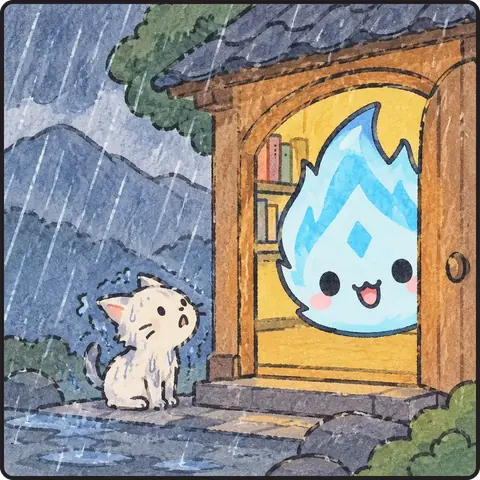
Hinoko loves books. One day, someone is waiting at her door.
- ~5 minutes
- 23 sentences
- 328 characters
- 17 kanji
- 0 N4 words
Every word and every kanji is checked against the N5 lists; no word from a higher level. How we check →
The story
ひのこは 小さくて あおいです。
Hinoko is small and blue.
山の 上の 小さい いえに 一人で すんでいます。
She lives alone in a little house up on the mountain.
Rōmaji of this paragraph
Hinoko wa chiisakute aoi desu. Yama no ue no chiisai ie ni hitori de sundeimasu.
ひのこは 本が 大すきです。
Hinoko loves books.
毎日、まどの そばで 本を 読みます。
Every day, she reads by the window.
でも、雨は きらいです。
But she doesn't like the rain.
Rōmaji of this paragraph
Hinoko wa hon ga daisuki desu. Mainichi, mado no soba de hon o yomimasu. Demo, ame wa kirai desu.
今日は あさから 雨が ふっています。
Today, it has been raining since the morning.
外は くらくて、さむいです。
Outside, it is dark and cold.
ひのこは いえの 中で 本を 読んでいます。
Hinoko is reading a book inside the house.
Rōmaji of this paragraph
Kyou wa asa kara ame ga futteimasu. Soto wa kurakute, samui desu. Hinoko wa ie no naka de hon o yondeimasu.
「すみません……」
"Excuse me…"
Rōmaji of this paragraph
“Sumimasen…”
ドアの 外に だれか います。
Someone is outside the door.
ひのこは ドアを あけます。
Hinoko opens the door.
小さくて 白い ねこです。
It's a small white cat.
ねこの からだは とても つめたいです。
The cat's body is very cold.
Rōmaji of this paragraph
Doa no soto ni dareka imasu. Hinoko wa doa o akemasu. Chiisakute shiroi neko desu. Neko no karada wa totemo tsumetai desu.
ねこは 小さい こえで いいます。
The cat says in a small voice:
「さむいです……」
"I'm cold…"
Rōmaji of this paragraph
Neko wa chiisai koe de iimasu. “Samui desu…”
「どうぞ、入って ください」
"Please, come in."
Rōmaji of this paragraph
“Douzo, haitte kudasai”
ひのこの ちかくは あたたかいです。
It's warm near Hinoko.
ねこは そこで すこし ねます。
The cat sleeps there for a little while.
それから、ねこは あたたかい おちゃを のみます。
Then the cat drinks some warm tea.
Rōmaji of this paragraph
Hinoko no chikaku wa atatakai desu. Neko wa soko de sukoshi nemasu. Sorekara, neko wa atatakai ocha o nomimasu.
「ありがとう。また 来ても いいですか」
"Thank you. May I come again?"
「はい、また 来て ください」
"Yes, please come again."
Rōmaji of this paragraph
“Arigatou. Mata kitemo ii desu ka” “Hai, mata kite kudasai”
ひのこは 雨が きらいでした。
Hinoko didn't like the rain.
でも、今日の 雨は すこし すきです。
But she likes today's rain a little.
Rōmaji of this paragraph
Hinoko wa ame ga kirai deshita. Demo, kyou no ame wa sukoshi suki desu.
Did you understand?
-
1 ひのこは 何が きらいでしたか。
What did Hinoko dislike?
See the answer
Answer: 2. 雨 rain
-
2 ドアの 外に だれが いましたか。
Who was outside the door?
See the answer
Answer: 1. 白い ねこ a white cat
-
3 ねこは ひのこの いえで 何を しましたか。
What did the cat do at Hinoko's house?
See the answer
Answer: 4. おちゃを のみました。 It drank tea.

Next story
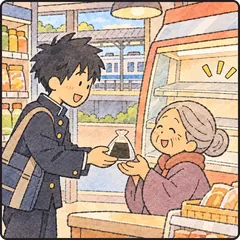 コンビニのおにぎり
The Konbini Onigiri
Every morning, Ken buys an onigiri at the konbini. Today there's only one left… and an old lady is looking at it too.
Tappable words, synthetic voice and review.
Grammar in this story
-
〜くて Te-form of i-adjectives (い → くて), linking: "small and cute"; いい gives よくて.
ひのこは 小さくて あおいです。
Hinoko is small and blue.
-
〜ている Te-form + いる: an action in progress, or a resulting state (結婚している).
山の 上の 小さい いえに 一人で すんでいます。
She lives alone in a little house up on the mountain.
-
〜てください Te-form + ください: a polite request, "please do…".
「どうぞ、入って ください」
"Please, come in."
-
〜てもいいですか Te-form + もいい: permission, "you may"; with ですか, "may I…?"
「ありがとう。また 来ても いいですか」
"Thank you. May I come again?"
Vocabulary 53 words
- 小さな ちいさな
- small, little (always before a noun)
- 友だち ともだち
- friend
- 小さい ちいさい
- small, little
- あおい
- blue
- 山 やま
- mountain
- 上 うえ
- top, above
- いえ
- house, home
- 一人 ひとり
- one person; alone (一人で, いつも 一人)
- すむ
- to live (somewhere)
- 本 ほん
- book
- 大すき だいすき
- to love, to like very much
- 毎日 まいにち
- every day
- まど
- window
- そば
- beside, near
- 読む よむ
- to read
- でも
- but
- 雨 あめ
- rain
- きらい
- to dislike, not to like
- 今日 きょう
- today
- あさ
- morning
- ふる
- to fall (rain, snow)
- 外 そと
- outside
- くらい
- dark
- さむい
- cold (weather, air)
- 中 なか
- inside
- すみません
- excuse me, sorry
- ドア
- door
- だれか
- someone
- いる
- to be, to exist (living things)
- あける
- to open
- 白い しろい
- white
- ねこ
- cat
- からだ
- body
- とても
- very
- つめたい
- cold (to the touch)
- こえ
- voice
- いう
- to say
- どうぞ
- please; here you are; go ahead
- 入る はいる
- to enter, to come in
- ちかく
- near, nearby
- あたたかい
- warm (pleasantly)
- そこ
- there, that place
- すこし
- a little
- ねる
- to sleep, to go to bed
- それから
- and then, after that
- おちゃ
- (green) tea
- のむ
- to drink
- ありがとう
- thank you
- また
- again
- 来る くる
- to come
- いい
- good, fine
- はい
- yes
- すき
- to like