 hinoko
ゆうめいなラーメン Famous Ramen
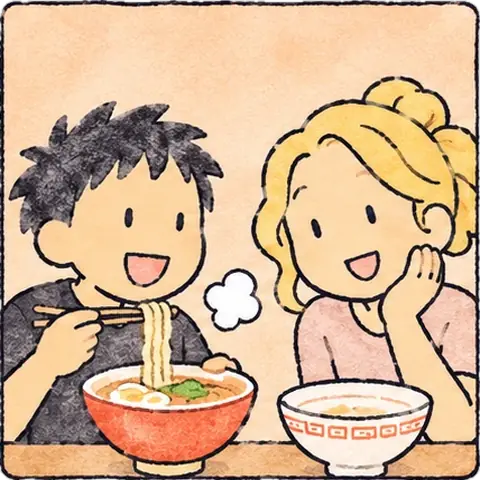
Emma and Ken wait a long time in line outside a famous ramen shop. But at the door, a bad surprise is waiting for them.
- ~4 minutes
- 13 sentences
- 245 characters
- 14 kanji
- 0 N4 words
Every word and every kanji is checked against the N5 lists; no word from a higher level. How we check →
The story
休みの日、エマと けんは ゆうめいな ラーメンの みせへ 行きました。
On their day off, Emma and Ken went to a famous ramen shop.
みせの 前には 人が たくさん ならんでいました。
Lots of people were waiting in line in front of the shop.
二人も 一時間 ならびました。
The two of them waited in line too, for an hour.
Rōmaji of this paragraph
Yasuminohi, Ema to Ken wa yuumeina raamen no mise e ikimashita. Mise no mae ni wa hito ga takusan narandeimashita. Futari mo ichi jikan narabimashita.
でも、ドアの 前で、みせの 人が いいました。
But at the door, someone from the shop said:
「すみません。今日は もう スープが ありません」
"Sorry. There's no more broth today."
Rōmaji of this paragraph
Demo, doa no mae de, mise no hito ga iimashita. “Sumimasen. Kyou wa mou suupu ga arimasen”
エマは となりの 小さくて ふるい みせを 見ました。
Emma looked at the small, old shop next door.
「あの みせに 入りましょう」
"Let's go into that shop."
Rōmaji of this paragraph
Ema wa tonari no chiisakute furui mise o mimashita. “Ano mise ni hairimashou”
小さい みせには、おきゃくさんが いませんでした。
There were no customers in the little shop.
「おいしい!」
"So good!"
けんは 二はい 食べました。
Ken ate two bowls.
Rōmaji of this paragraph
Chiisai mise ni wa, okyakusan ga imasen deshita. “Oishii!” Ken wa ni hai tabemashita.
つぎの 休みの日、二人は また 小さい みせへ 行きました。
On their next day off, the two of them went back to the little shop.
でも、小さい みせの 前にも 人が たくさん ならんでいました。
But in front of the little shop too, lots of people were waiting in line.
「また 一時間ですね」
"Another hour, huh…"
Rōmaji of this paragraph
Tsugi no yasuminohi, futari wa mata chiisai mise e ikimashita. Demo, chiisai mise no mae ni mo hito ga takusan narandeimashita. “Mata ichi jikan desu ne”
Did you understand?
-
1 二人は ゆうめいな みせの 前で 何時間 ならびましたか。
How many hours did they wait in line outside the famous shop?
See the answer
Answer: 1. 一時間 one hour
-
2 二人は どこで ラーメンを 食べましたか。
Where did they eat ramen?
See the answer
Answer: 2. 小さい みせで at the little shop
-
3 つぎの 休みの日、小さい みせの 前は どうでしたか。
On the next day off, what was it like in front of the little shop?
See the answer
Answer: 1. 人が たくさん いました。 There were lots of people.

Next story
 シロのはな
Shiro's Flower
Today, Shiro comes to Hinoko's house with a little flower in his mouth. But why that one?
Tappable words, synthetic voice and review.
Grammar in this story
-
〜ました Polite past of 〜ます: "did" (行きました, "went").
休みの日、エマと けんは ゆうめいな ラーメンの みせへ 行きました。
On their day off, Emma and Ken went to a famous ramen shop.
-
〜ませんでした Polite past negative of 〜ます: "did not" (行きませんでした).
小さい みせには、おきゃくさんが いませんでした。
There were no customers in the little shop.
-
〜ましょう Polite "let’s…": suggests doing something together (行きましょう).
「あの みせに 入りましょう」
"Let's go into that shop."
-
〜くて Te-form of i-adjectives (い → くて), linking: "small and cute"; いい gives よくて.
エマは となりの 小さくて ふるい みせを 見ました。
Emma looked at the small, old shop next door.
Vocabulary 34 words
- 休みの日 やすみのひ
- day off
- ゆうめい
- famous
- ラーメン
- ramen (noodle soup)
- みせ
- shop, store; restaurant
- 行く いく
- to go
- 前 まえ
- front; before (入る 前に = "before going in")
- 人 ひと
- person; ゆうびんきょくの 人 = "the post office clerk"
- たくさん
- a lot, many
- ならぶ
- to line up, to wait in line
- 二人 ふたり
- two people; 二人で = "the two of them"
- 一 いち
- one
- 時間 じかん
- time; hour (duration): 一時間 = "one hour"
- でも
- but
- ドア
- door
- いう
- to say
- すみません
- excuse me, sorry
- 今日 きょう
- today
- もう
- already; (with a negative) no longer
- スープ
- soup; here, the ramen broth
- ある
- there is, to be (for things)
- となり
- next to, next door
- 小さい ちいさい
- small, little
- ふるい
- old (for things)
- 見る みる
- to look, to see
- あの
- that… (over there)
- 入る はいる
- to enter, to come in
- おきゃくさん
- customer
- いる
- to be, to exist (living things)
- おいしい
- delicious, tasty
- 二 に
- two
- はい
- counter for bowls and glasses: 二はい = "two bowls"
- 食べる たべる
- to eat
- つぎ
- next; つぎの あさ = "the next morning"
- また
- again